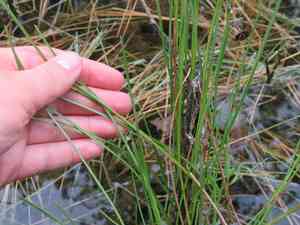
Robbins' spikerush (Eleocharis robbinsii)
Also known as: Robbins' Spikerush
Robbins' spikerush is a perennial, grass-like aquatic plant commonly found in wetlands and streambanks. It typically reaches heights of 10-60 cm with dense clusters of slender, cylindrical stems. The plant features small, scaled flowers at the tips of its stems, which appear during its subtle blooming period. Adapted to waterlogged soils, Robbins' spikerush plays a vital role in stabilizing soil and providing habitat for wetland wildlife.
In This Article
Attributes of Robbins' spikerush
Lifespan
Perennial
Plant Type
Grass
Plant Height
15 cm to 76 cm
Spread
Not applicable
Leaf Color
Green
Flower Size
0.1-0.3 cm
Flower Color
White Yellow Green Brown
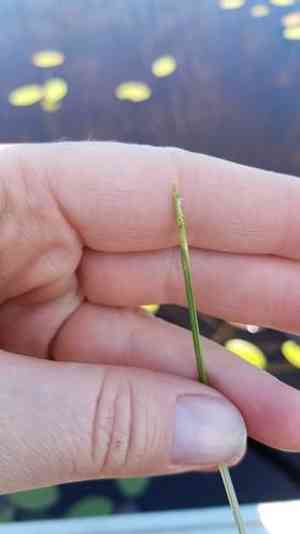
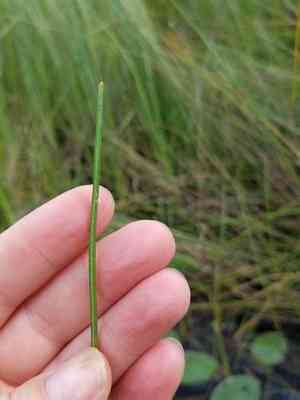
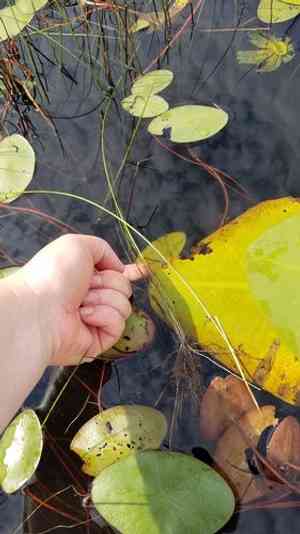
Images of Robbins' spikerush
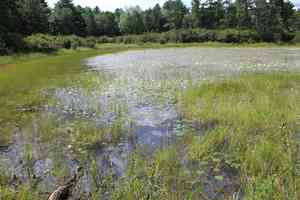
Quickly Identify Robbins' spikerush
1
This plant can be identified by its thin, grass-like stems that are typically 20-60 cm tall. The stems are usually smooth, green, and tapering to a point. The plant forms dense clumps and has small, inconspicuous flowers.
Scientific Classification of Robbins' spikerush
Phylum
Vascular plants
Class
Monocotyledons
Order
Poales
Family
Sedge
Genus
Eleocharis
Species
Robbins' spikerush
Planting and Growing of Robbins' spikerush
Care Difficulty
Moderate
Watering Schedule
Every 4 days
Sunlight Requirements
Partial sun
Sunshine Duration
6-8 hours
Ideal Temperature
60-75℉
Soil Type
Potting Mix, Peat Mix
Soil pH
At least 6.5
Fertilizer Type
Balanced
Pruning Season
Spring, Summer
Pruning Area
Branches, Leaves
Pruning Frequency
2 times a year
Repotting Season
Spring
Pot Type
Plastic, Ceramic
 How to Water Robbins' spikerush?
Eleocharis robbinsii, commonly known as a wetland plant, needs its soil to be consistently moist but not waterlogged. It's crucial to ensure even distribution of 250 ml of water throughout the pot, reaching the lower roots while avoiding any water pooling at the bottom.
What are the symptoms of an underwatered Robbins' spikerush?
›
What should I do if my Robbins' spikerush is not getting enough water?
›
What are the symptoms of an overwatered Robbins' spikerush?
›
How to save an overwatered Robbins' spikerush?
›
 What Are the Sunlight Requirements for Robbins' spikerush?
Partial sun, Full shade is ideal for Eleocharis robbinsii as it provides balanced growth conditions, preventing excessive stress and ensuring lush, vibrant foliage.
How much sunlight does Eleocharis robbinsii prefer?
›
What solutions are there to achieve this lighting condition?
›
What benefits does ideal lighting provide?
›
 What Is the Ideal Temperature Range for Robbins' spikerush?
The ideal temperature range for Eleocharis robbinsii growth is between 60°F and 75°F. This range ensures optimal photosynthesis and metabolic functions. Maintaining temperatures within this range can significantly enhance plant health and vigor.
 What Soil is Best for Robbins' spikerush?
Eleocharis robbinsii thrives in soils that can retain moisture well. These conditions mimic its natural habitat of wetlands and marshes, ensuring the plant stays hydrated and grows robustly. A soil rich in organic matter is vital for Eleocharis robbinsii as it provides essential nutrients. This not only boosts plant health but also fosters a habitat that supports robust root development. Although this plant prefers moist conditions, adequate drainage is necessary to prevent waterlogging. Well-drained soils ensure roots do not suffocate, promoting healthier and more vigorous growth.
 How to Fertilize Robbins' spikerush?
For Eleocharis robbinsii, it's crucial to apply fertilizers in moderate amounts to prevent nutrient burn. When using liquid fertilizer, dilute it to half the recommended strength. For slow-release fertilizers, distribute them lightly across the soil, ensuring the nutrients slowly permeate as needed.
 How to Prune Robbins' spikerush?
While Eleocharis robbinsii can be pruned throughout Spring and Summer, it is best done in early Spring when the plant is waking up from its dormant phase. Pruning during this time can invigorate the plant and allow for the full growing season to prompt lush new growth. Avoid pruning in the Fall and Winter, as these seasons are critical for the plant’s resting phase. Eleocharis robbinsii is a primarily aquatic plant that relies heavily on its root system for nutrition and stability. When pruning, be cautious not to disturb the plant's roots. Gentle handling during the process will prevent unnecessary stress to the plant.
More About Pruning Techniques→
 How to Propagate Robbins' spikerush plant?
1
Begin by preparing a well-draining, nutrient-rich soil mix. This substrate is crucial for both seed germination and division as it provides essential nutrients and prevents water retention which can hinder growth.
2
When propagating from seeds, sow them in your prepared seed trays, ensuring they are slightly covered with soil. Maintain a consistent moisture level without flooding the seeds to improve germination rates.
3
For division propagation, carefully separate the plant at its root system using a sterile knife, ensuring each division has a sufficient amount of roots attached. Replant immediately in prepared soil.
 How to Repot Robbins' spikerush plant?
1
Eleocharis robbinsii should be repotted when it becomes root-bound, evident by roots growing out of the drainage holes or a visibly compacted root ball. Signs like water quickly draining through the pot or slow plant growth also indicate the need for repotting. Ideally, repotting should occur in spring when the plant's growth is active, ensuring a swift recovery and adaptation to the new environment.
2
Select a pot that is only an inch or two larger in diameter than the current one to prevent excessive soil space, which can lead to root rot. It's beneficial to go for pots with ample drainage holes to allow excess water to escape. A shallow pot may also be suitable due to the compact nature of its root system, promoting healthier growth and easier management.
3
Opt for a moist, well-draining soil mix to keep the roots from becoming waterlogged. A blend that includes components such as peat and sand can enhance drainage while retaining adequate moisture. This optimal soil structure promotes healthier root development and encourages steady plant growth, keeping Eleocharis robbinsii flourishing and vibrant.



