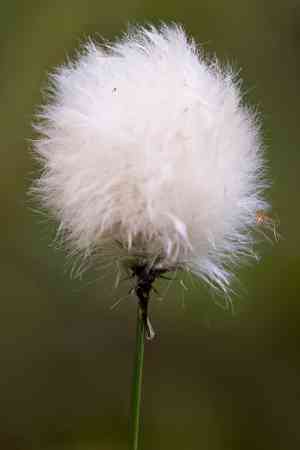
Squarestem spikerush (Eleocharis quadrangulata)
Also known as: Squarestem spikerush
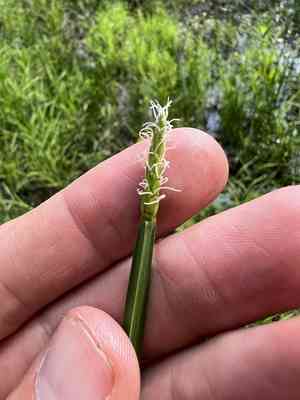
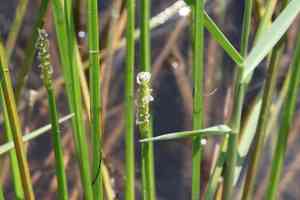
This plant typically thrives in and around freshwater environments such as lakes, ponds, and other aquatic settings. It is a perennial herb that spreads through rhizomes and can reach heights of 0.5 to 1 meter. The stem is notably spongy, compressible, and sharply four-angled, measuring a few millimeters in width. Its inflorescence consists of a solitary spikelet, ranging from 1.5 to 7.5 centimeters in length, and is composed of multiple flowers enveloped in light brown bracts.
In This Article
Attributes of Squarestem spikerush
Lifespan
Perennial
Plant Type
Grass
Plant Height
30 cm to 91 cm
Spread
N/A (not applicable for this type of plant)
Leaf Color
Green
Flower Size
Small, less than 1 cm
Flower Color
Brown
Images of Squarestem spikerush
Quickly Identify Squarestem spikerush
1
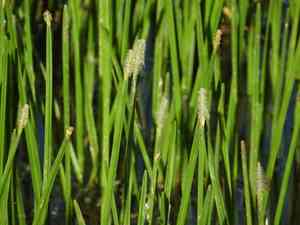
Square stem distinguishes squarestem spikerush from other species, growing up to 35 inches (90 cm).
2
Sparse leaves form sheaths, transitioning from green above to white below.
3
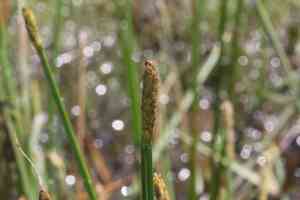
Tiny brown-flowered spikelets densely clustered, each around 0.4 inches (1 cm) long.
4
Distinctive spongy stem, green and buoyant, up to 2 feet (60 cm) tall.
5
Yellow-brown achenes with prominent longitudinal stripes, seed enclosed in hard scales.
Scientific Classification of Squarestem spikerush
Phylum
Vascular plants
Class
Monocotyledons
Order
Poales
Family
Sedge
Genus
Eleocharis
Species
Squarestem spikerush
Planting and Growing of Squarestem spikerush
Care Difficulty
Easy
Watering Schedule
Every 4 days
Sunlight Requirements
Full sun
Sunshine Duration
6-10 hours
Ideal Temperature
68-77℉
Soil Type
Potting Mix, Peat Mix
Soil pH
6.5-7.5
Fertilizer Type
Balanced
Pruning Season
Spring, Summer
Pruning Area
Branches, Leaves
Pruning Frequency
2 times a year
Repotting Season
Spring
Pot Type
Plastic, Ceramic
 How to Water Squarestem spikerush?
The plant should be watered until the soil is thoroughly moist but not waterlogged. Ideal watering ensures that water penetrates deeply to reach the root system, which typically means providing about 500 milliliters each time.
What are the symptoms of an underwatered Squarestem spikerush?
›
What should I do if my Squarestem spikerush is not getting enough water?
›
What are the symptoms of an overwatered Squarestem spikerush?
›
How to save an overwatered Squarestem spikerush?
›
 What Are the Sunlight Requirements for Squarestem spikerush?
Partial to full sun exposure can meet Eleocharis quadrangulata's light requirements, promoting vigorous growth and a healthy appearance. Adequate sunlight supports effective photosynthesis, bubbles through water environments, and enhances overall vitality.
What is the ideal light condition for Eleocharis quadrangulata?
›
What solutions exist to achieve ideal lighting for this plant?
›
What are the benefits of providing ideal light for Eleocharis quadrangulata?
›
 What Is the Ideal Temperature Range for Squarestem spikerush?
For Eleocharis quadrangulata, maintaining an ideal temperature between 68°F to 77°F is essential for optimal growth. This range ensures that the metabolic processes occur efficiently and that the plant thrives without stress.
 What Soil is Best for Squarestem spikerush?
Eleocharis quadrangulata thrives in moist soil conditions. Ensuring your soil retains moisture will keep the plant healthy, preventing the foliage from drying out. Nutrient-rich soil is essential for the proper growth of Eleocharis quadrangulata. Soils high in nutrients provide the plant with necessary elements for vibrant growth and resilience against pests. While moisture retention is crucial, good drainage ensures that the roots do not become waterlogged. Well-draining soil prevents root rot and maintains a healthy root system.
 How to Fertilize Squarestem spikerush?
For Eleocharis quadrangulata, it's vital to apply a moderate amount of fertilizer. Use approximately half the recommended dose indicated on your liquid fertilizer packaging. This amount helps ensure the plant receives adequate nutrients without risking over-fertilization.
 How to Prune Squarestem spikerush?
Start by identifying any dead or damaged stems, using clean and sharp scissors to cut them gently. Trim the plant back to a uniform height, retaining its natural shape. This fosters new growth and maintains its attractive appearance. For more robust growth, consider thinning the plant from the base. Remove older, woodier stems to encourage new shoot development. Space the cuts evenly to keep the plant looking full and healthy, enhancing its natural growth patterns.
More About Pruning Techniques→
 How to Propagate Squarestem spikerush plant?
1
Collect seeds from mature plants and clean them thoroughly. Allow them to dry for a few days before sowing, ensuring they are free from any fungal spores or pests.
2
Plant the seeds in a tray filled with moist, well-draining soil. Cover them lightly with soil and maintain a consistent moisture level until germination occurs, which typically takes several weeks.
3
Carefully dig up a mature plant, ensuring the roots are not damaged. Use a sharp spade to divide the clump into smaller sections, making sure each division has a good root system and some foliage.
 How to Repot Squarestem spikerush plant?
1
For Eleocharis quadrangulata, repotting is ideal when the plant shows signs of being root-bound or when growth becomes stunted. A telltale sign is roots curling out of the drainage holes. Typically, this need arises during the warmer months when the plant is in its active growth phase.
2
Select a pot that is a step larger than the current one, preferably terracotta for its breathability. This material assists in moisture regulation, preventing roots from becoming waterlogged, while also allowing for some healthy root expansion.
3
Opt for a loamy, well-draining soil mix. This type of soil provides the balance of moisture retention and drainage, essential for preventing root rot and ensuring that the roots of Eleocharis quadrangulata receive sufficient air flow.
Learn More About Squarestem spikerush Diseases
Anthracnose
Bacterial Leaf Spot
Bacterial Soft Rot
Bacterial Wilt
Crown Gall
Cyst Nematode
Damping-off
Downy Mildew
Drought Stress
Fusarium Wilt
Gray Mold
Leaf Spot
Mosaic
Nutrient Deficiency
Nutrient Toxicity
Powdery Mildew
Root Rot
Root-knot Nematode
Rusts
Sooty Mold
Spider Mites
Temperature Stress
Thrips Damage
White Mold



