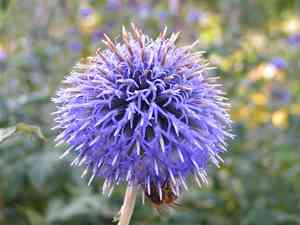
Blue globe thistle (Echinops bannaticus)
Also known as: Globe thistle
The blue globe thistle flourishes best in full sunlight. Due to its deep taproot, it can be challenging to divide or relocate once it’s well-established. Its scientific name, Echinops ritro, is derived from Greek words meaning "hedgehog" and "appearance," alluding to its spiky, spherical flowers.
In This Article
Attributes of Blue globe thistle
Lifespan
Perennial
Plant Type
Herb
Plant Height
1.8 m
Spread
60 cm
Leaf Color
Green Gray Silver
Flower Size
2.5 cm to 5 cm
Flower Color
Blue
Images of Blue globe thistle
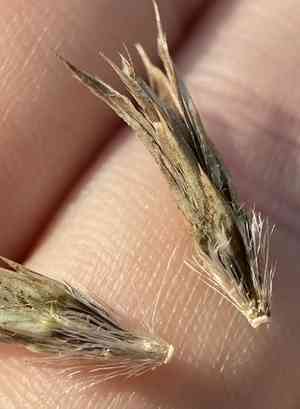
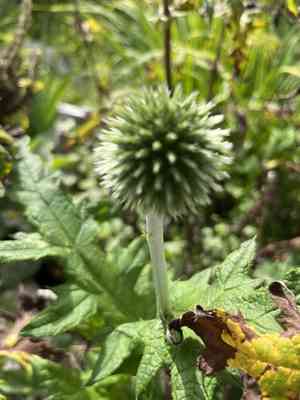
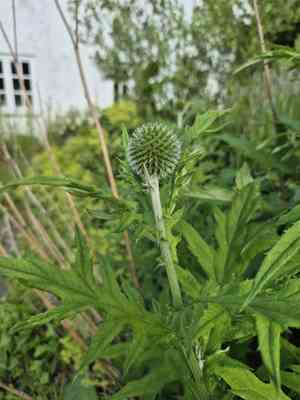
Quickly Identify Blue globe thistle
1
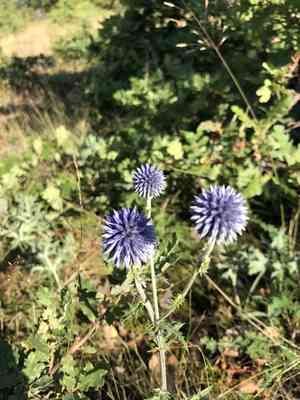
Look for spiky, globe-shaped blue or steel blue flowers, which appear atop tall stems. The deep green leaves are deeply lobed with a silvery underside, and the stems are covered in fine white hairs.
Scientific Classification of Blue globe thistle
Phylum
Vascular plants
Class
Dicotyledons
Order
Asterales
Family
Daisy
Genus
Globe thistles
Species
Blue globe thistle
Planting and Growing of Blue globe thistle
Care Difficulty
Easy
Watering Schedule
Every 2 days
Sunlight Requirements
Full sun
Sunshine Duration
6-12 hours
Ideal Temperature
65-75℉
Soil Type
Potting Mix, Peat Mix
Soil pH
6.5-7.5
Fertilizer Type
Balanced
Pruning Season
Spring, Summer
Pruning Area
Branches, Leaves
Pruning Frequency
Once a year
Repotting Season
Spring
Pot Type
Plastic, Ceramic
 How to Water Blue globe thistle?
Echinops bannaticus prefers a well-drained environment. Watering should be enough to moisten the top 2-3 inches of the soil without leaving it soggy. Approximately 500ml of water is adequate, but adjust according to the plant's environment.
What are the symptoms of an underwatered Blue globe thistle?
›
What should I do if my Blue globe thistle is not getting enough water?
›
What are the symptoms of an overwatered Blue globe thistle?
›
How to save an overwatered Blue globe thistle?
›
 What Are the Sunlight Requirements for Blue globe thistle?
Partial to full sunlight exposure is ideal for Echinops bannaticus, enhancing its bloom size and frequency. Ideal lighting ensures robust structural health and less susceptibility to plant diseases.
More About Sunlight Requirements Techniques→
How much sunlight does Echinops bannaticus need?
›
What solutions can provide the ideal sunlight?
›
What are the benefits of ideal lighting for this plant?
›
 What Is the Ideal Temperature Range for Blue globe thistle?
Echinops bannaticus thrives best in temperatures ranging from 65°F to 75°F. This range ensures that the plant's metabolic processes are optimized, promoting healthy growth and robust flowering. Maintaining an environment within this range helps prevent stress and disease, allowing the plant to reach its full potential.
 What Soil is Best for Blue globe thistle?
Echinops bannaticus thrives in well-drained soil that prevents waterlogging and root rot. This type of soil ensures proper air circulation, which supports healthy root development and vigorous plant growth. While it tolerates drought, Echinops bannaticus also prefers slightly moist conditions. Consistent moisture, without becoming soggy, can help the plant to maintain lush, vibrant foliage and prolific blooming. Incorporating organic matter or compost into the soil can boost fertility and nutrient availability, supplying Echinops bannaticus with the resources needed for flowers with deep, striking colors and prolonged bloom period.
 How to Fertilize Blue globe thistle?
For Echinops bannaticus, a balanced liquid fertilizer should be used during the growing season. Typically, a diluted solution of half the recommended strength is ideal to avoid over-fertilizing. Ensure the fertilizer is evenly distributed around the root zone without saturating the soil and avoid leaf contact to prevent burn.
 How to Prune Blue globe thistle?
Begin by snipping off any dead or fading flower heads to encourage continuous blooming. Use sharp, clean pruning shears to trim the stems back by a third of their length. This not only maintains the desired plant shape but also prevents the plant from becoming too leggy. Pay attention to the plant's natural shape and aim to enhance it while pruning. For best results, always prune in the morning when the plant is most hydrated. Work systematically from the top of the plant downwards to ensure comprehensive trimming.
More About Pruning Techniques→
 How to Propagate Blue globe thistle plant?
1
Select loose, well-draining soil and fill the seed tray or pot. Ensure that the soil is slightly moist before sowing seeds or placing divided sections to encourage rooting and germination.
2
Space seeds evenly across the surface of the prepared soil. Cover them lightly with a thin layer of soil and gently water, ensuring the soil is moist but not waterlogged to promote germination.
3
For propagation by division, carefully dig up the plant and shake off excess soil. Use a sharp knife or spade to split the plant into several clumps, each with healthy roots, and replant them immediately.
 How to Repot Blue globe thistle plant?
1
Observe your Echinops bannaticus for signs that it needs repotting, such as roots circling the base or growing through drainage holes. Spring or autumn is ideal, as these seasons ensure optimal acclimatization conditions. Repotting during these times supports root establishment for robust growth.
2
Select a pot that's 1 to 2 inches larger in diameter than the current one. A pot too large can lead to excess moisture accumulation, while a slightly larger pot promotes controlled growth and healthy root expansion. Ensure it has adequate drainage holes for proper aeration.
3
Opt for a well-draining potting mix rich in organic matter. This type of soil allows excess water to escape, mitigating root rot risks. An aerated and nutrient-rich medium supports a healthier and more vigorous plant, optimizing its blooming potential.
Learn More About Blue globe thistle Diseases
Anthracnose
Bacterial Leaf Spot
Bacterial Soft Rot
Bacterial Wilt
Black Spot
Chemical Injury
Crown Gall
Damping-off
Downy Mildew
Drought Stress
Fusarium Wilt
Gray Mold
Leaf Curl
Leaf Spot
Mosaic
Nutrient Deficiency
Nutrient Toxicity
Powdery Mildew
Root Rot
Root-knot Nematode
Rusts
Sooty Mold
Spider Mites
Temperature Stress
Thrips Damage
White Mold



