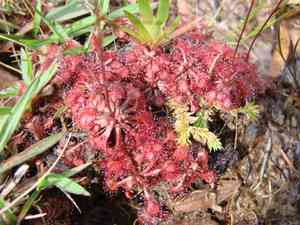
Pink Sundew (Drosera capillaris)
Also known as: Spathulate-leaved Sundew
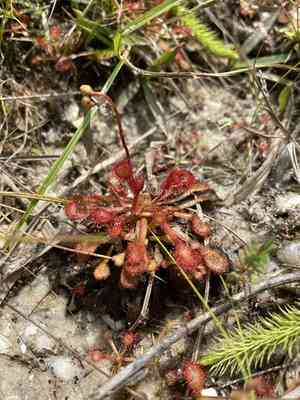
The Pink Sundew (Drosera capillaris) is a carnivorous plant commonly found in the moist, boggy environments of the southeastern United States and certain regions of the Caribbean. Its flat-lying leaves are equipped with red, sticky tentacles that capture insects by secreting a glue-like substance, aiding in the plant's nutrient intake.
In This Article
Attributes of Pink Sundew
Lifespan
Perennial, Annual
Plant Type
Herb
Plant Height
5 cm to 20 cm
Spread
5 cm to 13 cm
Leaf Color
Green with red glandular hairs
Flower Size
2.5 cm
Flower Color
Pink Purple
Images of Pink Sundew
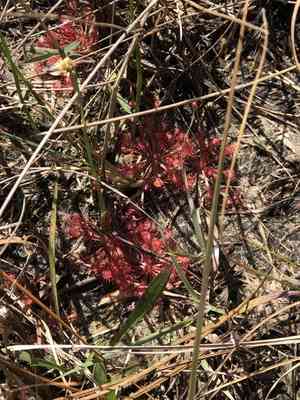
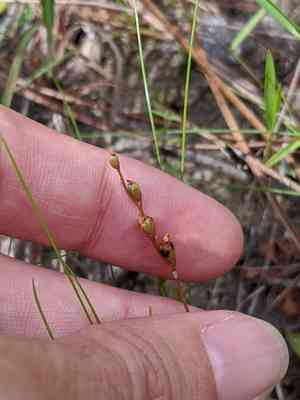
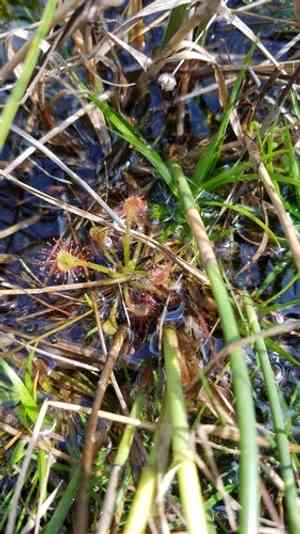
Quickly Identify Pink Sundew
1
Rosette of spatula-shaped leaves with sticky, gland-tipped hairs for insect capture.
2
Delicate pink flowers with symmetrical star-like arrangement and slender petals.
3
Slender, elongated fruit capsule turning from green to brown for seed dispersal.
4
Prostrate leaves with spoon-like shape, featuring glandular hairs and color variations.
Scientific Classification of Pink Sundew
Phylum
Vascular plants
Class
Dicotyledons
Order
Caryophyllales
Family
Sundew
Genus
Sundews
Species
Pink Sundew
Planting and Growing of Pink Sundew
Care Difficulty
Easy
Watering Schedule
Every 15 days
Sunlight Requirements
Full sun
Sunshine Duration
3-6 hours
Ideal Temperature
70-80℉
Soil Type
Potting Mix, Peat Mix
Soil pH
4.5-5.5
Fertilizer Type
Balanced
Pruning Season
Spring, Summer
Pruning Area
Branches, Leaves
Pruning Frequency
2 times a year
Repotting Season
Spring
Pot Type
Plastic, Ceramic
 How to Water Pink Sundew?
For Drosera capillaris, you should ensure the soil is consistently moist but not waterlogged. Aim to water until the top layer of soil feels damp, but avoid letting the plant sit in standing water. About 100ml per watering is ideal.
What are the symptoms of an underwatered Pink Sundew?
›
What should I do if my Pink Sundew is not getting enough water?
›
What are the symptoms of an overwatered Pink Sundew?
›
How to save an overwatered Pink Sundew?
›
 What Are the Sunlight Requirements for Pink Sundew?
Drosera capillaris prefers ideally 4 to 6 hours of direct sunlight. This range ensures vibrant coloration and healthy growth, optimizing its ability to photosynthesize and metabolize nutrients effectively.
More About Sunlight Requirements Techniques→
Sunlight Exposure
›
Light Intensity
›
Balanced Lighting
›
 What Is the Ideal Temperature Range for Pink Sundew?
The ideal temperature range for Drosera capillaris is between 70 to 80 degrees Fahrenheit. This temperature range facilitates optimal enzyme activity and photosynthesis, maximizing plant growth. Maintaining this range ensures that Drosera capillaris can effectively trap insects without metabolic stress.
 What Soil is Best for Pink Sundew?
Drosera capillaris thrives in soil that retains moisture well, such as peat-based mixes. This helps in keeping the roots consistently hydrated, essential for its growth and carnivorous mechanisms. Moist soils prevent the plant from drying out, ensuring healthy growth. The plant has adapted to nutrient-deficient environments; thus, it requires soil with minimal nutrients to avoid root burn and maintain nutrient balance. This characteristic comes from its habit of deriving nutrients from captured insects. While humid environments suit Drosera capillaris, their soil must drain well to prevent waterlogging. The use of sandy loam or an appropriate mix helps prevent root rot, a common issue in water-retentive soils, thus ensuring healthy root systems.
 How to Fertilize Pink Sundew?
Drosera capillaris, commonly known as the sundew, is a carnivorous plant that generally requires minimal fertilization. However, if you choose to fertilize, use a very dilute solution of liquid fertilizer, at one-quarter strength of the recommended dose for most houseplants. Solid fertilizers should be applied sparingly, typically around the beginning of the growing season, with care not to overwhelm the plant.
 How to Prune Pink Sundew?
Use blunt scissors to trim away any brown or black, decaying leaves at their base. This not only improves appearance but also allows the plant to redirect energy to healthy, new foliage. If your plant blooms, cutting back spent flowers down to the base prevents the plant from spending unnecessary energy on seed production, focusing instead on robust leaf growth. Thin out densely packed areas thoughtfully to improve air circulation and light penetration, enhancing overall growth conditions.
More About Pruning Techniques→
 How to Propagate Pink Sundew plant?
1
Use a mix of sphagnum peat moss and silica sand in a 1:1 ratio to fill the seed tray. This medium ensures good drainage and provides the necessary acidity for Drosera capillaris.
2
Sprinkle the seeds evenly on top of the soil. Do not cover the seeds with soil, as they need light to germinate. Lightly mist the surface to settle the seeds.
3
Place the seed tray in a location with indirect sunlight and maintain a temperature between 70-80°F (21-27°C). Use a clear lid or plastic wrap to create a humid environment, which is crucial for germination.
 How to Repot Pink Sundew plant?
1
Drosera capillaris should be repotted when the roots start peeking out of drainage holes, indicating they need more space. Alternatively, if the soil appears compacted and no longer drains well, it's a signal to refresh the medium.
2
Select a pot with adequate drainage to prevent waterlogging, which Drosera capillaris dislikes. A pot slightly larger than the current one allows room for growth without being so large that it retains too much moisture.
3
Use a well-draining, acidic substrate like a peat and perlite mix. This provides the suitable low-nutrient environment typical of Drosera capillaris habitats, promoting healthy growth and preventing root rot.



