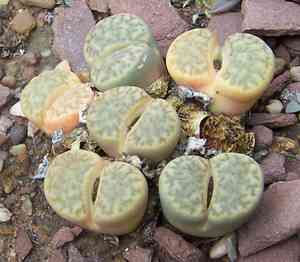
Hairy dewflower (Drosanthemum hispidum)
Also known as: Bristly Dewflower, Rough Mesemb, Ice Plant
The hairy dewflower is a tough succulent featuring thick, water-storing leaves adorned with tiny, glistening hairs. These hairs are crucial for trapping moisture from the air, enabling the plant to thrive in dry conditions. Its bright yellow flowers bloom abundantly in full sunlight, bringing a splash of color to arid, rocky areas.
In This Article
Attributes of Hairy dewflower
Lifespan
Perennial
Plant Type
Shrub
Plant Height
15 cm
Spread
1 m
Leaf Color
Green, sometimes with a reddish tint
Flower Size
2-3 cm
Flower Color
Pink, Purple
Images of Hairy dewflower
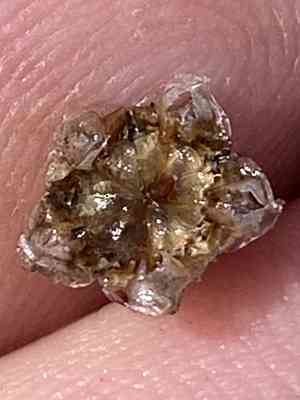
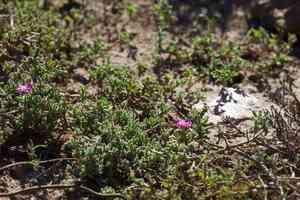
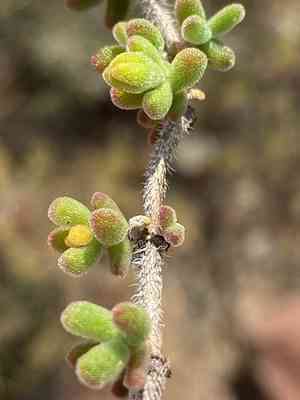
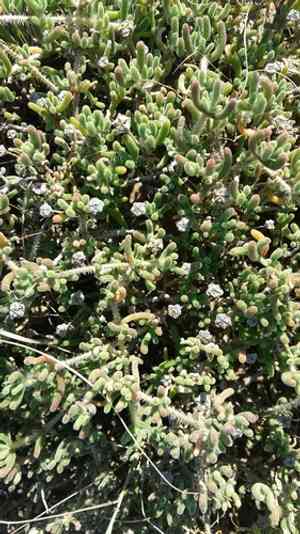
Quickly Identify Hairy dewflower
1
Look for small, succulent leaves densely covered in tiny, hair-like trichomes. Flowers are bright and daisy-like, usually pink or purple, appearing in dense clusters.
Scientific Classification of Hairy dewflower
Phylum
Vascular plants
Class
Dicotyledons
Order
Caryophyllales
Family
Fig-marigold
Genus
Drosanthemum
Species
Hairy dewflower
Planting and Growing of Hairy dewflower
Care Difficulty
Easy
Watering Schedule
Every 2 days
Sunlight Requirements
Full sun
Sunshine Duration
4-8 hours
Ideal Temperature
65-75℉
Soil Type
Potting Mix, Peat Mix
Soil pH
6.5-7.5
Fertilizer Type
Balanced
Pruning Season
Spring, Summer
Pruning Area
Branches, Leaves
Pruning Frequency
2 times a year
Repotting Season
Spring
Pot Type
Plastic, Ceramic
 How to Water Hairy dewflower?
Drosanthemum hispidum, commonly known as the hairy dewflower, thrives on a minimal watering schedule. It requires about 100 ml of water per session. Ensure you water thoroughly but sparingly, allowing the soil to dry out between waterings, as too much moisture can lead to root rot.
What are the symptoms of an underwatered Hairy dewflower?
›
What should I do if my Hairy dewflower is not getting enough water?
›
What are the symptoms of an overwatered Hairy dewflower?
›
How to save an overwatered Hairy dewflower?
›
 What Are the Sunlight Requirements for Hairy dewflower?
Drosanthemum hispidum thrives with full to partial sun. This balance allows optimal blooming and foliage health, significantly when sunlight is spread evenly across the day, supporting overall plant vitality.
What type of location is ideal for Drosanthemum hispidum?
›
How can I ensure my Drosanthemum hispidum gets enough sun?
›
What are the benefits of ideal sunlight for Drosanthemum hispidum?
›
 What Is the Ideal Temperature Range for Hairy dewflower?
The ideal temperature range for Drosanthemum hispidum, a succulent known for its drought tolerance, is between 65°F and 75°F. Within this range, the plant can carry out photosynthesis efficiently and maintain healthy tissue growth, contributing to its overall vigor and blooming potential.
 What Soil is Best for Hairy dewflower?
Drosanthemum hispidum thrives in soil that drains well, preventing waterlogging. This characteristic is essential to ensure root health and prevent rot, which could otherwise stifle growth. Although not overly demanding, this plant benefits from moderately fertile soil, providing it with essential nutrients necessary for vibrant growth and maximum blooming. The soil should have a somewhat coarse texture, aiding in drainage while providing stability to the roots. This ensures the roots can expand freely without hindrance.
 How to Fertilize Hairy dewflower?
Drosanthemum hispidum prefers a balanced approach to fertilization. Use a diluted liquid fertilizer at half the recommended strength for most houseplants. This helps avoid nutrient burn while ensuring the plant receives what it needs for growth and flowering.
 How to Prune Hairy dewflower?
Firstly, remove any dead, diseased, or damaged stems. This helps prevent the spread of disease and allows the plant to focus its energy on healthy growth. Trim the plant to maintain its naturally pleasing, compact shape. Cut back overgrown areas to encourage side stems, resulting in a fuller appearance and preventing a sparse look. Remove parts that are overly dense to allow sunlight to reach inner sections, promoting more uniform growth and better airflow, which reduces humidity-related problems.
More About Pruning Techniques→
 How to Propagate Hairy dewflower plant?
1
Use a well-draining soil mix designed for succulents. Ensure the soil is slightly moist before planting seeds or cuttings to support healthy root development.
2
Scatter the seeds on the soil surface and lightly press them onto the soil. Avoid covering the seeds too deeply as they require light exposure to germinate effectively.
3
Select a healthy stem and use sterilized pruning shears to cut a segment just below a node. Allow the cutting to dry for a few days to form a callus before planting it in soil.
 How to Repot Hairy dewflower plant?
1
Drosanthemum hispidum should be repotted when you notice roots crowding out from the drainage holes or a significant drop in plant vitality. It's a sign that the current pot is too small or soil has degraded. Choosing the right time, usually spring or summer, optimizes its growth recovery.
2
Select a pot that's about 2 inches larger in diameter than the current one, with adequate drainage holes to prevent waterlogging. A terracotta pot is an excellent choice as it allows excess moisture to evaporate, mimicking the plant's native arid environment and avoiding root rot.
3
Use a well-draining sandy mix, possibly mixed with some perlite or pumice, to promote rapid drainage. This type of soil closely resembles Drosanthemum hispidum’s natural habitat, keeping the roots healthy and preventing issues from standing water.
Learn More About Hairy dewflower Diseases
Anthracnose
Bacterial Leaf Spot
Bacterial Soft Rot
Damping-off
Downy Mildew
Fusarium Wilt
Gray Mold
Leaf Spot
Mosaic
Powdery Mildew
Root Rot
Root-knot Nematode
Rusts
Sooty Mold
White Mold
Chemical Injury
Drought Stress
Nutrient Deficiency
Nutrient Toxicity
Temperature Stress
Spider Mites
Thrips Damage



