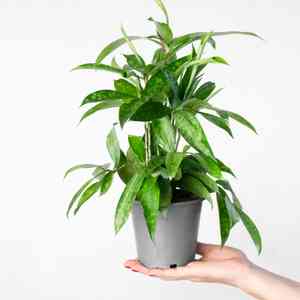
Gold dust dracaena(Dracaena surculosa)

Gold dust dracaena (Dracaena surculosa)

Also known as: Japanese bamboo

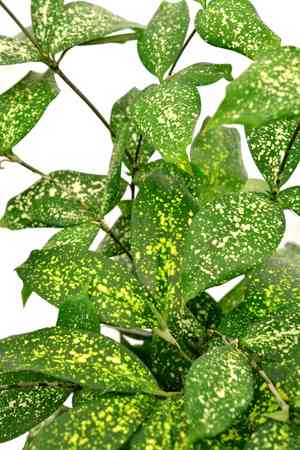
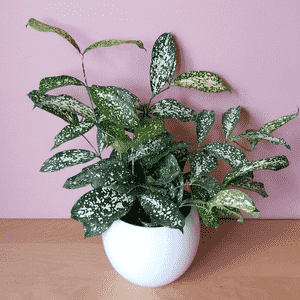
The gold dust dracaena is prized for its striking, variegated leaves, often found in homes, offices, and stores due to its appealing appearance. Its common name, "Gold-dust," is inspired by the yellow speckles on its leaves, which eventually turn white as they age. The scientific name, Dracaena surculosa, intriguingly translates to "shooting dragon" in Latin.

Attributes of Gold dust dracaena

Lifespan
Perennial
Plant Type
Shrub
Plant Height
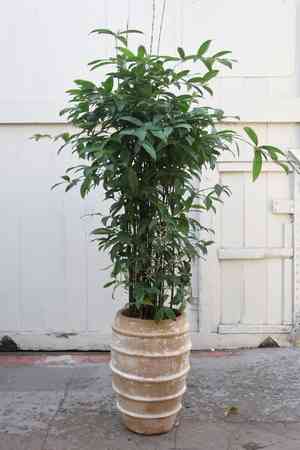
61 cm to 91 cm
Spread
90 cm to 1.2 m
Leaf Color
Green White
Flower Size
2.5 cm
Flower Color
White Green

ForwardPlant - Identify plants with a snap

Identify and diagnose plants, get toxicity alerts, and explore safety guides for all types of fungi.

Try for Free

Images of Gold dust dracaena

Gold dust dracaena(Dracaena surculosa)

Quickly Identify Gold dust dracaena

1
Variegated leaves with green and yellow swirls, up to 8 inches (20 cm) long.
2
Tubular greenish-white flowers in globular clusters with 6 backward-bending petals.
3
Vibrant orange-red berries, 1/2 inch (1.27 cm) diameter, rare indoors.
4
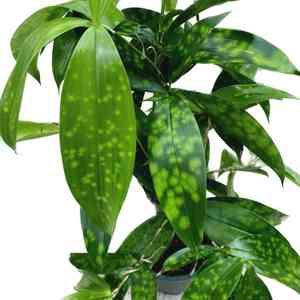
Glossy dark green leaves with creamy yellow spots, elliptical or ovate, 3-inch (7-12 cm).
5
Wiry brown stems, 0.1 to 0.2 inches (2.5 to 5 mm) diameter, irregular branching pattern.

Scientific Classification of Gold dust dracaena

Phylum
Vascular plants
Class
Monocotyledons
Order
Asparagales
Family
Asparagus
Genus
Dracaena
Species
Gold dust dracaena

Planting and Growing of Gold dust dracaena

Care Difficulty
Easy
Watering Schedule
Every 2 days
Sunlight Requirements
Partial sun
Sunshine Duration
6-12 hours
Ideal Temperature
65-80℉
Soil Type
Potting Mix
Soil pH
6.5-7.5
Fertilizer Type
Balanced
Pruning Season
Spring, Summer
Pruning Area
Branches, Leaves
Pruning Frequency
Once a year
Repotting Season
Spring
Pot Type
Plastic, Ceramic

water icon How to Water Gold dust dracaena?

Dracaena surculosa requires moderate watering. Water the plant until you see a little drainage from the bottom of the pot, ensuring soil is consistently moist but never waterlogged. Excess water should be drained to prevent root rot.
What are the symptoms of an underwatered Gold dust dracaena?
What should I do if my Gold dust dracaena is not getting enough water?
What are the symptoms of an overwatered Gold dust dracaena?
How to save an overwatered Gold dust dracaena?
More About Watering Techniques

sunlight icon What Are the Sunlight Requirements for Gold dust dracaena?

Sunlight Requirements: Partial sun, Full shade
Duration of light: Up to 4-6 hours
Dracaena surculosa thrives best with partial sun to full shade exposure. These conditions ensure that it has enough light for photosynthesis without the risk of overheating or leaf burn, leading to robust growth and vitality.
How much light does Dracaena surculosa need?
How to achieve ideal lighting for Dracaena surculosa?
Why is ideal lighting important for Dracaena surculosa?
More About Sunlight Requirements Techniques

temperature icon What Is the Ideal Temperature Range for Gold dust dracaena?

Ideal Temperature: 65 ~ 80℉
The ideal temperature range for Dracaena surculosa is between 65°F and 80°F. Within this range, the plant will thrive, exhibiting healthy growth and vibrant foliage. These temperatures mimic the plant's natural tropical environment, providing the warmth and humidity needed for optimal health.

soil icon What Soil is Best for Gold dust dracaena?

Soil type: Loam, Sandy loam
Soil PH: 6.5 ~ 7.5
Dracaena surculosa thrives best in well-drained soil. This ensures that the roots do not sit in water, preventing root rot and promoting healthy growth. It is important for the plant's aeration and overall vitality. This plant appreciates soil that is rich in organic matter. A nutrient-rich medium encourages robust growth and vibrant foliage by providing essential nutrients continuously. Preferably, the soil should have a slightly acidic to neutral pH, like 6.5-7.0. This range is optimal for nutrient absorption, ensuring the plant maintains its health and vigor. More About Soil

fertilize icon How to Fertilize Gold dust dracaena?

Fertilizer type: Balanced
Dracaena surculosa thrives on regular but moderate fertilization. For liquid fertilizers, mix at half the recommended rate on the product label to avoid nutrient burn. When using slow-release fertilizer granules, apply sparingly around the base, covering about a tablespoon per application, for even nutrient distribution. More About Fertilizing Techniques

prune icon How to Prune Gold dust dracaena?

Pruning Time: Spring, Summer
Begin by inspecting your Dracaena surculosa for any dead or yellowing leaves. Use clean, sharp pruning shears to cut back these leaves at their base. Focus on the stems and trim back any overly long or awkward branches to maintain a neat shape. Finally, look for any signs of disease like discoloration or spots, and remove those parts to prevent spreading. To shape your Dracaena surculosa, selectively prune branches to encourage a fuller appearance. Trim back the longest stems just above a node, which is where leaves attach to the stem. This encourages new growth that is denser and more compact. Be mindful to keep the plant balanced on all sides for an attractive symmetrical form. When pruning, remember that cutting just above a node can stimulate new branches to form. This is particularly useful if your plant is looking a bit sparse. The node is a crucial point for future growth, so pruning at these areas will ensure that new shoots develop, creating a lush, bushy plant over time. More About Pruning Techniques

propagate icon How to Propagate Gold dust dracaena plant?

Propagate Time: Spring, Early summer
1
Choose a healthy, mature stem from the Dracaena surculosa that is about 4-6 inches long. Ensure the selected stem is free of any pests or diseases, as this will improve the success of propagation.
2
Use sterilized pruning shears to cut just below a node. Remove the lower leaves to expose at least an inch of the stem to encourage rooting and minimize rot risks in the soil.
3
Dip the cut end into rooting hormone, then plant it into a pot filled with a well-draining soil mix. Water lightly and cover with a clear plastic bag to create a humid environment, which aids rooting.
More About Propagating Techniques

repot icon How to Repot Gold dust dracaena plant?

Repotting frequency: Every 2-3 years
1
Dracaena surculosa needs repotting when roots outgrow the pot or growth slows down. This usually occurs every 2-3 years. Spring is ideal as it's the growth phase, allowing the plant to establish in new soil.
2
Select a pot with proper drainage holes, slightly larger than the current one. Ensure it's stable enough to support the plant's height. Ample drainage prevents root rot and accommodates the plant’s growth over the years.
3
Choose a well-draining potting mix rich in organic matter. A mixture of peat, perlite, and loam helps retain necessary moisture but drains well, providing essential nutrients and promoting healthy root development.
More About Repotting Techniques

ForwardPlant - Identify plants with a snap

Find the best spots for them to optimize their health, simply using your phone.

Try for Free

Toxicity of Gold dust dracaena

Is Gold dust dracaena toxic to humans?

The gold dust dracaena exhibits a low degree of toxicity in humans, primarily when consumed. The entire plant contains saponins, which are responsible for its toxic characteristics. If ingested, gold dust dracaena may result in a variety of symptoms, including nausea, vomiting, and diarrhea. These symptoms reflect the body's reaction to the saponins found throughout the plant. It is crucial for individuals, particularly those with children or pets, to recognize the potential dangers linked to accidental consumption of any part of the gold dust dracaena.

Is Gold dust dracaena toxic to cat?

The gold dust dracaena is a widely cultivated houseplant that poses mild to moderate toxicity to cats upon ingestion. Every part of this plant harbors saponins, which can lead to symptoms such as excessive drooling, vomiting, lethargy, and dilated pupils in felines.

Is Gold dust dracaena toxic to dog?

Gold dust dracaenas possess a mild to moderate level of toxicity for dogs, which varies based on the specific part of the plant ingested and the quantity consumed. Every part of the plant contains harmful saponins; however, the berries and flowers contain the highest levels, potentially resulting in more significant adverse reactions. Typical symptoms associated with gold dust dracaena poisoning include diarrhea, vomiting, dilated pupils, excessive drooling, and overall weakness. In severe instances, veterinary assistance may be necessary.

Identify toxic plants for your safety

Learn which plants are harmful to you and your pets, and make informed choices for a safer home!

Try for Free
WARNING
The judgment on toxicity and danger is for reference only. We DO NOT GUARANTEE any accuracy of such judgment. Therefore, you SHALL NOT rely on such judgment. It is IMPORTANT TO SEEK PROFESSIONAL ADVICE in advance when necessary.
More About Toxic Techniques