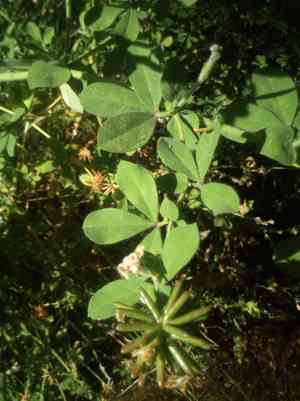
Erect canary clover (Dorycnium rectum)
Also known as: Straight dorycnium
Erect canary clover is a compact Mediterranean herb from the pea family. This resilient small shrub, typically under 1 meter in height, features charming light pink flowers that bloom in spring. These blossoms are particularly appealing to butterflies and other pollinators.
In This Article
Attributes of Erect canary clover
Lifespan
Perennial
Plant Type
Herb
Plant Height
50 cm to 2 m
Spread
30 cm to 50 cm
Leaf Color
Green
Flower Size
0.5-1 cm
Flower Color
White Red Brown
Quickly Identify Erect canary clover
1
Dorycnium rectum can be identified by its woody-based stems, spreading habit, and trifoliate leaves with a silky texture. The plant produces clusters of small, white to cream flowers during the bloom period.
Scientific Classification of Erect canary clover
Phylum
Vascular plants
Class
Dicotyledons
Order
Fabales
Family
Legume
Genus
Dorycnium
Species
Erect canary clover
Planting and Growing of Erect canary clover
Care Difficulty
Easy
Watering Schedule
Every day
Sunlight Requirements
Full sun
Sunshine Duration
4-6 hours
Ideal Temperature
60-75℉
Soil Type
Potting Mix, Peat Mix
Soil pH
6.5-7.5
Fertilizer Type
Balanced
Pruning Season
Spring, Summer
Pruning Area
Branches, Leaves
Pruning Frequency
2 times a year
Repotting Season
Spring
Pot Type
Plastic, Ceramic
 How to Water Erect canary clover?
Dorycnium rectum thrives on a careful balance of soil moisture. Aim to water about 500 ml during each session, ensuring the soil is adequately moistened without being waterlogged. Water should permeate the soil evenly but not excessively.
What are the symptoms of an underwatered Erect canary clover?
›
What should I do if my Erect canary clover is not getting enough water?
›
What are the symptoms of an overwatered Erect canary clover?
›
How to save an overwatered Erect canary clover?
›
 What Are the Sunlight Requirements for Erect canary clover?
Dorycnium rectum prefers full sun to partial sun conditions, benefiting from consistent periods of brightness throughout the day. Optimal light availability encourages healthier growth and more abundant flowering.
How much sunlight does Dorycnium rectum need?
›
What are the best locations for planting?
›
Why is adequate sunlight important for Dorycnium rectum?
›
 What Is the Ideal Temperature Range for Erect canary clover?
For Dorycnium rectum, the optimal temperature range for growth is between 60 and 75°F. This temperature range ensures the plant can perform essential physiological processes efficiently. Moderate temperatures allow for balanced transpiration and photosynthesis, which are critical for healthy growth.
 What Soil is Best for Erect canary clover?
Dorycnium rectum thrives well in well-drained soils. Proper drainage ensures the roots do not become waterlogged, thus preventing root rot and other moisture-related issues, promoting healthier growth. This plant prefers soils that are moderately rich in nutrients. An adequately nutrient-balanced soil allows for sustained growth and vibrant blooming, making sure the plant has access to essential elements for optimal health. A loamy texture that offers a balance between silt, clay, and sand ensures that the soil holds the right amount of moisture while still providing necessary aeration, benefiting root development significantly.
 How to Fertilize Erect canary clover?
Dorycnium rectum will benefit from a well-balanced fertilizer to maintain optimal health. An application of liquid fertilizer should be diluted to half the recommended strength, while solid, slow-release fertilizers can be used at full strength as directed on the packaging. Consistency in application ensures the plant receives adequate nutrients without stress.
 How to Prune Erect canary clover?
Start by observing the plant to identify any dead or damaged branches, as well as any unruly growth that might affect the plant's shape. This assessment helps you decide which areas need attention. Carefully cut back any dead, diseased, or crossing branches. Make sure to prune back to a healthy bud or branch to encourage new, vigorous growth that maintains the plant’s intended form. Trim the plant to maintain its desired shape, which is usually a compact, rounded form. This step often involves cutting back long shoots to ensure a dense growth habit.
More About Pruning Techniques→
 How to Propagate Erect canary clover plant?
1
Before sowing Dorycnium rectum seeds, soak them in warm water for 24 hours. This helps to soften the seed coat, allowing quicker germination once sown.
2
Select a healthy stem from the plant, and using sharp pruners, cut a section of about 10-15 cm just below a node. Remove leaves from the lower part to prevent rotting when placed in the soil.
3
For division, choose a mature plant and carefully dig up the roots. Using a spade or sharp knife, divide the root ball into smaller sections, ensuring each has a good amount of root and stem.
 How to Repot Erect canary clover plant?
1
Repot Dorycnium rectum when you notice roots emerging from drainage holes or the plant outgrowing its current pot. The best signal is slowed growth despite optimal conditions, indicating the roots need more space. This usually occurs every 2 to 3 years.
2
Select a pot that's one size larger than the current one and with drainage holes. The new pot should allow for root growth, preventing root circling and promoting adequate drainage, which is essential for Dorycnium rectum's health.
3
Opt for a well-draining sandy loam, which allows excess water to escape and prevents root rot. This type of soil mimics the plant's natural habitat and supports healthy growth by ensuring the roots don't stay soggy.
Toxicity
Ingestion
WARNING
The judgment on toxicity and danger is for reference only. We DO NOT GUARANTEE any accuracy of such judgment. Therefore, you SHALL NOT rely on such judgment. It is IMPORTANT TO SEEK PROFESSIONAL ADVICE in advance when necessary.
Learn More About Erect canary clover Diseases
Anthracnose
Bacterial Leaf Spot
Bacterial Wilt
Crown Gall
Cyst Nematode
Damping-off
Downy Mildew
Drought Stress
Fusarium Wilt
Gray Mold
Leaf Spot
Mosaic
Nutrient Deficiency
Nutrient Toxicity
Powdery Mildew
Root Rot
Root-knot Nematode
Rusts
Sooty Mold
Spider Mites
Temperature Stress
Thrips Damage
White Mold



