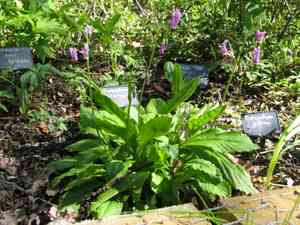
Tundra shootingstar (Dodecatheon austrofrigidum)
Also known as: Southern Frigid Shooting-Star
A plant with a rosette of oblong leaves at its base and downward-facing flowers with reflexed petals is likely the **tundra shootingstar**. This plant is notable for its eye-catching floral arrangement, where each stem holds a cluster of flowers that face downward, showcasing a prominent central stamen cluster. It is typically found in colder, alpine regions, where its vibrant blooms stand out against the rugged terrain, indicating a specialized adaptation to attract the scarce pollinators in such environments.
In This Article
Attributes of Tundra shootingstar
Lifespan
Perennial
Plant Type
Herb
Plant Height
6-18 inches
Spread
Not typically measured due to its growth habit
Leaf Color
Green
Flower Size
0.5-1 inch
Flower Color
Pink to magenta
Images of Tundra shootingstar
Quickly Identify Tundra shootingstar
1
Identifying this plant involves looking for its nodding, star-like flowers which are usually pink to magenta, with petals that are reflexed backwards. The leaves form a basal rosette and are lanceolate to spoon-shaped.
Scientific Classification of Tundra shootingstar
Phylum
Vascular plants
Class
Dicotyledons
Order
Ericales
Family
Primrose
Genus
Shooting star
Species
Tundra shootingstar
Planting and Growing of Tundra shootingstar
Care Difficulty
Moderate
Watering Schedule
Every 2 days
Sunlight Requirements
Partial sun
Sunshine Duration
4-8 hours
Ideal Temperature
50-65℉
Soil Type
Potting Mix, Peat Mix
Soil pH
6.5-7.5
Fertilizer Type
Balanced
Pruning Season
Spring, Summer
Pruning Area
Branches, Leaves
Pruning Frequency
Once a year
Repotting Season
Spring
Pot Type
Plastic, Ceramic
 How to Water Tundra shootingstar?
The ideal watering amount for Dodecatheon austrofrigidum is approximately 200 milliliters each time. This plant prefers the soil to be evenly moist but not drenched. Water until the first few centimeters of soil are moist and excess water begins to drain from the bottom of the pot, ensuring thorough hydration without overwatering.
What are the symptoms of an underwatered Tundra shootingstar?
›
What should I do if my Tundra shootingstar is not getting enough water?
›
What are the symptoms of an overwatered Tundra shootingstar?
›
How to save an overwatered Tundra shootingstar?
›
 What Are the Sunlight Requirements for Tundra shootingstar?
Partial sun exposure is ideal, balancing between full sun and shade. This exposure ensures healthy foliage and flowering, accommodating the plant's natural requirements.
How much light does it need?
›
What solutions help achieve ideal lighting?
›
What are the benefits of receiving ideal light?
›
 What Is the Ideal Temperature Range for Tundra shootingstar?
Dodecatheon austrofrigidum thrives best in a temperature range of 50 to 65 degrees Fahrenheit. These conditions mirror the cool and moderate climates it is typically native to, promoting optimal root and foliage development.
 What Soil is Best for Tundra shootingstar?
Dodecatheon austrofrigidum thrives best in well-drained soil that prevents waterlogging, which can cause root rot. The drainage allows for oxygenation of the roots, promoting healthy plant growth. While it needs well-drained soil, this plant also benefits from soils that retain slight moisture to mimic its natural habitat. This balance prevents the plant from drying out during hot weather. A nutrient-rich soil, preferably loamy with organic matter, supports its growth. This provides essential nutrients like nitrogen and phosphorus that enhance blooming and foliage quality.
 How to Fertilize Tundra shootingstar?
For Dodecatheon austrofrigidum, moderation is key. Use a diluted liquid fertilizer at half the strength recommended for most houseplants. Apply about 10 ml of diluted liquid fertilizer per plant. Over-application can lead to root burn.
 How to Prune Tundra shootingstar?
Start by clearing away any debris and dead leaves at the base of the plant. This will help you better see the health of the stems and remove any obstacles that could hinder your pruning work. Carefully trim back stems to the desired height, cutting just above a leaf node to encourage bushier growth. Avoid cutting too close to a node, as this might damage future buds. A thoughtful trim helps shape the plant into a tidy, manageable size. Once pruning is complete, gently pat down the soil around the plant and water deeply. This helps settle disturbed roots and encourages recovery from the pruning stress. Check for any remaining debris to prevent pests and disease from taking hold.
More About Pruning Techniques→
 How to Propagate Tundra shootingstar plant?
1
Gather seeds from mature plants in late spring. Ensure that the seeds are fully mature by checking for a dry and firm texture. Clean and store seeds in a cool, dry place until you're ready to sow them.
2
Use a well-draining seed-starting mix for sowing. Moisten the soil thoroughly before planting to ensure even distribution of water, which aids in better seed germination.
3
In early spring, carefully dig up mature plants and separate them into smaller sections. Each section should have ample roots to support new growth. Replant immediately to new locations.
 How to Repot Tundra shootingstar plant?
1
Dodecatheon austrofrigidum shows signs of needing repotting when its roots begin to emerge from the drainage holes or when it appears root-bound on the surface. The best time to reposition this plant is during Spring or Summer when active growth resumes, ensuring minimal disturbance to its growth cycle.
2
Selecting the right pot for Dodecatheon austrofrigidum is crucial. Aim for a pot slightly larger than the current one, with ample drainage holes at the bottom. Using a pot that's too large can retain excess moisture, leading to root rot, whereas a well-draining one ensures a healthy rhizosphere, promoting optimal growth.
3
Opt for a well-draining potting mix to ensure the roots have adequate aeration. This kind of soil minimizes the risk of waterlogging, which can suffocate roots and cause diseases, while ensuring Dodecatheon austrofrigidum receives just the right amount of moisture for vigorous growth.
Learn More About Tundra shootingstar Diseases
Anthracnose
Bacterial Leaf Spot
Bacterial Soft Rot
Bacterial Wilt
Chemical Injury
Crown Gall
Cyst Nematode
Damping-off
Downy Mildew
Drought Stress
Fusarium Wilt
Gray Mold
Leaf Curl
Leaf Spot
Mosaic
Nutrient Deficiency
Nutrient Toxicity
Powdery Mildew
Root Rot
Root-knot Nematode
Rusts
Sooty Mold
Spider Mites
Temperature Stress
Thrips Damage
White Mold



