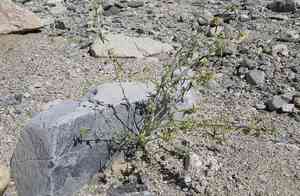
Narrowleaf silverbush (Ditaxis lanceolata)
Also known as: Desert Holly, Sowthistle Spurge
The narrowleaf silverbush is a resilient perennial herb characterized by its slender, branching stems and elongated, lance-shaped leaves. Its ability to thrive in full sun and tolerate drought conditions allows it to flourish in arid, desert-like environments. This plant's small, star-shaped white flowers and green foliage are well-adapted to harsh climates, making it a durable component of its native habitat.
In This Article
Attributes of Narrowleaf silverbush
Lifespan
Perennial
Plant Type
Herb
Plant Height
10 cm to 49 cm
Spread
The crown diameter typically ranges from 1 to 2 feet (30 to 60 cm).
Leaf Color
Silvery-gray
Flower Size
8 mm
Flower Color
White
Images of Narrowleaf silverbush
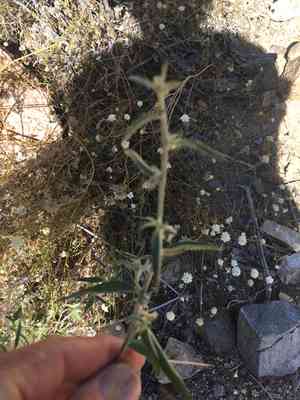
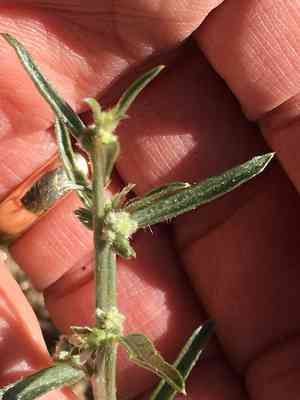
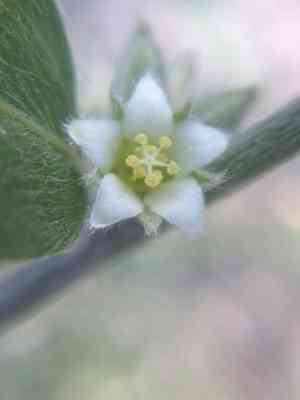
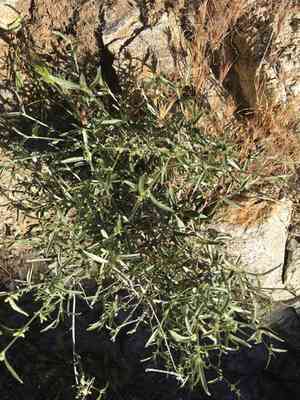
Quickly Identify Narrowleaf silverbush
1
Identify Ditaxis lanceolata by its lance-shaped leaves with silvery-gray coloration and small yellow-green flowers. The leaves are usually covered with fine hairs that give a frosted appearance.
Scientific Classification of Narrowleaf silverbush
Phylum
Vascular plants
Class
Dicotyledons
Order
Malpighiales
Family
Spurge
Genus
Ditaxis
Species
Narrowleaf silverbush
Planting and Growing of Narrowleaf silverbush
Care Difficulty
Easy
Watering Schedule
Every 2 days
Sunlight Requirements
Full sun
Sunshine Duration
4-6 hours
Ideal Temperature
65-75℉
Soil Type
Potting Mix, Peat Mix
Soil pH
6.5-7.5
Fertilizer Type
Balanced
Pruning Season
Spring, Summer
Pruning Area
Branches, Leaves
Pruning Frequency
2 times a year
Repotting Season
Spring
Pot Type
Ceramic, Plastic
 How to Water Narrowleaf silverbush?
When watering Ditaxis lanceolata, ensure that the soil is moist but not waterlogged. This typically translates to about 250 ml of water per session. Make sure the water penetrates the soil thoroughly, reaching the roots without leaving standing water on the surface.
What are the symptoms of an underwatered Narrowleaf silverbush?
›
What should I do if my Narrowleaf silverbush is not getting enough water?
›
What are the symptoms of an overwatered Narrowleaf silverbush?
›
How to save an overwatered Narrowleaf silverbush?
›
 What Are the Sunlight Requirements for Narrowleaf silverbush?
Ditaxis lanceolata thrives best in full to partial sun, typically needing 6 to 8 hours of sunlight daily. This ensures robust foliage and development, utilizing sunlight for energy essential in growth and repair processes.
What is the best location for planting Ditaxis lanceolata?
›
How can I ensure Ditaxis lanceolata gets enough light indoors?
›
What are the benefits of providing ideal light to Ditaxis lanceolata?
›
 What Is the Ideal Temperature Range for Narrowleaf silverbush?
To cultivate Ditaxis lanceolata successfully, maintaining a temperature range between 65°F and 75°F is essential. This range supports steady plant development and ensures metabolic processes run efficiently. The temperatures within this range offer a favorable environment for photosynthesis, nutrient absorption, and overall plant vigor.
 What Soil is Best for Narrowleaf silverbush?
Ditaxis lanceolata thrives in nutrient-rich soil, which supports vigorous growth and robust foliage. A well-fertilized medium supplies essential nutrients, contributing to vibrant plant health and resilience against environmental stressors. This plant prefers well-draining soil to prevent root rot. Efficient drainage ensures excess water percolates away quickly, safeguarding the root system and allowing adequate air exchange, essential for healthy plant development. Ditaxis lanceolata does well in soils that can retain some moisture without becoming waterlogged. This balance helps sustain consistent hydration, crucial for nutrient uptake and maintaining plant vigor in varying weather conditions.
 How to Fertilize Narrowleaf silverbush?
For Ditaxis lanceolata, a moderate amount of fertilizer is recommended to avoid over or underfeeding. Typically, a balanced liquid fertilizer at half strength per application is ideal. Always follow the manufacturer's directions on the package for precise measurements.
 How to Prune Narrowleaf silverbush?
Begin by removing any dead or damaged leaves and branches. Look for discolored or wilted leaves, as well as branches that feel brittle or appear darker than healthy ones. Trim back branches that stick out awkwardly to create a more uniform and aesthetically pleasing shape. This not only keeps the plant looking neat but also encourages balanced growth. When pruning, make your cuts just above a node or leaf pair. This encourages the plant to send out new shoots, leading to a denser growth habit. Ensure your cuts are clean and at a slight angle to promote quick healing.
More About Pruning Techniques→
 How to Propagate Narrowleaf silverbush plant?
1
For seeds, soak them overnight to enhance germination rates. For cuttings, cut a healthy stem section 4-6 inches long, and remove the lower leaves to prepare it for planting.
2
For seeds, plant them in a lightweight potting medium, maintaining consistent moisture. For cuttings, dip the cut end in rooting hormone before planting in a well-draining mix.
3
Ensure adequate warmth and light. For seeds, a covered mini-greenhouse effect may speed germination. For cuttings, maintain humidity by covering with a plastic bag or propagator lid.
 How to Repot Narrowleaf silverbush plant?
1
Ditaxis lanceolata shows signs of needing repotting when its roots start emerging from the pot's drainage holes. Additionally, if plant growth appears stunted and water drainage is poor, these are signals to repot. Spring is ideal as increased light and warmth encourage recovery.
2
Select a pot that is one size larger than the current one, with ample drainage holes. This aids root development by preventing waterlogging, ensuring healthy growth. Terra cotta pots are particularly beneficial as they are breathable and help regulate soil moisture levels.
3
A well-draining cactus mix is ideal for Ditaxis lanceolata. This type of soil maintains adequate aeration and prevents root rot by swiftly removing excess water. Augment the mix with perlite or coarse sand for improved drainage and soil structure.



