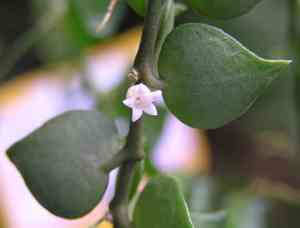
Million hearts (Dischidia ruscifolia)
Also known as: Million Hearts, Heart Leaf, Button Orchid
Million Hearts (Dischidia ruscifolia) captivates horticulturalists globally due to its charming, heart-shaped foliage that provides a lush, cascading look. Its appeal is further enhanced by its ease of care, requiring only moderate light and occasional watering. The plant's rapid growth offers quick visual rewards, making it an attractive choice for both beginners and experienced gardeners. Additionally, it’s worth noting that while it adds aesthetic value, caution is advised as it can be toxic if ingested.
In This Article
Attributes of Million hearts
Lifespan
Perennial
Plant Type
Herb
Plant Height
15 cm
Spread
1.2 m to 1.8 m
Leaf Color
Green
Flower Size
Approximately 0.5 cm (0.2 inches)
Flower Color
White Blue
Quickly Identify Million hearts
1
Dischidia ruscifolia can be identified by its small, thick, heart-shaped leaves that grow opposite each other on long, slender, trailing stems. The leaves are succulent and slightly glossy, and the plant may produce small, tubular white or light-pink flowers.
Scientific Classification of Million hearts
Phylum
Vascular plants
Class
Dicotyledons
Order
Gentians, dogbanes, madders, and allies
Family
Dogbane
Genus
Dischidia
Species
Million hearts
Planting and Growing of Million hearts
Care Difficulty
Easy
Watering Schedule
Every 2 days
Sunlight Requirements
Partial sun
Sunshine Duration
4-8 hours
Ideal Temperature
65-80℉
Soil Type
Potting Mix, Peat Mix
Soil pH
6.5-7.5
Fertilizer Type
Balanced
Pruning Season
Spring, Summer
Pruning Area
Branches, Leaves
Pruning Frequency
2 times a year
Repotting Season
Spring
Pot Type
Plastic, Ceramic
 How to Water Million hearts?
For Dischidia ruscifolia, it's essential to water till the soil feels slightly moist, ensuring proper humidity without making it soggy. The goal is to mimic its native environment by allowing the soil to dry briefly between watering sessions, promoting healthy growth.
What are the symptoms of an underwatered Million hearts?
›
What should I do if my Million hearts is not getting enough water?
›
What are the symptoms of an overwatered Million hearts?
›
How to save an overwatered Million hearts?
›
 What Are the Sunlight Requirements for Million hearts?
The plant thrives under partial sun conditions, ideally receiving 4-6 hours of indirect or filtered light. This range preserves leaf color and structure while maintaining energy efficiency through consistent photosynthesis.
More About Sunlight Requirements Techniques→
What is the best lighting for Dischidia ruscifolia?
›
How can I achieve the ideal light conditions?
›
What are the benefits of optimal light conditions?
›
 What Is the Ideal Temperature Range for Million hearts?
Dischidia ruscifolia thrives best in a temperature range between 65°F to 80°F. This ideal range ensures optimal growth and health by maintaining the metabolic processes of the plant at an efficient level. Within this range, the plant's leaves and stems develop strong and healthy, and the risk of disease or stress is minimized.
 What Soil is Best for Million hearts?
Dischidia ruscifolia thrives in well-draining soil. This requirement ensures that the roots do not sit in waterlogged conditions, which can lead to root rot and other related issues. Good drainage is essential to keep the plant healthy and allows it to absorb nutrients efficiently. While the soil should drain well, it should also retain some moisture to provide a consistent supply to the plant roots. This balance helps the plant grow lush and green, mimicking its natural habitat where humidity levels are typically moderate. The soil should be rich in organic matter to provide the necessary nutrients for growth. Loamy soil typically fulfills this requirement by offering a mix of sand, silt, and clay, along with organic materials, thus providing ample nourishment for the plant.
 How to Fertilize Million hearts?
For Dischidia ruscifolia, it is best to use a diluted liquid fertilizer. A balanced 20-20-20 fertilizer can be used at a concentration of 1/4 strength. Be cautious not to apply too much, as over-fertilization can harm the plant.
 How to Prune Million hearts?
Look for any parts of the Dischidia ruscifolia that have grown excessively or become sparse. These are the sections you will want to focus on during pruning to ensure the plant maintains a balanced appearance. When pruning, always make cuts just above a node, where leaves and branches intersect. This encourages new growth directly beneath your cut, leading to a fuller and more vigorous vine. Focus on removing any dead, yellowing, or diseased parts of the plant. This not only helps to keep the plant aesthetically pleasing but also prevents the spread of disease or pest issues. Dischidia ruscifolia can be shaped through careful trimming. Decide on the desired silhouette before you start pruning, and cut back only those parts that detract from the desired form.
More About Pruning Techniques→
 How to Propagate Million hearts plant?
1
Choose healthy vines that are about 10-12cm long, with at least two leaves. Ensure that the cuttings are taken from a robust mother plant to increase the chances of successful propagation.
2
Remove lower leaves to prevent foliage from rotting in the soil. Dip the base of the cuttings into rooting hormone to promote root development.
3
Insert the cuttings into a well-draining potting mix. Keep the soil moist but not waterlogged, and place the pot in a warm, bright location with indirect sunlight.
 How to Repot Million hearts plant?
1
You should consider repotting your Dischidia ruscifolia when you notice roots poking out of the pot's drainage holes or if the plant appears to have outgrown its current container. These signs generally indicate that the plant needs more space to grow. Another clear signal is when the soil seems compacted or waterlogged. Repotting during the active growing seasons, spring or summer, provides the plant with the best conditions to adapt.
2
Opt for a pot that is slightly larger than the current one—about 1 to 2 inches in diameter larger is ideal. It should have good drainage to prevent water from accumulating, which could lead to root rot. The right pot ensures that water is properly dispensed and air circulates around the roots, providing optimal growth conditions. Terracotta pots are often a good choice as they allow for excess moisture to evaporate through their porous walls.
3
Select a well-draining soil mix for your Dischidia ruscifolia. A combination of orchid bark, perlite, and standard potting soil works well. This mixture simulates the plant's natural habitat, providing aeration and preventing excess moisture from lingering at the root level, which can cause root rot. The addition of perlite aids in maintaining an airy composition, crucial for healthy growth.
Learn More About Million hearts Diseases
Anthracnose
Bacterial Leaf Spot
Bacterial Soft Rot
Chemical Injury
Damping-off
Downy Mildew
Drought Stress
Fusarium Wilt
Gray Mold
Leaf Curl
Leaf Spot
Mosaic
Nutrient Deficiency
Nutrient Toxicity
Powdery Mildew
Root Rot
Root-knot Nematode
Sooty Mold
Spider Mites
Temperature Stress
Thrips Damage
White Mold



