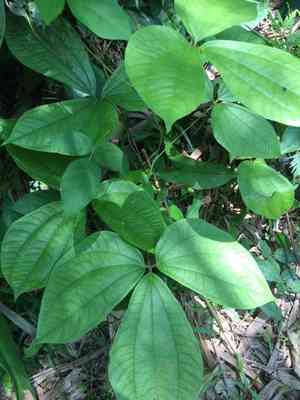
Intoxicating yam (Dioscorea hispida)
Also known as: Intoxicating Yam, Bitter Yam, Gadung
The intoxicating yam, known as Dioscorea hispida, is characterized by its sizable tuberous roots and heart-shaped leaves that are slightly hairy. This vine flourishes in tropical regions, often climbing trees to access sunlight. While it produces small, unremarkable flowers, its primary value lies in its starchy tubers. These tubers need meticulous preparation, such as soaking, cooking, or fermentation, to eliminate their natural toxins and make them safe for consumption.
In This Article
Attributes of Intoxicating yam
Lifespan
Perennial
Plant Type
Vine, Herb
Plant Height
1-3 meters (stem length)
Spread
Not applicable
Leaf Color
Green
Flower Size
Small, not prominently visible
Flower Color
White to pale yellow
Images of Intoxicating yam
Quickly Identify Intoxicating yam
1
Dioscorea hispida can be identified by its broad, heart-shaped leaves, rough and prickly stems, and large underground tubers. Its yellowish or brownish tubers are covered in a layer of fibrous material.
Scientific Classification of Intoxicating yam
Phylum
Vascular plants
Class
Monocotyledons
Order
Dioscoreales
Family
Yam
Genus
Dioscorea
Species
Intoxicating yam
Planting and Growing of Intoxicating yam
Care Difficulty
Hard
Watering Schedule
Every 2 days
Sunlight Requirements
Partial sun
Sunshine Duration
6-8 hours
Ideal Temperature
77-86℉
Soil Type
Potting Mix, Peat Mix
Soil pH
5.5-7.5
Fertilizer Type
Balanced
Pruning Season
Spring, Summer
Pruning Area
Branches, Leaves
Pruning Frequency
2 times a year
Repotting Season
Spring
Pot Type
Plastic, Terracotta
 How to Water Intoxicating yam?
Dioscorea hispida appreciates a watering regime that imitates its natural environment. When you water, aim for about 200 ml per session. This ensures that the soil becomes adequately moist without becoming soggy. The soil should be allowed to dry out slightly between waterings, just enough to avoid any risk of root rot.
What are the symptoms of an underwatered Intoxicating yam?
›
What should I do if my Intoxicating yam is not getting enough water?
›
What are the symptoms of an overwatered Intoxicating yam?
›
How to save an overwatered Intoxicating yam?
›
 What Are the Sunlight Requirements for Intoxicating yam?
Dioscorea hispida thrives best in partial sun to full shade, where it can enjoy the benefits of filtered light, promoting healthy leaf coloration and robust overall growth without the risk of heat stress.
How to achieve ideal lighting?
›
What adjustments are needed seasonally?
›
How can indoor placement affect lighting?
›
 What Is the Ideal Temperature Range for Intoxicating yam?
Dioscorea hispida thrives best in a warm environment, with an ideal temperature range of 77°F to 86°F. This range ensures optimal growth and development, facilitating proper metabolic functions and photosynthesis rate. Growing in this temperature range also helps maintain the right humidity levels required for its physiological processes.
 What Soil is Best for Intoxicating yam?
Dioscorea hispida thrives in well-draining soils which prevent root rot by facilitating excess water drainage. Ensuring excellent permeability is vital for maintaining healthy tuber growth, as it allows for effective aeration and nutrient absorption. Enriching the soil with organic matter provides necessary nutrients and enhances soil fertility, crucial for Dioscorea hispida's vigorous growth. Organic matter also improves soil texture, retaining just enough moisture while encouraging a robust root system. While Dioscorea hispida requires moisture to support its growth, the soil should not be waterlogged. Maintaining moderate moisture levels ensures healthy tuber development without risking fungal diseases caused by excessive wet conditions.
 How to Fertilize Intoxicating yam?
Dioscorea hispida requires a balanced approach to fertilization. Use a balanced liquid fertilizer diluted to half strength, approximately 50% of the recommended amount per the package instructions. For slow-release fertilizers, apply about 50 grams per plant per application.
 How to Prune Intoxicating yam?
Start by removing any dead or damaged vines. Trim back to healthy wood, ensuring smooth cuts to promote quick healing. Prune conservatively to shape the plant, focusing on maintaining an open structure. This helps with air circulation and light penetration, both vital for plant health.
More About Pruning Techniques→
 How to Propagate Intoxicating yam plant?
1
Collect mature seeds from a healthy Dioscorea hispida plant. Clean them thoroughly to remove any pulp or debris that might attract pests or cause rot during germination.
2
Sow the cleaned seeds in seed trays filled with a sterile potting mix. Lightly cover the seeds with soil, ensuring they are not buried too deep. Keep the trays in a warm, well-lit area to encourage germination.
3
Water the seeds lightly but regularly, keeping the soil consistently moist but not waterlogged. Overwatering can lead to seed rot, while underwatering can hinder germination.
 How to Repot Intoxicating yam plant?
1
Dioscorea hispida should be repotted when you notice that its roots are visibly outgrowing the current pot or the plant itself has slowed in growth. These are signs that the nutrients in the soil have been exhausted or the plant requires more space to thrive. Ideally, repotting should be done during active growing periods to minimize stress.
2
Select a pot that is 1-2 sizes larger than the current one, ideally made of clay for breathability. Ensure it has sufficient drainage holes to prevent waterlogging, which can lead to root rot. A correctly sized and well-drained pot promotes healthy root growth and plant stability.
3
Opt for a loamy soil mix that offers excellent drainage yet retains enough moisture to support the plant's growth requirements. Amending with perlite or sand enhances drainage, which is crucial as Dioscorea hispida does not tolerate waterlogged conditions that can harm its root system.
Toxicity
Ingestion
WARNING
The judgment on toxicity and danger is for reference only. We DO NOT GUARANTEE any accuracy of such judgment. Therefore, you SHALL NOT rely on such judgment. It is IMPORTANT TO SEEK PROFESSIONAL ADVICE in advance when necessary.
Learn More About Intoxicating yam Diseases
Anthracnose
Bacterial Leaf Spot
Bacterial Soft Rot
Bacterial Wilt
Chemical Injury
Damping-off
Downy Mildew
Drought Stress
Fusarium Wilt
Gray Mold
Leaf Spot
Mosaic
Nutrient Deficiency
Nutrient Toxicity
Powdery Mildew
Root Rot
Root-knot Nematode
Rusts
Sooty Mold
Spider Mites
Temperature Stress
Thrips Damage
White Mold



