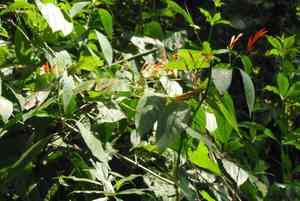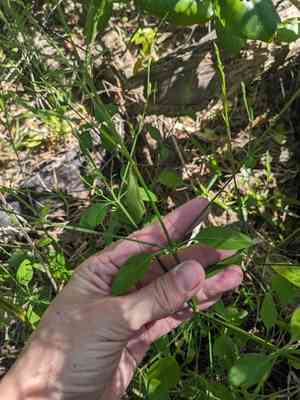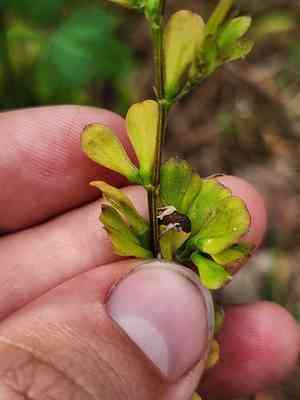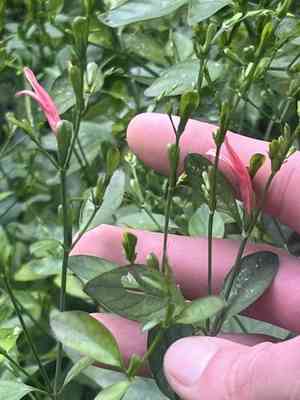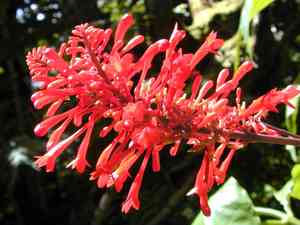
Sixangle foldwing(Dicliptera sexangularis)

Sixangle foldwing (Dicliptera sexangularis)

Also known as: No known aliases

The sixangle foldwing (Dicliptera sexangularis) is distinguished by its unique six-angled stems and smooth-edged, lanceolate to ovate leaves. The plant produces small, tubular flowers that are generally purple or pink, which bloom in clusters and attract pollinators.

**Key Characteristics**:
1. **Stems**: Six-angled, giving the plant its name.
2. **Leaves**: Opposite, lanceolate to ovate, with smooth margins.
3. **Flowers**: Tubular, usually purple or pink, clustered.

**Growing Conditions**:
1. **Light**: Prefers partial to full sunlight.
2. **Soil**: Grows best in well-drained, sandy or loamy soils.
3. **Water**: Moderate watering needs; drought-tolerant once established.
4. **Climate**: Ideal for warm, temperate areas, withstanding light frost but thriving in frost-free regions.

Often found in open woodlands and along roadsides, this plant showcases resilience and adaptability, making it suitable for various landscapes.

Attributes of Sixangle foldwing

Lifespan
Perennial
Plant Type
Herb
Plant Height
30-60 cm
Spread
Varies, generally small as it is a herb
Leaf Color
Green
Flower Size
1-2 cm
Flower Color
Typically pink or purple

ForwardPlant - Identify plants with a snap

Identify and diagnose plants, get toxicity alerts, and explore safety guides for all types of fungi.

Try for Free

Images of Sixangle foldwing

Sixangle foldwing(Dicliptera sexangularis)

Quickly Identify Sixangle foldwing

1
To identify Dicliptera sexangularis, look for its characteristic six-angled stems and its small, tubular flowers which are often brightly colored. The leaves are opposite and generally ovate.

Scientific Classification of Sixangle foldwing

Phylum
Vascular plants
Class
Dicotyledons
Order
Lamiales
Family
Acanthus
Genus
Dicliptera
Species
Sixangle foldwing

Planting and Growing of Sixangle foldwing

Care Difficulty
Moderate
Watering Schedule
Every 4 days
Sunlight Requirements
Partial sun
Sunshine Duration
4-6 hours
Ideal Temperature
65-75℉
Soil Type
Potting Mix, Peat Mix
Soil pH
6.5-7.5
Fertilizer Type
Balanced
Pruning Season
Spring, Summer
Pruning Area
Branches, Leaves
Pruning Frequency
2 times a year
Repotting Season
Spring
Pot Type
Plastic, Ceramic

water icon How to Water Sixangle foldwing?

For Dicliptera sexangularis, ensure each watering is thorough but not excessive, around 250 ml. The goal is to keep the soil moist but not soggy, as too much water can lead to root rot. Always check if the top inch of soil is dry before watering again.
What are the symptoms of an underwatered Sixangle foldwing?
What should I do if my Sixangle foldwing is not getting enough water?
What are the symptoms of an overwatered Sixangle foldwing?
How to save an overwatered Sixangle foldwing?

sunlight icon What Are the Sunlight Requirements for Sixangle foldwing?

Sunlight Requirements: Partial sun
Duration of light: 4 to 6 hours daily
Partial sun exposure allows Dicliptera sexangularis to thrive, balancing energy needs while preventing sun stress. Ideal lighting encourages vibrant leaf color and robust growth, contributing to a healthy, disease-resistant plant.
How to achieve optimal sunlight?
What are the specific actions to take?
What benefits does ideal lighting bring?

temperature icon What Is the Ideal Temperature Range for Sixangle foldwing?

Ideal Temperature: 65 ~ 75℉
For optimal growth, Dicliptera sexangularis thrives in conditions where the temperature ranges between 65°F and 75°F. This range provides the necessary warmth to support photosynthesis and overall metabolic activities within the plant. Maintaining this temperature range ensures that the plant can allocate resources effectively, promoting healthy leaf development and robust flowering. In environments where temperature drops below or exceeds these limits, the plant may experience stress, affecting its growth and vitality.

soil icon What Soil is Best for Sixangle foldwing?

Soil type: Loam, Sandy soil, Sandy loam
Soil PH: 6.5 ~ 7.5
Dicliptera sexangularis thrives best in well-drained soil as it helps prevent root rot, allowing the roots to get oxygen and nutrients efficiently. It ensures healthy growth and vibrant foliage. The plant prefers a soil with moderate fertility levels, ensuring enough nutrients to sustain growth while preventing excessive foliage at the expense of flowering. This balance promotes vibrant blooms and healthy stems. Keeping the soil consistently moist yet not waterlogged is crucial. This balance allows the plant to absorb enough water without causing stress from excess water, which can lead to fungal problems.

fertilize icon How to Fertilize Sixangle foldwing?

Fertilizer type: Balanced
The plant Dicliptera sexangularis generally benefits from a light but consistent application of fertilizer. A recommended dosage is to use a balanced liquid fertilizer diluted to half strength every time you water. For slow-release fertilizers, apply about 15 grams evenly around the base of the plant, ensuring it is not concentrated in one spot.

prune icon How to Prune Sixangle foldwing?

Pruning Time: Spring, Summer, Autumn
Begin by inspecting the entire plant to identify dead or diseased stems. Using sharp, sanitized pruning shears, remove these branches first, cutting just above a healthy node or branch. For general shaping, trim back the outer edges of the plant to maintain your desired size and form. Aim to cut back no more than one-third of the plant at any given time. Dicliptera sexangularis benefits from regular tip pruning. Pinch back the tips of new growth to promote bushier development. This practice encourages side branching, resulting in a fuller and more aesthetically pleasing appearance. Make sure to use clean fingers or sterilized scissors, and cut just above a leaf node. More About Pruning Techniques

propagate icon How to Propagate Sixangle foldwing plant?

Propagate Time: Spring,Early summer
1
To propagate from seed, start by selecting mature seeds. Sow them in a well-draining potting mix, and cover lightly with soil. Keep the soil consistently moist and place the container in a warm, bright location. Germination usually occurs within a few weeks.
2
Select healthy stems from the plant for cuttings. Use pruning shears to cut 4-6 inch sections just below a node. Remove the leaves from the bottom half of the cutting, and dip the end in rooting hormone before planting in a moist growing medium.
3
Division involves separating a mature plant into smaller parts. Carefully dig up the plant, ensuring minimal disturbance to the roots. Divide the root ball into sections, ensuring each has several healthy shoots and roots. Replant divisions in suitable containers or garden spaces.
More About Propagating Techniques

repot icon How to Repot Sixangle foldwing plant?

Repotting frequency: Every 2-3 years
1
Dicliptera sexangularis typically needs repotting when roots start emerging from drainage holes or when growth seems stunted. Ideally, repot during its active growing seasons, spring or summer, ensuring no disruption in its lifecycle. These periods allow the plant to adapt quickly to its new environment, minimizing shock.
2
Choose a pot that is one size larger than the current one to provide ample room for root expansion. Ensure it has adequate drainage holes to prevent waterlogging, which can lead to root rot. A slightly deeper pot aids in supporting mature plants and maintaining stability in windy conditions.
3
Select a well-draining soil mix, preferably enriched with organic matter like compost. This mix will retain necessary moisture while allowing excess water to escape, preventing root rot. The composition supports robust growth by nourishing the plant and promoting healthy root development.

ForwardPlant - Identify plants with a snap

Find the best spots for them to optimize their health, simply using your phone.

Try for Free