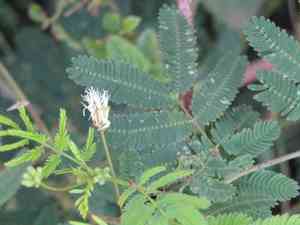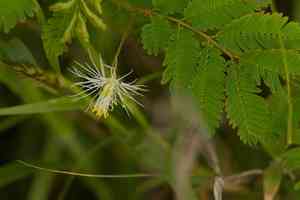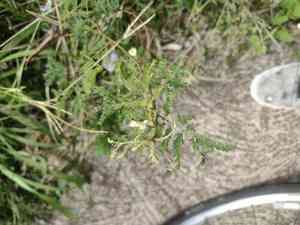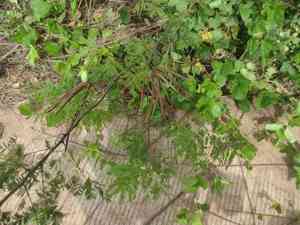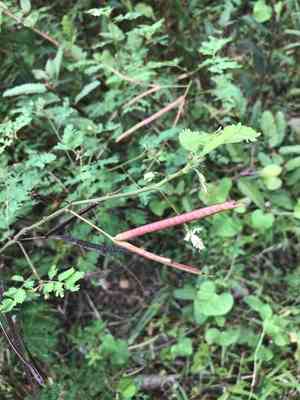
Pigeon bundleflower(Desmanthus pernambucanus)

Pigeon bundleflower (Desmanthus pernambucanus)

Also known as: Pernambuco Bundleflower, Catclaw Acacia

The pigeon bundleflower (Desmanthus virgatus) is a hardy shrub distinguished by its finely divided, feathery leaves and spherical clusters of white flowers. Key adaptations that enable its success in tropical climates include:

1. **Robust Root System:** Its extensive root network allows it to efficiently tap into deep water sources and nutrients, providing resilience during dry spells.
2. **Efficient Seed Dispersal:** The plant's seed pods open in a characteristic spiral, aiding in effective seed distribution across diverse soil types.
3. **Heat Resistance:** Adapted foliage helps the plant endure high tropical temperatures.
4. **Nitrogen Fixation:** As a leguminous plant, it partners with bacteria to fix atmospheric nitrogen, enriching the soil and promoting its own growth.

These features collectively support the pigeon bundleflower's ability to thrive in varied tropical environments.

Attributes of Pigeon bundleflower

Lifespan
Perennial
Plant Type
Shrub, Herb
Plant Height
1 to 3 meters
Spread
1 to 2 meters
Leaf Color
Green
Flower Size
0.5 to 1 cm
Flower Color
White

ForwardPlant - Identify plants with a snap

Identify and diagnose plants, get toxicity alerts, and explore safety guides for all types of fungi.

Try for Free

Images of Pigeon bundleflower

Pigeon bundleflower(Desmanthus pernambucanus)

Quickly Identify Pigeon bundleflower

1
This plant can be identified by its bipinnate leaves, small spherical clusters of whitish flowers, and elongated seed pods. The branches are often thorny, which is a distinctive feature.

Scientific Classification of Pigeon bundleflower

Phylum
Vascular plants
Class
Dicotyledons
Order
Fabales
Family
Legume
Genus
Bundleflowers
Species
Pigeon bundleflower

Planting and Growing of Pigeon bundleflower

Care Difficulty
Moderate
Watering Schedule
Every 3 days
Sunlight Requirements
Full sun
Sunshine Duration
4-8 hours
Ideal Temperature
68-86℉
Soil Type
Potting Mix, Peat Mix
Soil pH
6.5-7.5
Fertilizer Type
Balanced
Pruning Season
Spring, Summer
Pruning Area
Branches, Leaves
Pruning Frequency
2 times a year
Repotting Season
Spring
Pot Type
Plastic, Ceramic

water icon How to Water Pigeon bundleflower?

Desmanthus pernambucanus prefers a moderate watering approach. It is crucial to observe the soil's dryness; ensure the top 2-3 inches of soil are dry before watering again. Water with approximately 500 ml at a time, enough to moisten the soil without waterlogging it.
What are the symptoms of an underwatered Pigeon bundleflower?
What should I do if my Pigeon bundleflower is not getting enough water?
What are the symptoms of an overwatered Pigeon bundleflower?
How to save an overwatered Pigeon bundleflower?

sunlight icon What Are the Sunlight Requirements for Pigeon bundleflower?

Sunlight Requirements: Full sun, Partial sun
Duration of light: 6 to 8 hours
Desmanthus pernambucanus benefits from full to partial sunlight. This range assures optimal photosynthesis, leading to robust growth, vibrant foliage, and a higher flowering rate.
How much sunlight is needed?
What to do if not enough light?
Best position for growth?

temperature icon What Is the Ideal Temperature Range for Pigeon bundleflower?

Ideal Temperature: 68 ~ 86℉
Maintaining an ideal temperature range between 68°F to 86°F is crucial for healthy growth of Desmanthus pernambucanus. This range provides optimal conditions for photosynthesis and nutrient uptake, ensuring that the plant can thrive and develop robust foliage and root systems.

soil icon What Soil is Best for Pigeon bundleflower?

Soil type: Sandy loam, Loam
Soil PH: 6.5 ~ 7.5
Desmanthus pernambucanus thrives in well-draining soils as it prevents waterlogging, which can lead to root rot. Such soils help maintain appropriate moisture levels, ensuring the plant's roots remain healthy and vigorous. This plant favors soil enriched with organic matter. Nutrient-rich soils provide essential minerals that support the plant's growth, flowering, and overall resilience, resulting in a more robust and vibrant plant. The plant prefers moderately fertile soil which supports steady growth without causing excessive vegetative growth that might weaken its structure. Balanced fertility boosts both the aesthetic and structural soundness of the plant.

fertilize icon How to Fertilize Pigeon bundleflower?

Fertilizer type: Balanced
Desmanthus pernambucanus benefits from a balanced N-P-K (Nitrogen-Phosphorus-Potassium) ratio of about 10-10-10 to 20-20-20. It's important to follow the specific instructions on the fertilizer package, but generally, apply about 1 teaspoon per gallon of water for liquid forms. For granular nutrients, use approximately 1/4 cup scattered evenly around the plant's base, taking care not to let it contact the stem directly.

prune icon How to Prune Pigeon bundleflower?

Pruning Time: Spring, Summer
Begin by cutting away any branches that are dead, diseased, or crossing each other. This helps in directing energy towards healthy growth and opens up the plant for better air circulation, reducing the risk of fungal infections. Trim the plant to maintain a desired size and shape, usually opting for a rounded, bushy appearance. Always cut back to a leaf node, as this encourages the plant to produce new shoots from that point, promoting a fuller look. More About Pruning Techniques

propagate icon How to Propagate Pigeon bundleflower plant?

Propagate Time: Early spring, Summer
1
Sow the seeds in seed trays filled with a light, well-draining soil mix. Keep the soil moist but not waterlogged. Cover the trays with a plastic dome to maintain humidity and place them in a warm area with indirect sunlight.
2
Select healthy and mature stems for cuttings, about 6 inches long, in early spring or summer. Cut just below a node, remove any lower leaves and dip the cut end in rooting hormone to encourage root growth.
3
Once the seedlings or cuttings have established roots, carefully transplant them to individual pots filled with a well-draining potting mix. Gradually acclimate them to outdoor conditions over several days.
More About Propagating Techniques

repot icon How to Repot Pigeon bundleflower plant?

Repotting frequency: Every 2-3 years
1
Desmanthus pernambucanus should be repotted when its roots begin to grow out of drainage holes or when water takes longer to drain due to compacted soil. Spring and summer are ideal times as the plant is in its active growth phase, allowing it to recover from the stress of repotting more effectively.
2
Choose a pot that is 2 inches larger in diameter than the current one. Ensure it has proper drainage holes to prevent waterlogging. This size allows the roots to expand without constraints, promoting healthier growth and minimizing the risk of root rot.
3
Opt for well-draining sandy loam enriched with organic matter. This type of soil mixture ensures adequate aeration and moisture retention while preventing compaction, allowing roots to expand freely and absorb nutrients effectively.

ForwardPlant - Identify plants with a snap

Find the best spots for them to optimize their health, simply using your phone.

Try for Free