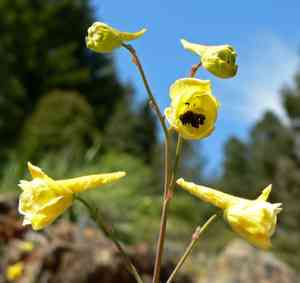
Yellow larkspur(Delphinium luteum)

Yellow larkspur (Delphinium luteum)

Also known as: Golden Larkspur, Yellow Delphinium

Yellow larkspur (Delphinium luteum) is a perennial wildflower notable for its bright yellow, trumpet-shaped blooms, setting it apart from the typically blue or purple Delphinium species. It features slender stems, reaching heights of up to 60 cm, and has lobed leaves that are not as deeply divided as those of its relatives.

Key distinctions include:
- **Flower Color**: Bright yellow, unlike the more common blue or purple flowers of other Delphinium species.
- **Bloom Time**: Flowers from spring to early summer.
- **Habitat**: Prefers serpentine soils and coastal scrub habitats in Northern California, adapted to less fertile conditions.
- **Size**: Generally smaller and more delicate.

Optimal growing conditions involve:
- **Soil**: Well-drained, sandy, or rocky, often serpentine.
- **Light**: Full sun to partial shade.
- **Water**: Moderate moisture, with good drought tolerance once established.

These characteristics make yellow larkspur a rare and distinctive member of the Delphinium genus.

Attributes of Yellow larkspur

Lifespan
Perennial
Plant Type
Herb
Plant Height
30-60 cm
Spread
Not applicable (herbaceous plant)
Leaf Color
Green
Flower Size
2-3 cm
Flower Color
Yellow

ForwardPlant - Identify plants with a snap

Identify and diagnose plants, get toxicity alerts, and explore safety guides for all types of fungi.

Try for Free

Images of Yellow larkspur

Yellow larkspur(Delphinium luteum)

Quickly Identify Yellow larkspur

1
Delphinium luteum can be identified by its yellow, spurred flowers, palmately divided leaves, and tall, erect stem. The flowers grow in clusters and have a distinctive shape that resembles a dolphin\'s nose.

Scientific Classification of Yellow larkspur

Phylum
Vascular plants
Class
Dicotyledons
Order
Ranunculales
Family
Buttercup
Genus
Larkspurs
Species
Yellow larkspur

Planting and Growing of Yellow larkspur

Care Difficulty
Hard
Watering Schedule
Every day
Sunlight Requirements
Partial sun
Sunshine Duration
4-6 hours
Ideal Temperature
60-75℉
Soil Type
Potting Mix, Peat Mix
Soil pH
6.5-7.5
Fertilizer Type
Balanced
Pruning Season
Spring, Summer
Pruning Area
Branches, Leaves
Pruning Frequency
2 times a year
Repotting Season
Spring
Pot Type
Plastic, Ceramic

water icon How to Water Yellow larkspur?

Delphinium luteum prefers well-drained soil and moderate watering. It is essential to ensure the soil is moist but not waterlogged. The amount should typically be around 250 ml, enough to moisten the root area without creating a soggy environment. Check that the top inch of soil is dry before the next watering.
What are the symptoms of an underwatered Yellow larkspur?
What should I do if my Yellow larkspur is not getting enough water?
What are the symptoms of an overwatered Yellow larkspur?
How to save an overwatered Yellow larkspur?

sunlight icon What Are the Sunlight Requirements for Yellow larkspur?

Sunlight Requirements: Partial sun
Duration of light: 4 to 6 hours
For Delphinium luteum, partial sun is ideal, which translates to about 4 to 6 hours of light. This balance fosters healthy growth, optimum flowering, and prevents damage from harsh sunlight, ensuring the plant thrives.
How much light does Delphinium luteum need?
What are the solutions to achieve ideal light for Delphinium luteum?
What benefits does Delphinium luteum gain from ideal lighting?

temperature icon What Is the Ideal Temperature Range for Yellow larkspur?

Ideal Temperature: 60 ~ 75℉
For optimal growth, Delphinium luteum should be kept in temperatures between 60°F and 75°F. These temperatures simulate the conditions of its natural habitat, promoting proper physiological processes, vibrant bloom, and disease resistance.

soil icon What Soil is Best for Yellow larkspur?

Soil type: Loam, Sandy loam
Soil PH: 6.5 ~ 7.5
Delphinium luteum thrives in well-draining soils that prevent waterlogging. This ensures the roots receive adequate oxygen, promoting healthy growth. The plant requires soil rich in nutrients to support its vibrant blooms. Fertile loam or sandy loam enriched with organic matter is ideal. While good drainage is essential, the soil should also retain some moisture. This balance helps maintain consistent hydration without sogginess.

fertilize icon How to Fertilize Yellow larkspur?

Fertilizer type: Balanced
Delphinium luteum prefers fertilizers that are balanced in nutrients. A general recommendation is to use one teaspoon (about 5 ml) of liquid fertilizer diluted in one gallon (approximately 3.8 liters) of water for each application. For slow-release fertilizers, use around 4-5 ounces (about 114-142 grams) per plant each year to ensure steady nourishment.

prune icon How to Prune Yellow larkspur?

Pruning Time: Spring, Summer, Autumn
Start by disinfecting your pruners to prevent disease spread. Identify and remove any dead, damaged, or diseased stems. Cut them back to the base or to healthy tissue. To encourage bushier growth, trim back young stems by one-third, ideally just above a leaf node. Avoid cutting back more than 30% of the plant at a time to prevent stress. More About Pruning Techniques

propagate icon How to Propagate Yellow larkspur plant?

Propagate Time: Spring, Early spring
1
To propagate Delphinium luteum from seeds, begin by sowing seeds in a well-draining seed tray filled with seed starting mix. Cover the seeds lightly with soil and ensure they remain moist until germination occurs.
2
Select healthy stems from the Delphinium luteum plant for cuttings. Use sharp pruning shears to cut 4-6 inch segments from the tips of non-flowering shoots and remove any lower leaves before placing them in a rooting hormone.
3
For tissue culture propagation, begin by sterilizing plant tissue using a bleach solution. Place the sterilized tissue in a culture medium under controlled temperature and lighting conditions to encourage root and shoot development.
More About Propagating Techniques

repot icon How to Repot Yellow larkspur plant?

Repotting frequency: Every 2 to 3 years
1
Watch for signs like roots showing through the drainage holes, the plant becoming top-heavy, or a noticeable decrease in growth rate. These indicate it's time to repot Delphinium luteum, ensuring the plant has ample space and nutrients.
2
Select a pot that is one size larger than the current one, with adequate drainage holes. This ensures proper drainage and space for fresh soil, promoting root health and reducing the risk of waterlogging, which can cause root rot.
3
Opt for a well-draining, fertile soil mix rich in organic matter. Such soil provides essential nutrients and prevents water accumulation, vital for the successful growth and blooming of Delphinium luteum.

ForwardPlant - Identify plants with a snap

Find the best spots for them to optimize their health, simply using your phone.

Try for Free

Toxicity

Ingestion

Identify toxic plants for your safety

Learn which plants are harmful to you and your pets, and make informed choices for a safer home!

Try for Free
WARNING
The judgment on toxicity and danger is for reference only. We DO NOT GUARANTEE any accuracy of such judgment. Therefore, you SHALL NOT rely on such judgment. It is IMPORTANT TO SEEK PROFESSIONAL ADVICE in advance when necessary.

