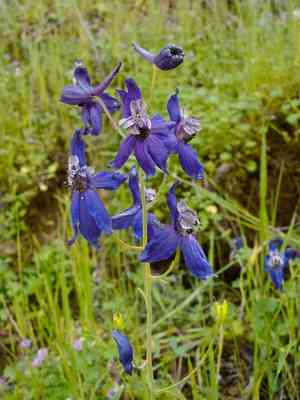
Foothill larkspur(Delphinium hesperium)

Foothill larkspur (Delphinium hesperium)

Also known as: Cuyamaca larkspur

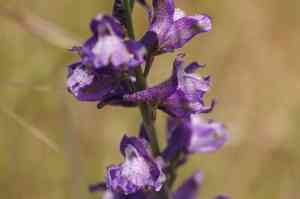
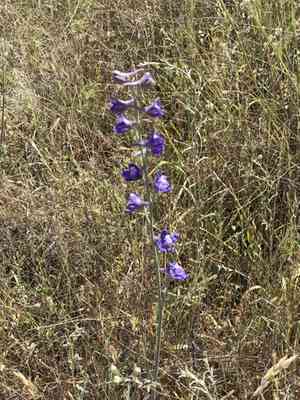
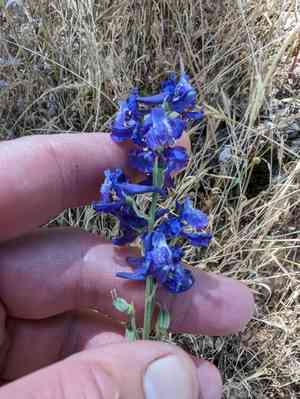
Foothill larkspur (Delphinium hesperium) showcases tall spikes adorned with vibrant blue to purple flowers, each distinguished by a notable 'spur'. Reaching heights of up to 1-3 feet, it flourishes in California's well-drained, sunny grasslands and open woodlands.

**Characteristics:**
- Stems: Erect with multiple branches.
- Leaves: Deeply lobed, arranged in a palmate fashion.
- Flowers: Spurred, with five petal-like sepals and smaller inner petals.
- Bloom Time: Spring to early summer.

**Growing Conditions:**
- Sunlight: Prefers full sun but can tolerate partial shade.
- Soil: Needs well-drained soil, ideally rocky or sandy.
- Watering: Drought-tolerant once established, though occasional watering is beneficial.
- Habitat: Common in foothill regions and meadows.

**Pollinators:**
- Bees: Particularly bumblebees.
- Hummingbirds: Attracted to the plant's nectar.
- Butterflies and Moths: Various species contribute to pollination.

These attributes and conditions make foothill larkspur an excellent choice for native plant gardens and natural landscapes, supporting a diverse range of pollinators.

Attributes of Foothill larkspur

Lifespan
Perennial
Plant Type
Herb
Plant Height
0.5 to 2 meters (1.6 to 6.6 feet)
Spread
Approximately 30 to 50 centimeters (11.8 to 19.7 inches) wide
Leaf Color
Green
Flower Size
Approximately 2 to 3 centimeters (0.8 to 1.2 inches)
Flower Color
Blue, Purple, White

ForwardPlant - Identify plants with a snap

Identify and diagnose plants, get toxicity alerts, and explore safety guides for all types of fungi.

Try for Free

Images of Foothill larkspur

Foothill larkspur(Delphinium hesperium)

Quickly Identify Foothill larkspur

1
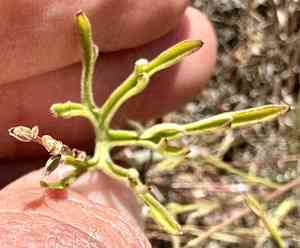
Delphinium hesperium can be identified by its tall, slender spikes of irregularly shaped flowers, typically blue, purple, or white. The plant has deeply lobed leaves and a distinctive spur on the back of each flower.

Scientific Classification of Foothill larkspur

Phylum
Vascular plants
Class
Dicotyledons
Order
Ranunculales
Family
Buttercup
Genus
Larkspurs
Species
Foothill larkspur

Planting and Growing of Foothill larkspur

Care Difficulty
Moderate
Watering Schedule
Every 4 days
Sunlight Requirements
Full sun
Sunshine Duration
6-10 hours
Ideal Temperature
60-75℉
Soil Type
Potting Mix, Peat Mix
Soil pH
6-7
Fertilizer Type
Balanced
Pruning Season
Spring, Summer
Pruning Area
Branches, Leaves
Pruning Frequency
2 times a year
Repotting Season
Spring
Pot Type
Plastic, Ceramic

water icon How to Water Foothill larkspur?

Delphinium hesperium requires a moderate watering approach, ensuring soil is moist but not waterlogged. It's beneficial to aim for a deep watering, where the water reaches about 5 inches into the soil. This ensures the roots receive sufficient hydration without drowning them.
What are the symptoms of an underwatered Foothill larkspur?
What should I do if my Foothill larkspur is not getting enough water?
What are the symptoms of an overwatered Foothill larkspur?
How to save an overwatered Foothill larkspur?

sunlight icon What Are the Sunlight Requirements for Foothill larkspur?

Sunlight Requirements: Full sun, Partial sun
Duration of light: 6 to 8 hours
Delphinium hesperium prefers full sun to partial sun exposures. Ideal lighting ensures robust flowering and healthy growth. It maximizes photosynthesis enabling the plant to leverage sunlight's energy effectively, resulting in vibrant and lush blooms.
What is the ideal amount of light for Delphinium hesperium?
How can I ensure Delphinium hesperium receives proper sunlight?
What benefits does proper lighting provide to Delphinium hesperium?

temperature icon What Is the Ideal Temperature Range for Foothill larkspur?

Ideal Temperature: 60 ~ 75℉
The ideal temperature range for Delphinium hesperium is between 60°F and 75°F. These temperatures provide optimal conditions for photosynthesis and growth. Consistently maintaining the temperature within this range can result in healthier plants and more vibrant blooms. This range ensures that the plants receive the warmth needed for growth while not being subjected to heat stress, which can affect their development adversely.

soil icon What Soil is Best for Foothill larkspur?

Soil type: Loam, Sandy loam
Soil PH: 6 ~ 7
Delphinium hesperium thrives in well-drained soil, which helps prevent root rot and promotes healthy growth. This drainage is crucial in ensuring that excess water does not accumulate around the roots. A soil high in organic matter supports the vigorous growth required by Delphinium hesperium. Rich nutrients provide the necessary food for vibrant blooms and robust plant health. A balance between moisture retention and drainage helps maintain consistent soil moisture levels. This balance is beneficial to prevent the plant from drying out while also avoiding waterlogged conditions.

fertilize icon How to Fertilize Foothill larkspur?

Fertilizer type: Balanced
For Delphinium hesperium, it's crucial to balance the fertilizer amount. Typically, use a balanced 10-10-10 fertilizer, applying about 1 tablespoon per square foot for mature plants. Over-fertilizing can cause excessive foliage growth while under-fertilizing can lead to nutrient deficiencies.

prune icon How to Prune Foothill larkspur?

Pruning Time: Spring, Summer
Start by identifying stems that are dead, damaged, or diseased. Cut these back to their base. Next, trim any stems that have grown too long or misshapen to maintain a balanced shape. Reduce the length of any remaining stems by about one-third to promote new growth. Ensure all cuts are clean and made at a slight angle to prevent water accumulation. After pruning, water the plant thoroughly, as this encourages recovery and growth. Consider applying a balanced fertilizer to support the new growth. Monitor the plant regularly, especially in the weeks following pruning, to catch any signs of stress or disease early. More About Pruning Techniques

propagate icon How to Propagate Foothill larkspur plant?

Propagate Time: Spring, Early spring
1
Choose seeds from healthy, mature plants. Freshly harvested seeds offer the best germination rates. Before planting, check that the seeds are free from visible damage or disease.
2
Use a well-draining soil mix that retains moisture but does not stay soggy. Adding compost can enhance the nutrient profile, giving seedlings a better start.
3
Plant seeds at a shallow depth, approximately twice the diameter of the seed. For cuttings, ensure a node is buried as this is where roots will form. Water thoroughly immediately after planting.
More About Propagating Techniques

repot icon How to Repot Foothill larkspur plant?

Repotting frequency: Every 2-3 years
1
Repot Delphinium hesperium when you notice the roots are circling the bottom of the pot, the plant is stunted despite watering and feeding, or if it's been a couple of years since the last repotting. Early spring is ideal as it allows the plant to establish in its new pot before the active growing season.
2
Choose a pot that is slightly larger than the current one, ensuring it has ample drainage holes to prevent waterlogging, which can lead to root rot. Opting for a breathable material like terracotta can help in maintaining moisture balance, which encourages healthier roots and growth.
3
Select a well-draining, rich soil mix, preferably one that retains some moisture but not excessively. A mix containing organic material aids in providing necessary nutrients, while perlite or sand ensures proper aeration, helping the roots to breathe and thrive.

ForwardPlant - Identify plants with a snap

Find the best spots for them to optimize their health, simply using your phone.

Try for Free

Toxicity

Ingestion of plant parts, especially flowers and seeds

Identify toxic plants for your safety

Learn which plants are harmful to you and your pets, and make informed choices for a safer home!

Try for Free
WARNING
The judgment on toxicity and danger is for reference only. We DO NOT GUARANTEE any accuracy of such judgment. Therefore, you SHALL NOT rely on such judgment. It is IMPORTANT TO SEEK PROFESSIONAL ADVICE in advance when necessary.