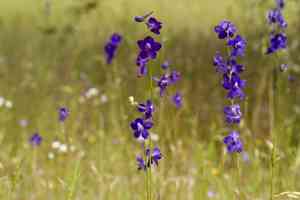
Hansen's larkspur (Delphinium hansenii)
Also known as: Ewan's larkspur
Hansen's larkspur (Delphinium hansenii) is a perennial herb notable for its tall, slender stems adorned with deep blue to violet flowers. These distinctive blooms, which appear from late spring to early summer, add a splash of color to the landscape. The plant typically grows from a robust root system and prefers well-drained soils, often flourishing on rocky slopes and in canyons. Its vibrant flowers attract various pollinators, contributing significantly to its ecological niche.
In This Article
Attributes of Hansen's larkspur
Lifespan
Perennial
Plant Type
Herb
Plant Height
Around 1 to 1.5 meters
Spread
N/A (This plant does not form a crown)
Leaf Color
Green
Flower Size
2-3 centimeters
Flower Color
Blue, sometimes white or violet
Images of Hansen's larkspur
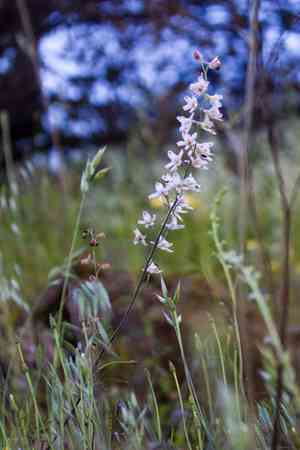
Quickly Identify Hansen's larkspur
1
Identification of Delphinium hansenii can be achieved by its tall, slender stems bearing multiple long-spurred blue or white flowers. The leaves are usually divided into deeply lobed and thin segments.
Scientific Classification of Hansen's larkspur
Phylum
Vascular plants
Class
Dicotyledons
Order
Ranunculales
Family
Buttercup
Genus
Larkspurs
Species
Hansen's larkspur
Planting and Growing of Hansen's larkspur
Care Difficulty
Moderate
Watering Schedule
Every 3 days
Sunlight Requirements
Full sun
Sunshine Duration
4-8 hours
Ideal Temperature
50-70℉
Soil Type
Potting Mix, Peat Mix
Soil pH
6.5-7.5
Fertilizer Type
Balanced
Pruning Season
Spring, Summer
Pruning Area
Branches, Leaves
Pruning Frequency
2 times a year
Repotting Season
Spring
Pot Type
Terracotta, Plastic
 How to Water Hansen's larkspur?
Delphinium hansenii prefers its soil to be consistently moist but not waterlogged. When watering, aim to provide approximately 500 ml of water per session. Ensure the water reaches just below the root zone but does not stagnate at the bottom. The key is to maintain a balance: moist but not overly wet soil.
What are the symptoms of an underwatered Hansen's larkspur?
›
What should I do if my Hansen's larkspur is not getting enough water?
›
What are the symptoms of an overwatered Hansen's larkspur?
›
How to save an overwatered Hansen's larkspur?
›
 What Are the Sunlight Requirements for Hansen's larkspur?
Delphinium hansenii thrives best in full to partial sun, requiring 6 to 8 hours of daily sunlight. Adequate light supports better flowering, vigorous growth, and disease resistance, enhancing the plant's beauty and longevity.
What are the ideal lighting conditions for Delphinium hansenii?
›
How do you achieve these ideal lighting conditions?
›
What benefits does Delphinium hansenii gain from optimal lighting?
›
 What Is the Ideal Temperature Range for Hansen's larkspur?
Delphinium hansenii thrives best in a temperature range of 50°F to 70°F. These temperatures provide optimal conditions for photosynthesis and growth, ensuring the plant's physiological processes occur without stress. These conditions mimic its natural habitat, making it crucial to maintain this range for healthy development.
 What Soil is Best for Hansen's larkspur?
Delphinium hansenii flourishes in well-drained soil as it prevents waterlogging, which can lead to root rot. The presence of proper drainage enhances aeration around the roots, allowing them to absorb nutrients efficiently. Rich loamy soil is crucial for the plant's growth because it supplies essential nutrients. A fertile soil composition supports robust growth, resulting in vibrant blooms and expanded foliage. While well-drained, the soil should also retain some moisture to sustain the plant during dry periods. This balance ensures that Delphinium hansenii receives consistent hydration without the risk of mold development.
 How to Fertilize Hansen's larkspur?
For Delphinium hansenii, it is important to apply a balanced fertilizer at a rate of approximately 1 tablespoon per gallon of water for liquid fertilizers. Solid fertilizers should be applied at a rate of 1/4 cup around the base of the plant, ensuring the soil is moist to facilitate nutrient absorption.
 How to Prune Hansen's larkspur?
Start your pruning in late winter or early spring, when the plant is dormant and before new growth starts. A second lighter pruning can be done after the first flowering period in summer to encourage a second bloom. Begin by cutting back any dead stems to the base using clean, sharp pruning shears. Remove any spindly or overcrowded stems to improve air circulation. After the first flowering, trim back spent flower spikes to encourage new growth. When cutting, make your cut just above a leaf node to minimize damage and encourage healthy growth. Remove any leaves showing signs of disease to prevent the spread of pathogens.
More About Pruning Techniques→
 How to Propagate Hansen's larkspur plant?
1
Begin by filling seedling trays with a well-draining potting mix, pressing seeds gently into the surface. Lightly cover them with soil and water thoroughly. Maintain a consistent moisture level to aid germination, which typically occurs within 2-3 weeks.
2
Select a healthy, non-flowering stem approximately 10cm long. Use sharp shears to make a clean cut just below a node. Remove the lower leaves and dip the cut end in rooting hormone before planting it in a pot filled with a moist potting mix.
3
In early spring, dig up an established plant ensuring a good root ball. Gently tease apart smaller sections, ensuring each has roots attached. Replant each division at the same depth as the original clump, watering well to settle the soil.
 How to Repot Hansen's larkspur plant?
1
Delphinium hansenii needs repotting when roots begin to protrude through drainage holes, or when the soil becomes compacted. The best time for repotting is during active growth periods, typically in spring or early autumn. This ensures that the plant can quickly re-establish in its new environment.
2
Select a pot that is one size larger than the current one, with sufficient drainage holes to prevent waterlogging. A slightly larger pot allows enough room for root expansion without overwhelming the plant, helping to provide optimum growth conditions.
3
Opt for well-draining loamy soil enriched with organic matter. This type of soil prevents root rot by allowing excess moisture to escape, while supplying nutrients essential for Delphinium hansenii's healthy development, leading to robust foliage and vibrant flowers.
Toxicity
ingestion
WARNING
The judgment on toxicity and danger is for reference only. We DO NOT GUARANTEE any accuracy of such judgment. Therefore, you SHALL NOT rely on such judgment. It is IMPORTANT TO SEEK PROFESSIONAL ADVICE in advance when necessary.
Learn More About Hansen's larkspur Diseases
Anthracnose
Bacterial Leaf Spot
Bacterial Soft Rot
Bacterial Wilt
Black Spot
Chemical Injury
Crown Gall
Cyst Nematode
Damping-off
Downy Mildew
Drought Stress
Fusarium Wilt
Gray Mold
Leaf Curl
Leaf Spot
Mosaic
Nutrient Deficiency
Nutrient Toxicity
Powdery Mildew
Root Rot
Root-knot Nematode
Rusts
Sooty Mold
Spider Mites
Temperature Stress
Thrips Damage
White Mold



