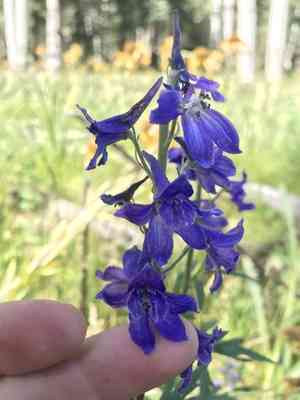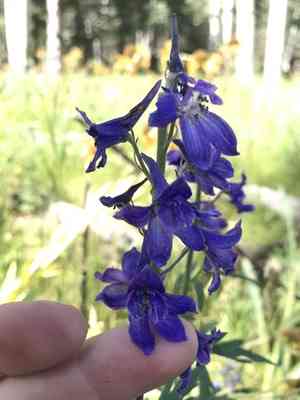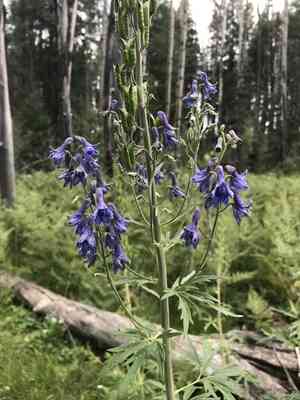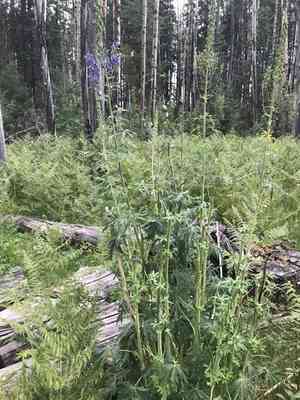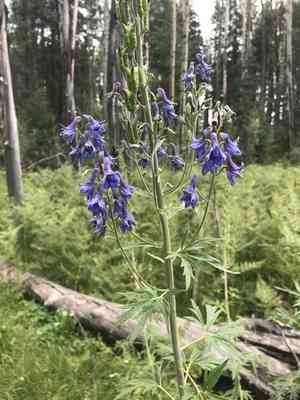
Clark valley larkspur(Delphinium geraniifolium)

Clark valley larkspur (Delphinium geraniifolium)

Also known as: Geranium-leaf Delphinium

Clark Valley larkspur (Delphinium gypsophilum ssp. parviflorum) is notable for its elegant spikes of small blue or purple flowers that bloom on slender stems, typically reaching heights of 1-2 feet. The plant features finely divided, fern-like leaves, adding to its delicate and graceful look.

**Characteristics:**
- **Height:** 1-2 feet.
- **Flowers:** Small, blue or purple with a spur.
- **Leaves:** Finely divided and fern-like.

**Ideal Growing Conditions:**
- **Soil:** Prefers well-drained, gypsum-rich soils.
- **Sunlight:** Best in full sun to partial shade.
- **Water:** Moderate watering needs; drought-tolerant once established.
- **Climate:** Thrives in Mediterranean climates with wet winters and dry summers.

It is commonly found in open woodlands and grasslands, reflecting its preference for temperate conditions.

Attributes of Clark valley larkspur

Lifespan
Perennial
Plant Type
Herb
Plant Height
30-90 cm
Spread
20-30 cm
Leaf Color
Green
Flower Size
2-3 cm
Flower Color
Blue, Purple

ForwardPlant - Identify plants with a snap

Identify and diagnose plants, get toxicity alerts, and explore safety guides for all types of fungi.

Try for Free

Images of Clark valley larkspur

Clark valley larkspur(Delphinium geraniifolium)

Quickly Identify Clark valley larkspur

1
To identify Delphinium geraniifolium, look for its distinctive spurred flowers which range from blue to purple, and its deeply lobed, fern-like leaves which resemble those of a geranium.

Scientific Classification of Clark valley larkspur

Phylum
Vascular plants
Class
Dicotyledons
Order
Ranunculales
Family
Buttercup
Genus
Larkspurs
Species
Clark valley larkspur

Planting and Growing of Clark valley larkspur

Care Difficulty
Moderate
Watering Schedule
Every 4 days
Sunlight Requirements
Full sun
Sunshine Duration
6-12 hours
Ideal Temperature
60-75℉
Soil Type
Potting Mix, Peat Mix
Soil pH
6.5-7.5
Fertilizer Type
Balanced
Pruning Season
Spring, Summer
Pruning Area
Branches, Leaves
Pruning Frequency
2 times a year
Repotting Season
Spring
Pot Type
Plastic, Terracotta

water icon How to Water Clark valley larkspur?

Delphinium geraniifolium thrives when watered consistently with about 250 milliliters each time. The soil should be kept moist but not soggy. It is advisable to water until a slight trickle appears at the bottom of the pot, ensuring that the roots have adequate hydration. This amount ensures proper growth without waterlogging the soil.
What are the symptoms of an underwatered Clark valley larkspur?
What should I do if my Clark valley larkspur is not getting enough water?
What are the symptoms of an overwatered Clark valley larkspur?
How to save an overwatered Clark valley larkspur?

sunlight icon What Are the Sunlight Requirements for Clark valley larkspur?

Sunlight Requirements: Full sun, Partial sun
Duration of light: 6 to 8 hours daily
Partial to full sun is ideal, promoting abundant flowering and robust growth. Regular sunlight boosts photosynthesis, resulting in vibrant colors and sturdy stems.
What is the ideal amount of light?
How to ensure the ideal lighting?
What are the benefits of ideal lighting?

temperature icon What Is the Ideal Temperature Range for Clark valley larkspur?

Ideal Temperature: 60 ~ 75℉
The ideal temperature range for Delphinium geraniifolium is between 60°F to 75°F. Within this range, the plant thrives, exhibiting vigorous growth and optimal flowering. This temperature range closely simulates the plant's native environment, promoting photosynthesis and nutrient uptake.

soil icon What Soil is Best for Clark valley larkspur?

Soil type: Loam, Sandy loam, Calcareous soil
Soil PH: 6.5 ~ 7.5
Delphinium geraniifolium thrives in well-draining soil to prevent root rot. This condition ensures that excess water escapes efficiently, keeping the roots healthy and promoting robust plant growth. A nutrient-rich soil supports the vigorous growth of Delphinium geraniifolium. The presence of essential nutrients will enhance flowering and overall development, resulting in a resilient and beautiful plant. While the soil must drain well, it should also retain adequate moisture. This balance is crucial for Delphinium geraniifolium, as it helps maintain hydration without waterlogging, supporting consistent and lush growth.

fertilize icon How to Fertilize Clark valley larkspur?

Fertilizer type: Balanced
Delphinium geraniifolium requires a balanced approach to fertilization. Generally, use a 10-10-10 NPK fertilizer, ensuring about 1 tablespoon per gallon of water for liquid feeding. This ensures the plant absorbs necessary nutrients without an overload.

prune icon How to Prune Clark valley larkspur?

Pruning Time: Spring, Summer
Start by sterilizing your pruning shears to prevent disease. Remove any dead or damaged stems at the base. Cut back taller stems to maintain a tidy appearance and encourage stronger, more robust growth. Aim for a neat, compact shape that allows sunlight to reach all parts of the plant, promoting even blooms. After the initial flowering period, you can remove spent blooms to encourage a second flush of flowers. Cut just above the node where the next set of leaves appears, as this is where new growth will sprout. This technique keeps the plant blooming longer and prolongs its decorative display. More About Pruning Techniques

propagate icon How to Propagate Clark valley larkspur plant?

Propagate Time: Early spring,Late spring,Summer
1
Begin by collecting seeds from mature Delphinium geraniifolium plants. Clean the seeds thoroughly and allow them to dry in a cool, dark place to ensure they are viable for planting.
2
Select a healthy parent plant and cut a stem piece about 4-6 inches long. Remove the leaves from the lower half of the cutting and treat the cut end with rooting hormone to encourage root development.
3
Carefully dig up the mature plant and separate the root ball into smaller sections, ensuring each section has roots and shoots. Replant these divisions promptly in moist, well-drained soil.
More About Propagating Techniques

repot icon How to Repot Clark valley larkspur plant?

Repotting frequency: Every 2-3 years
1
Observe for signs such as roots protruding through drainage holes, reduced growth, or compacted soil. These indicate it's time to repot Delphinium geraniifolium, ensuring the plant has more space to thrive and doesn’t suffer from nutrient deficiency.
2
Choose a pot that is 2-3 inches larger in diameter than the current one. It should have good drainage to prevent waterlogging. A suitable pot size encourages healthy root growth without overwhelming the plant with excess soil that retains moisture.
3
Opt for a well-draining loamy mix that retains some moisture but doesn’t become soggy. This type of soil allows for proper aeration and water retention, promoting healthy root development and reducing the risk of root rot.

ForwardPlant - Identify plants with a snap

Find the best spots for them to optimize their health, simply using your phone.

Try for Free

Toxicity

Ingestion

Identify toxic plants for your safety

Learn which plants are harmful to you and your pets, and make informed choices for a safer home!

Try for Free
WARNING
The judgment on toxicity and danger is for reference only. We DO NOT GUARANTEE any accuracy of such judgment. Therefore, you SHALL NOT rely on such judgment. It is IMPORTANT TO SEEK PROFESSIONAL ADVICE in advance when necessary.