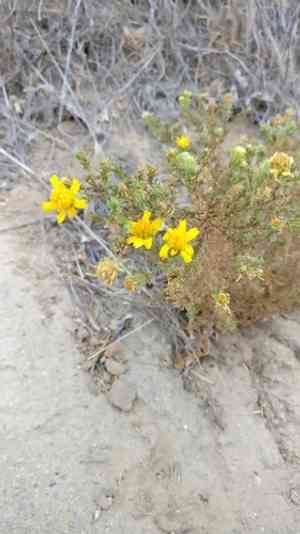
Santa susana tarweed (Deinandra minthornii)
Also known as: Santa Susana tarweed, chaparral tarplant
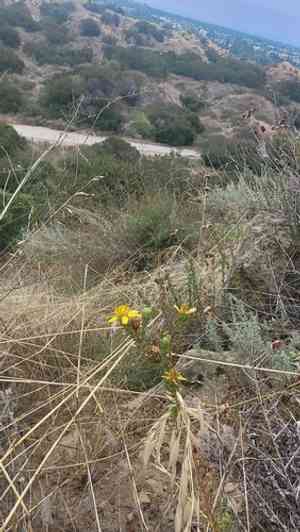
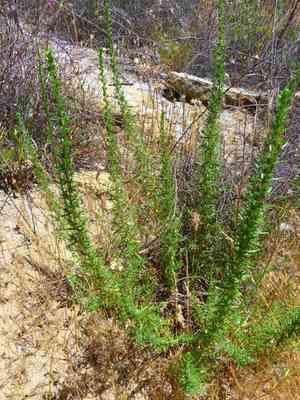
The Santa Susana tarweed (Deinandra minthornii) is a hardy perennial native to California, thriving particularly in rocky, serpentine soils. This sun-loving plant features striking yellow flowers reminiscent of daisies, with numerous slender petals. Its leaves are lance-shaped and covered in fine hairs, clustering along its upright stems. The tarweed's ability to flourish in dry, open habitats highlights its robust adaptation strategies, making it well-suited to its native environment.
In This Article
Attributes of Santa susana tarweed
Lifespan
Annual
Plant Type
Herb
Plant Height
30 to 100 cm
Spread
N/A
Leaf Color
Green
Flower Size
Approximately 2 cm
Flower Color
Yellow
Images of Santa susana tarweed
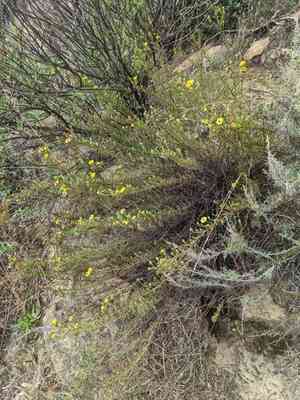
Quickly Identify Santa susana tarweed
1
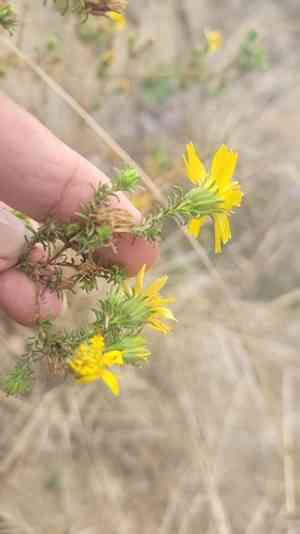
Deinandra minthornii can be identified by its sticky, glandular leaves and yellow flowers with both ray and disc florets. The plant\'s aromatic nature can also aid in its identification.
Scientific Classification of Santa susana tarweed
Phylum
Vascular plants
Class
Dicotyledons
Order
Asterales
Family
Daisy
Genus
Otay tarplant
Species
Santa susana tarweed
Planting and Growing of Santa susana tarweed
Care Difficulty
Hard
Watering Schedule
Every 2 days
Sunlight Requirements
Full sun
Sunshine Duration
4-8 hours
Ideal Temperature
60-75℉
Soil Type
Potting Mix, Peat Mix
Soil pH
6.5-7.5
Fertilizer Type
Balanced
Pruning Season
Spring, Summer
Pruning Area
Branches, Leaves
Pruning Frequency
2 times a year
Repotting Season
Spring
Pot Type
Plastic, Ceramic
 How to Water Santa susana tarweed?
Deinandra minthornii requires a moderate amount of water. Ensure the soil is moist but not soggy, meaning the top inch should be dry before the next watering. This prevents root rot and maintains optimal hydration.
What are the symptoms of an underwatered Santa susana tarweed?
›
What should I do if my Santa susana tarweed is not getting enough water?
›
What are the symptoms of an overwatered Santa susana tarweed?
›
How to save an overwatered Santa susana tarweed?
›
 What Are the Sunlight Requirements for Santa susana tarweed?
Deinandra minthornii prefers full sun to partial sun, benefiting from at least 6 hours of direct exposure daily. Ideal light maximizes photosynthesis, ensuring robust growth, vibrant foliage, and abundant flowering.
Ideal Light Exposure
›
Solution for Optimal Growth
›
Benefits of Ideal Light
›
 What Is the Ideal Temperature Range for Santa susana tarweed?
Deinandra minthornii thrives best in a temperature range of 60-75°F. This range ensures optimal metabolic activity and enzyme function, promoting healthy growth and flowering. Providing a stable environment within this range reduces plant stress and increases resilience against pests and diseases.
 What Soil is Best for Santa susana tarweed?
Deinandra minthornii thrives best in well-draining soil. This helps prevent root rot and ensures the plant has access to the necessary nutrients without waterlogging. Adequate drainage allows air to reach the roots, which is vital for healthy growth. While not overly demanding, this plant benefits from nutrient-rich soil, which supports its robust growth and vibrant foliage. Incorporating organic matter or compost can help meet this requirement by providing a steady supply of nutrients. Deinandra minthornii prefers soil with moderate moisture levels. This means the soil should be neither too dry nor too wet, fostering an environment where roots can easily absorb water and nutrients, promoting healthy plant development.
 How to Fertilize Santa susana tarweed?
For Deinandra minthornii, a moderate amount of balanced fertilizer is crucial. Use about 1/4 to 1/2 strength of what is recommended on the fertilizer package, ensuring not to overdo it as excess nutrients can harm this plant.
 How to Prune Santa susana tarweed?
Always aim to prune Deinandra minthornii early in the day when temperatures are cooler and the plant is less stressed. The cooler conditions reduce water loss and allow the plant to recover more efficiently from the cuts. Focus on removing any crossing branches or areas where the foliage is too dense. This approach not only improves the plant's shape but also enhances airflow, which is crucial for preventing fungal diseases and ensuring that sunlight penetrates throughout the plant.
More About Pruning Techniques→
 How to Propagate Santa susana tarweed plant?
1
Harvest seeds from mature Deinandra minthornii plants in early autumn when seed heads are dry. Ensure seeds are fully matured for the best chance of successful germination.
2
Use pruning shears to take cuttings from healthy stems in late spring. Each cutting should be 3-5 inches long with at least two leaves to promote rooting.
3
Plant seeds or insert cuttings into a soil mix that’s well-draining. Water lightly and keep in a warm spot, avoiding direct sunlight to allow for rooting.
 How to Repot Santa susana tarweed plant?
1
Look for signals such as roots emerging from the pot's drainage holes, slower growth, or the soil drying out faster than usual. These are clear indicators that it's time to repot Deinandra minthornii.
2
Select a pot that is only slightly larger than the current one, as too much space can lead to overwatering. Ensure the pot has good drainage, which helps in preventing root rot.
3
Use a well-draining cactus mix to promote healthy root growth. Optionally, mix in some perlite for extra aeration, which helps in avoiding water retention and allows roots to breathe.
Learn More About Santa susana tarweed Diseases
Anthracnose
Bacterial Leaf Spot
Bacterial Soft Rot
Bacterial Wilt
Black Spot
Chemical Injury
Crown Gall
Cyst Nematode
Damping-off
Downy Mildew
Drought Stress
Fusarium Wilt
Gray Mold
Leaf Curl
Leaf Spot
Mosaic
Nutrient Deficiency
Nutrient Toxicity
Powdery Mildew
Root Rot
Root-knot Nematode
Rusts
Sooty Mold
Spider Mites
Temperature Stress
Thrips Damage
White Mold



