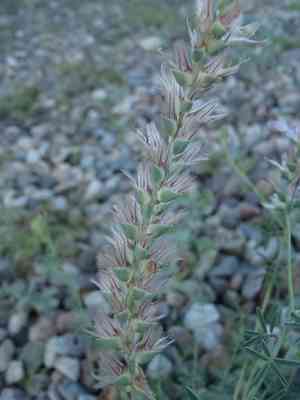
Bearded prairie clover (Dalea pogonathera)
Also known as: Bonilla, San Felipe Prairie Clover
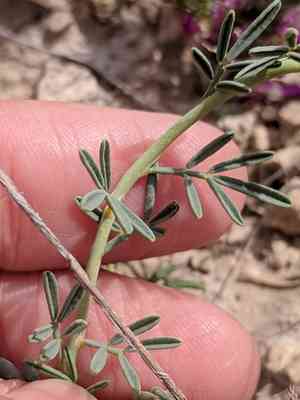
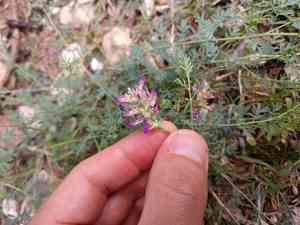
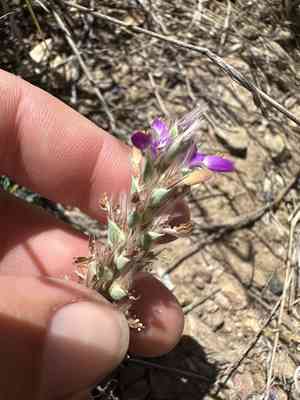
The bearded prairie clover (Dalea villosa) is well-adapted to arid environments due to several unique features. Its vibrant clusters of purple to bluish flowers sit atop sturdy, wiry stems. The plant's narrow, pinnately compound leaves are designed to endure dry conditions, reflecting its high drought tolerance. Thriving in sandy soils under full sunlight, its deep root system not only secures the plant in harsh conditions but also taps into deeper moisture reserves. Additionally, it serves as an important resource for local wildlife, making it a resilient and valuable component of arid ecosystems.
In This Article
Attributes of Bearded prairie clover
Lifespan
Perennial
Plant Type
Shrub
Plant Height
0 mm to 30 cm
Spread
Approximately 30 cm
Leaf Color
Green
Flower Size
0.5-1 cm
Flower Color
Purple, Pink
Images of Bearded prairie clover
Quickly Identify Bearded prairie clover
1
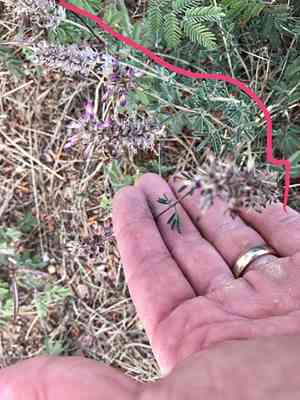
Dalea pogonathera can be identified by its compound leaves, small and numerous leaflets, and bright purple to pink flowers which are dense and cylindrical. The stems are generally hairy, and the plant can often be found in dry, open areas.
Scientific Classification of Bearded prairie clover
Phylum
Vascular plants
Class
Dicotyledons
Order
Fabales
Family
Legume
Genus
Prairie clover
Species
Bearded prairie clover
Planting and Growing of Bearded prairie clover
Care Difficulty
Moderate
Watering Schedule
Every 2 days
Sunlight Requirements
Full sun
Sunshine Duration
6-10 hours
Ideal Temperature
60-75℉
Soil Type
Potting Mix, Peat Mix
Soil pH
6.5-7.5
Fertilizer Type
Balanced
Pruning Season
Spring, Summer
Pruning Area
Branches, Leaves
Pruning Frequency
2 times a year
Repotting Season
Spring
Pot Type
Plastic, Ceramic
 How to Water Bearded prairie clover?
When watering Dalea pogonathera, aim to provide around 250 ml each time. The goal is to hydrate the soil without causing it to become soggy. Allow the soil to absorb the water fully while ensuring any excess drains away, mimicking the plant's natural arid habitat.
What are the symptoms of an underwatered Bearded prairie clover?
›
What should I do if my Bearded prairie clover is not getting enough water?
›
What are the symptoms of an overwatered Bearded prairie clover?
›
How to save an overwatered Bearded prairie clover?
›
 What Are the Sunlight Requirements for Bearded prairie clover?
Dalea pogonathera prefers full sun but can tolerate partial sun environments, ideally receiving 6 to 8 hours of light. This promotes robust growth and flowering.
Direct sunlight hours
›
Optimizing partial shade
›
Balancing light throughout the day
›
 What Is the Ideal Temperature Range for Bearded prairie clover?
The ideal temperature range for growing Dalea pogonathera is between 60°F and 75°F. This range ensures optimal growth and health by providing sufficient warmth while protecting against heat stress. It allows for proper photosynthesis and nutrient absorption, contributing to robust foliage and potentially flowering success.
 What Soil is Best for Bearded prairie clover?
Dalea pogonathera thrives in well-draining soils that prevent waterlogging around its roots. This characteristic helps the plant to avoid issues such as root rot and promotes healthy root development, essential for nutrient uptake. While this plant can survive in less fertile soils, providing a nutrient-rich substrate improves its growth and flowering quality. Soils enriched with organic matter can enhance its overall vigor and blooming potential. Best growth is observed in soils with a pH range of 6.5 to 7.5, which supports optimal nutrient availability. Maintaining this pH range ensures the plant gets access to all essential nutrients effectively.
 How to Fertilize Bearded prairie clover?
For Dalea pogonathera, use a balanced fertilizer with an N-P-K ratio of 10-10-10. When using liquid fertilizers, dilute them to half-strength. Apply about 1 tablespoon of granular fertilizer per plant annually, ensuring the roots absorb nutrients effectively without causing root burn.
 How to Prune Bearded prairie clover?
Prune during early mornings or late afternoons in spring or summer when temperatures are cooler. Avoid pruning during stress periods, such as extreme heat or cold. Begin by removing any dead or diseased stems. This encourages healthier growth and prevents the spread of disease to other parts of the plant. Trim back branch tips to promote a compact shape. Work with the plant's natural shape to encourage aesthetically pleasing growth patterns. Post-pruning, clean your tools with rubbing alcohol or bleach solution to prevent the transfer of potential diseases to other plants.
More About Pruning Techniques→
 How to Propagate Bearded prairie clover plant?
1
For seed propagation, begin by soaking seeds in warm water for 24 hours to soften the seed coat and improve germination rates. This step allows for moisture penetration which is crucial for successful germination.
2
Choose healthy, non-woody stems about 10-15cm long for cutting propagation. Ensure the mother plant is well-hydrated before making the cut to maintain the cutting's vitality and improve rooting success.
3
Insert the cuttings into a well-draining potting mix. Make a hole in the mix with a pencil to avoid damaging the cutting. Ensure at least one node is buried to promote root development.
 How to Repot Bearded prairie clover plant?
1
Look for signs like roots coming out of the drainage holes, or soil drying out too quickly. These indicate that Dalea pogonathera is getting too large for its current pot. Ideally, repot during its active growing seasons, spring or early autumn, when the plant can adjust well to new soil conditions.
2
Select a pot that is one size larger than the current one and has proper drainage holes. Clay pots are often recommended because they allow the soil to dry out more quickly, reducing the risk of root rot, which this plant is prone to if kept too moist.
3
Opt for a well-draining cactus mix, possibly adding coarse sand or small gravel to enhance drainage. This type of soil mimics the plant's native arid environment, allowing for air circulation around the roots and preventing water accumulation that can lead to root rot.
Learn More About Bearded prairie clover Diseases
Anthracnose
Bacterial Leaf Spot
Bacterial Wilt
Crown Gall
Cyst Nematode
Damping-off
Downy Mildew
Drought Stress
Fusarium Wilt
Gray Mold
Leaf Spot
Mosaic
Nutrient Deficiency
Nutrient Toxicity
Powdery Mildew
Root Rot
Root-knot Nematode
Rusts
Sooty Mold
Spider Mites
Temperature Stress
Thrips Damage
White Mold



