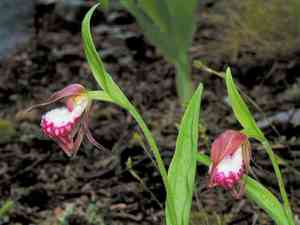
Ram's head lady's slipper (Cypripedium arietinum)
Also known as: Ram's Head Lady's Slipper, Ram's Head Orchid
The Ram's head lady's slipper (Cypripedium arietinum) thrives in its North American habitat thanks to its preference for lime-rich, moist woodland soils and partial shade. This petite orchid, with its maroon and white flowers resembling a slipper, employs a deceptive pollination strategy to attract insects, aiding its survival and reproduction.
In This Article
Attributes of Ram's head lady's slipper
Lifespan
Perennial
Plant Type
Herb
Plant Height
15 cm to 30 cm
Spread
Not applicable
Leaf Color
Green
Flower Size
1-2 cm
Flower Color
White Purple
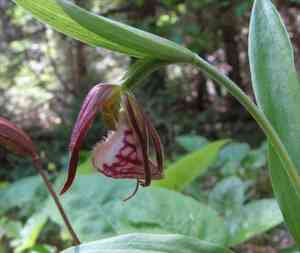
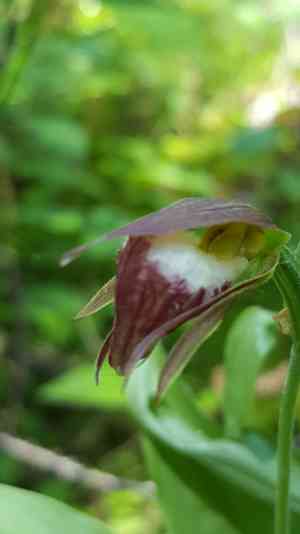
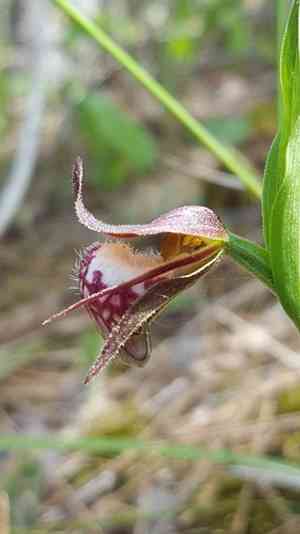
Images of Ram's head lady's slipper
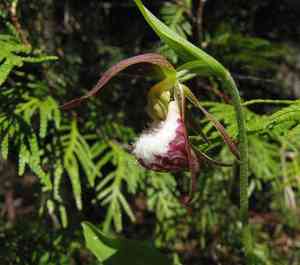
Quickly Identify Ram's head lady's slipper
1
Identify the Ram\'s Head Lady\'s Slipper by looking for its distinctively small, helmet-shaped flowers with a deep maroon or blackish hue and a white, pouch-like labellum. The plant typically has a single flower per stem with three green leaves alternating along the stem.
Scientific Classification of Ram's head lady's slipper
Phylum
Vascular plants
Class
Monocotyledons
Order
Asparagales
Family
Orchid
Genus
Slipper orchids
Species
Ram's head lady's slipper
Planting and Growing of Ram's head lady's slipper
Care Difficulty
Hard
Watering Schedule
Every 2 days
Sunlight Requirements
Partial sun
Sunshine Duration
6-8 hours
Ideal Temperature
60-75℉
Soil Type
Potting Mix, Peat Mix
Soil pH
5-6.5
Fertilizer Type
Balanced
Pruning Season
Spring, Summer
Pruning Area
Branches, Leaves
Pruning Frequency
2 times a year
Repotting Season
Spring
Pot Type
Plastic, Ceramic
 How to Water Ram's head lady's slipper?
The Showy Lady's Slipper (Cypripedium arietinum) benefits from a moderate watering approach. Consistently maintain the soil moist but not waterlogged, approximating 250 ml each session. This method respects its natural habitat where moisture is present without over saturation. Aim to have the soil slightly damp to the touch.
What are the symptoms of an underwatered Ram's head lady's slipper?
›
What should I do if my Ram's head lady's slipper is not getting enough water?
›
What are the symptoms of an overwatered Ram's head lady's slipper?
›
How to save an overwatered Ram's head lady's slipper?
›
 What Are the Sunlight Requirements for Ram's head lady's slipper?
Semi-shade or lightly shaded areas are ideal, providing enough light without overwhelming the plant. The right light balance encourages healthy leaf growth and vibrant flowering.
What kind of light does Cypripedium arietinum need?
›
How can I ensure Cypripedium arietinum gets its ideal light?
›
Why is the right lighting important for Cypripedium arietinum?
›
 What Is the Ideal Temperature Range for Ram's head lady's slipper?
The ideal temperature range for growing Cypripedium arietinum is between 60°F and 75°F. This range provides a conducive environment that promotes healthy growth and development, ensuring that the plant thrives under optimal conditions. It is important to maintain this range to prevent stress and unfavorable growth conditions.
 What Soil is Best for Ram's head lady's slipper?
Cypripedium arietinum thrives in soil that retains adequate moisture without becoming waterlogged. This quality is crucial as it ensures consistent hydration for the plant, which is vital for its growth and flowering potential. A fertile, nutrient-rich soil provides essential minerals and organic matter that support the vigorous growth of the plant. This promotes healthy root development and enhances overall plant health, significantly boosting its ability to produce vibrant blooms. The soil must offer excellent drainage to prevent root rot. While the plant requires moisture, standing water can lead to diseases. Good drainage ensures that excess water flows away, maintaining the health of the plant and allowing oxygen to reach the roots.
 How to Fertilize Ram's head lady's slipper?
Cypripedium arietinum, commonly known as the Ram's Head Lady's Slipper, requires a delicate balance of nutrients. When using liquid fertilizers, ensure that you're diluting it to one-third of its recommended strength to avoid root burn. A small dose works wonders, approximately 250 ml of diluted solution per plant per session.
 How to Prune Ram's head lady's slipper?
Begin by identifying any dead, wilted, or discolored foliage. These parts can be safely removed to enhance the plant's overall health and appearance. Use sharp, sterile scissors or pruners for precise cuts. After the flowering season, check for spent blooms and gently cut them back to the base. This encourages the plant to redirect its energy towards producing new growth and more vibrant blooms in the future. Keep disturbance to a minimum when pruning or handling the touch-sensitive roots. Avoid excessive digging or cutting near the base as Cypripedium arietinum thrives best with minimal root interference. Regularly observe your orchid throughout the year to monitor its wellbeing and adjust your pruning practices accordingly. Pay special attention to seasonal changes that may affect the plant's growth.
More About Pruning Techniques→
 How to Propagate Ram's head lady's slipper plant?
1
Fill the seed tray with a suitable medium like sphagnum moss. Make sure it's evenly spread and moist but not waterlogged.
2
Distribute seeds evenly across the seed tray. Cover lightly with a thin layer of the medium to promote germination while maintaining moisture.
3
Carefully dig around the root system with a knife or spade and separate the plant roots with minimal disturbance. Replant immediately into prepared soil.
 How to Repot Ram's head lady's slipper plant?
1
Cypripedium arietinum should be repotted during Spring or Autumn when it shows signs of reduced vigor, stunted growth, or persistent drying out. These signals indicate that the roots may have outgrown their current pot or the soil has depleted its nutrients.
2
Select a pot that is slightly larger than the current one, with excellent drainage holes to prevent waterlogging. A well-chosen pot ensures adequate space for root growth and reduces the risk of rot by allowing excess water to escape.
3
Opt for a rich, well-draining soil mix composed of organic matter like peat and perlite. This combination promotes healthy root development by maintaining moisture balance while providing essential nutrients to the plant.
Learn More About Ram's head lady's slipper Diseases
Anthracnose
Bacterial Leaf Spot
Bacterial Soft Rot
Bacterial Wilt
Black Spot
Chemical Injury
Crown Gall
Cyst Nematode
Damping-off
Downy Mildew
Drought Stress
Fusarium Wilt
Gray Mold
Leaf Curl
Leaf Spot
Mosaic
Nutrient Deficiency
Nutrient Toxicity
Powdery Mildew
Root Rot
Root-knot Nematode
Rusts
Sooty Mold
Spider Mites
Temperature Stress
Thrips Damage
White Mold



