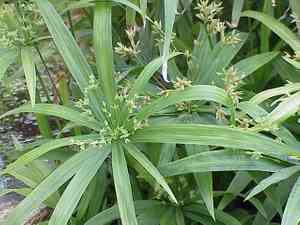
Woodrush flatsedge (Cyperus entrerianus)
Also known as: Deep-rooted sedge
Woodrush flatsedge (Cyperus entrerianus) is a perennial sedge that flourishes in wet environments such as marshes, stream banks, and ditches. Characterized by its triangular stems and narrow, grass-like leaves, this plant reaches heights of 20-80 cm. It produces small, yellowish-brown spikelets arranged in dense clusters. Its extensive rhizome system allows it to form large colonies, demonstrating its adaptability to moist to wet soils. Woodrush flatsedge prefers full sunlight to partial shade and can be found in both temperate and tropical regions.
In This Article
Attributes of Woodrush flatsedge
Lifespan
Perennial
Plant Type
Grass
Plant Height
Approximately 0.3 to 1 meter
Spread
N/A
Leaf Color
Green
Flower Size
Small, usually less than 1 cm
Flower Color
Yellow Brown
Images of Woodrush flatsedge
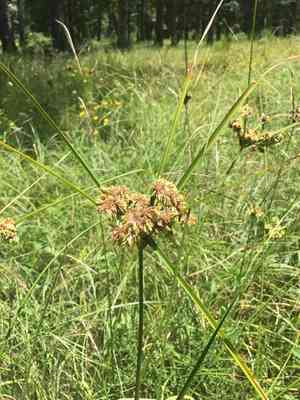
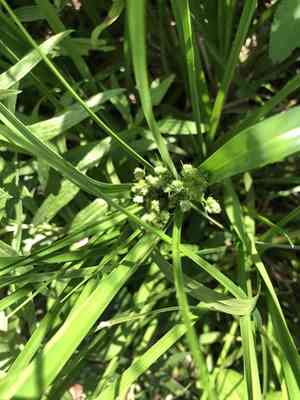
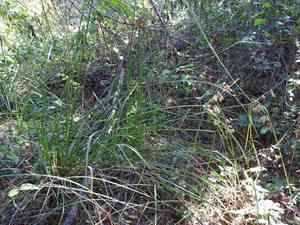
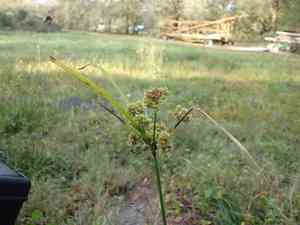
Quickly Identify Woodrush flatsedge
1
Triangular stems with purple-black bases for contrast.
2
Clustered spikelets in greenish-white inflorescence.
3
Small, brown achenes with high seed output.
4
Linear leaves, glossy with purple-black bases.
5
Triangular stem profile, erect growth without branches.
Scientific Classification of Woodrush flatsedge
Phylum
Vascular plants
Class
Monocotyledons
Order
Poales
Family
Sedge
Genus
Nutgrasses
Species
Woodrush flatsedge
Planting and Growing of Woodrush flatsedge
Care Difficulty
Easy
Watering Schedule
Every 3 days
Sunlight Requirements
Full sun
Sunshine Duration
4-8 hours
Ideal Temperature
68-77℉
Soil Type
Potting Mix, Peat Mix
Soil pH
6.5-7.5
Fertilizer Type
Balanced
Pruning Season
Spring, Summer
Pruning Area
Branches, Leaves
Pruning Frequency
2 times a year
Repotting Season
Spring
Pot Type
Plastic, Ceramic
 How to Water Woodrush flatsedge?
When watering Cyperus entrerianus, ensure the soil is evenly moist but not waterlogged. Aim for about 300 ml of water to soak the root zone thoroughly without causing standing water. The soil should feel damp to the touch.
What are the symptoms of an underwatered Woodrush flatsedge?
›
What should I do if my Woodrush flatsedge is not getting enough water?
›
What are the symptoms of an overwatered Woodrush flatsedge?
›
How to save an overwatered Woodrush flatsedge?
›
 What Are the Sunlight Requirements for Woodrush flatsedge?
Cyperus entrerianus flourishes under full sun to partial sun conditions, ideally receiving 4 to 6 hours of sunlight. Optimal light exposure enhances growth, strengthening the plant’s resilience and boosting its aesthetic appeal, ensuring overall vitality.
How much sunlight does Cyperus entrerianus need?
›
What are the solutions to ensure Cyperus entrerianus gets ideal lighting?
›
What benefits does Cyperus entrerianus gain from ideal lighting?
›
 What Is the Ideal Temperature Range for Woodrush flatsedge?
The ideal temperature range for Cyperus entrerianus growth is between 68°F and 77°F. Within this range, the plant is most likely to thrive, showing optimal growth and vibrant green foliage. These temperatures mimic the plant’s natural habitat conditions, promoting proper metabolic and photosynthetic activities.
 What Soil is Best for Woodrush flatsedge?
Cyperus entrerianus thrives in moist soil conditions that retain adequate water. Loam and sandy loam soils are particularly effective in providing the right level of moisture without becoming waterlogged, allowing the plant to flourish with vibrant green foliage. Rich in organic content, the ideal soil for Cyperus entrerianus offers abundant nutrients to support its rapid growth. These nutrients facilitate strong root development and healthy foliage, ensuring the plant remains lush and resilient. Well-aerated soil prevents root rot in Cyperus entrerianus by allowing oxygen to reach the roots. This ensures robust growth and helps in avoiding fungal diseases, contributing to the plant’s overall vigor and longevity.
 How to Fertilize Woodrush flatsedge?
For Cyperus entrerianus, it is important to apply fertilizers in moderation. Liquid fertilizers should be diluted to half the recommended strength to prevent any root burn or leaf scorching. For slow-release fertilizers, 5g per square meter is generally adequate. Always follow the manufacturer's guidelines for best results.
 How to Prune Woodrush flatsedge?
Begin your pruning session by removing any dead or damaged leaves. This not only improves the visual appearance but also allows light and air to reach healthier parts of the plant. Assess the overall shape of the plant and trim the outer edges to maintain its desired form. Be cautious not to cut too deeply into the plant's crown as this could damage new growth. Trim the tops of taller stems to keep the plant well-proportioned and to have an even canopy. This procedure encourages lateral growth, making your Cyperus entrerianus look fuller and more attractive. Thin out the interior parts to avoid overcrowding. Removing some of the inner stems can facilitate better airflow and reduce the chances of fungal infections.
More About Pruning Techniques→
 How to Propagate Woodrush flatsedge plant?
1
Collect seeds from mature Cyperus entrerianus plants. Soak the seeds overnight in water to increase germination success, as the outer coat absorbs moisture.
2
During the spring, dig up the parent plant carefully to expose the rhizomes. Use shears to cut into sections, ensuring each has a healthy root system.
3
Fill pots with a well-draining soil mix and place seeds or rhizome divisions just below the surface. Water gently to settle the soil but avoid compaction.
 How to Repot Woodrush flatsedge plant?
1
Cyperus entrerianus shows signs of needing a repot when its roots start to circle the pot's perimeter or poke through the drainage holes. Additionally, if water is not penetrating the soil effectively, it's a clear sign. Timing between late spring and early summer optimizes root recovery and growth.
2
Opt for a pot that is 2-3 inches larger in diameter than the current one. This prevents root bound issues and allows adequate space for growth. Ensure the pot has proper drainage holes to prevent waterlogging, which is imperative for maintaining optimal health of Cyperus entrerianus.
3
The ideal soil for Cyperus entrerianus is a well-draining sandy loam mixed with perlite. This combination promotes strong root development and prevents the common issue of root rot by ensuring efficient excess water drainage, which is vital for the plant’s overall health.
Learn More About Woodrush flatsedge Diseases
Anthracnose
Bacterial Leaf Spot
Bacterial Soft Rot
Bacterial Wilt
Chemical Injury
Cyst Nematode
Damping-off
Downy Mildew
Drought Stress
Fusarium Wilt
Gray Mold
Leaf Spot
Mosaic
Nutrient Deficiency
Nutrient Toxicity
Powdery Mildew
Root Rot
Root-knot Nematode
Rusts
Sooty Mold
Spider Mites
Temperature Stress
Thrips Damage
White Mold



