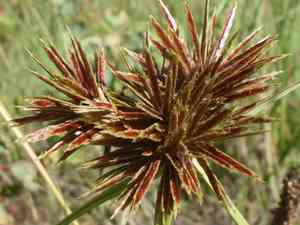
Clustered flat-sedge (Cyperus congestus)
Also known as: Dense flat-sedge
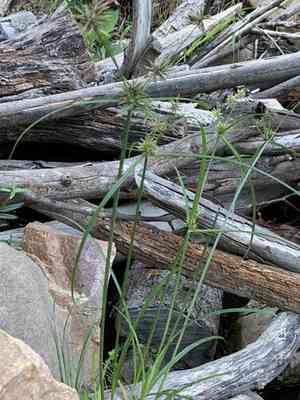
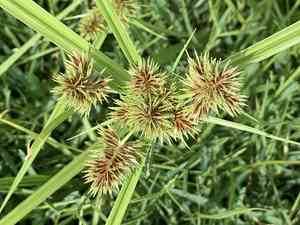
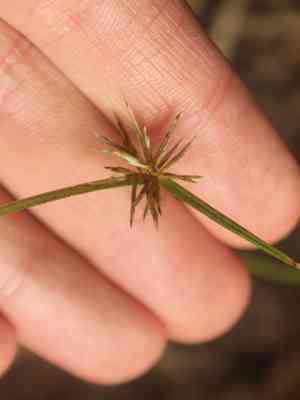
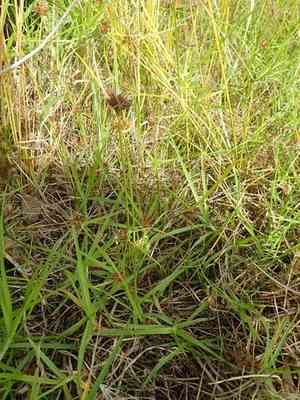
The perennial sedge commonly reaches about 1 meter in height and has a tufted growth form. Its culms are triangular and smooth, displaying a pink-red hue near the base. The leaves are 4 to 8 mm wide, featuring a pronounced central ridge. The inflorescence consists of up to 20 smaller, reddish-brown spikelets, each 1 to 2.5 cm long. Post-flowering, the plant produces a dark brown to black nut, which is trigonous and narrow-obovoid in shape, measuring around 1.5 mm in length and 0.6 mm in diameter.
In This Article
Attributes of Clustered flat-sedge
Lifespan
Perennial
Plant Type
Grass
Plant Height
30-60 cm
Spread
Not applicable (clump-forming)
Leaf Color
Green
Flower Size
1-2 cm (inflorescence cluster)
Flower Color
Green Brown
Images of Clustered flat-sedge
Quickly Identify Clustered flat-sedge
1
Identify Cyperus congestus by its dense, clump-forming growth habit, slender green stems, and small terminal clusters of inflorescences. It often grows in moist, swampy areas.
Scientific Classification of Clustered flat-sedge
Phylum
Vascular plants
Class
Monocotyledons
Order
Poales
Family
Sedge
Genus
Nutgrasses
Species
Clustered flat-sedge
Planting and Growing of Clustered flat-sedge
Care Difficulty
Easy
Watering Schedule
Every 4 days
Sunlight Requirements
Full sun
Sunshine Duration
4-8 hours
Ideal Temperature
65-75℉
Soil Type
Potting Mix, Peat Mix
Soil pH
6.5-7.5
Fertilizer Type
Balanced
Pruning Season
Spring, Summer
Pruning Area
Branches, Leaves
Pruning Frequency
2 times a year
Repotting Season
Spring
Pot Type
Plastic, Ceramic
 How to Water Clustered flat-sedge?
The Cyperus congestus prefers consistently moist soil, so a watering of about 200 milliliters per session is optimal. Water thoroughly until you see it draining from the bottom of the pot to ensure moisture reaches the root zone. The goal is to maintain a level of moisture that is neither soggy nor dry. This mirrors its natural wetland habitat.
What are the symptoms of an underwatered Clustered flat-sedge?
›
What should I do if my Clustered flat-sedge is not getting enough water?
›
What are the symptoms of an overwatered Clustered flat-sedge?
›
How to save an overwatered Clustered flat-sedge?
›
 What Are the Sunlight Requirements for Clustered flat-sedge?
Ideally, Cyperus congestus should be exposed to full sun for part of the day, as this light exposure encourages vigorous growth and healthy foliage, ensuring optimal overall plant well-being.
How does Cyperus congestus thrive in its environment?
›
What are some solutions to achieve ideal lighting for Cyperus congestus?
›
What benefits does Cyperus congestus experience from ideal light exposure?
›
 What Is the Ideal Temperature Range for Clustered flat-sedge?
For optimal growth and development, Cyperus congestus thrives best in a temperature range between 65°F to 75°F. This range ensures proper metabolic functioning and photosynthesis, key for healthy growth.
 What Soil is Best for Clustered flat-sedge?
Cyperus congestus thrives in well-draining soil which allows water to pass through efficiently, preventing root rot. Good drainage ensures that the roots receive adequate aeration, promoting healthy growth. The plant benefits from a nutrient-rich substrate which supports vigorous growth. Incorporating organic matter like compost enhances soil fertility, providing essential nutrients that fuel the plant's life cycle. This plant prefers soil with consistent moisture levels. Ensuring that the soil remains evenly moist mimics its natural habitat conditions, reducing stress and encouraging lush foliage.
 How to Fertilize Clustered flat-sedge?
Cyperus congestus generally requires a balanced and gentle approach to fertilization. For liquid fertilizer, a dilution ratio of one part fertilizer to ten parts water is suggested to prevent nutrient burn. For slow-release granules, follow the manufacturer's instructions, which usually recommend around 1 to 2 tablespoons per square foot, evenly distributed across the soil surface. The quantities should be adjusted based on the plant's growth stage and environmental conditions.
 How to Prune Clustered flat-sedge?
Always use clean, sharp scissors or gardening shears to make clean cuts. This will prevent tearing and damage to the plant tissue, reducing the risk of disease. Sanitizing tools between plants prevents cross-contamination and spreads potential pathogens. Prune Cyperus congestus in the early morning or late afternoon to avoid stressing the plant under the hot sun. Make sure the weather is dry, as cuts made in wet conditions are more susceptible to infection.
More About Pruning Techniques→
 How to Propagate Clustered flat-sedge plant?
1
Fill the seed tray with a mix of peat and perlite. Sow the seeds on the surface and lightly cover them. Keep the soil moist but not waterlogged and place the tray in a warm, indirect light area.
2
Carefully dig up the mature Cyperus congestus clump using a sharp spade. Gently separate the clump into smaller sections with roots intact. Replant the divisions in prepared soil, spacing them adequately.
3
Once the seeds germinate, provide them with plenty of light, but avoid direct sunlight. Gradually acclimate the seedlings to outdoor conditions before transplanting into the ground when they are large enough.
 How to Repot Clustered flat-sedge plant?
1
Cyperus congestus signals readiness for repotting when roots start growing through the drainage holes or the plant appears root-bound. Spring or early summer is ideal as the plant’s growth is most active. Repot when your plant seems sluggish despite regular care, ensuring it has ample room to expand.
2
Select a pot that's 1-2 inches larger in diameter compared to the current one. It should have adequate drainage holes to prevent water stagnation. A slightly larger pot prevents waterlogging yet allows roots space to thrive, promoting vigorous plant growth and health.
3
Opt for a well-draining mix, possibly prepared with ingredients like peat, perlite, and a bit of coarse sand. This type of soil prevents compacting, ensuring roots receive adequate air and drainage, thus facilitating healthy growth and reducing the risk of root rot.



