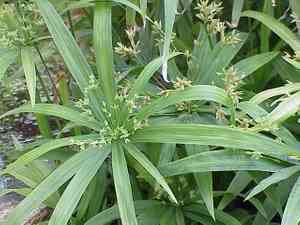
Asian flatsedge(Cyperus amuricus)

Asian flatsedge (Cyperus amuricus)

Also known as: Amur Sedge

Asian flatsedge (Cyperus michelianus) is an annual sedge that thrives in wetland environments. It is notable for its slender, upright stems and narrow, grass-like leaves. This plant produces small, brownish spikelets grouped in clusters, giving it a distinctive look.

### Characteristics:
1. **Growth Habit**: Typically reaches heights of 10-30 cm, forming thin, erect stems.
2. **Leaves**: Narrow, grass-like leaves that are generally shorter than the stems.
3. **Flowers**: Features clusters of small, brownish spikelets.
4. **Root System**: Shallow and fibrous, aiding in soil stabilization.

### Ecological Benefits:
1. **Erosion Control**: The fibrous root system helps anchor soil, thereby reducing erosion in wetland environments.
2. **Water Quality**: Improves water quality by capturing sediments and absorbing excess nutrients.
3. **Habitat Provision**: Offers habitat and food sources for various wetland species, including insects and birds.
4. **Nutrient Cycling**: Contributes to the decomposition of organic matter and nutrient cycling.
5. **Flood Reduction**: Enhances water absorption and slows down water flow during heavy rains, helping to mitigate floods.

These attributes make Asian flatsedge an essential plant for maintaining the health and stability of wetland ecosystems.

Attributes of Asian flatsedge

Lifespan
Annual
Plant Type
Grass
Plant Height
5 cm to 50 cm
Spread
N/A
Leaf Color
Green
Flower Size
8 mm to 3 cm
Flower Color
Red Purple Brown

ForwardPlant - Identify plants with a snap

Identify and diagnose plants, get toxicity alerts, and explore safety guides for all types of fungi.

Try for Free

Images of Asian flatsedge

Asian flatsedge(Cyperus amuricus)

Quickly Identify Asian flatsedge

1
The plant can be recognized by its tufted, grass-like appearance with triangular stems, and typically grows in wetlands or along riverbanks.

Scientific Classification of Asian flatsedge

Phylum
Vascular plants
Class
Monocotyledons
Order
Poales
Family
Sedge
Genus
Nutgrasses
Species
Asian flatsedge

Planting and Growing of Asian flatsedge

Care Difficulty
Easy
Watering Schedule
Every 4 days
Sunlight Requirements
Partial sun
Sunshine Duration
6-10 hours
Ideal Temperature
70-85℉
Soil Type
Potting Mix, Peat Mix
Soil pH
6.5-7.5
Fertilizer Type
Balanced
Pruning Season
Spring, Summer
Pruning Area
Branches, Leaves
Pruning Frequency
2 times a year
Repotting Season
Spring
Pot Type
Plastic, Ceramic

water icon How to Water Asian flatsedge?

For Cyperus amuricus, watering should be thorough but not excessive. The soil should be moist to the touch, indicating that the roots have sufficient water; however, the soil should not be soggy or waterlogged, as this can lead to root rot.
What are the symptoms of an underwatered Asian flatsedge?
What should I do if my Asian flatsedge is not getting enough water?
What are the symptoms of an overwatered Asian flatsedge?
How to save an overwatered Asian flatsedge?

sunlight icon What Are the Sunlight Requirements for Asian flatsedge?

Sunlight Requirements: Partial sun
Duration of light: 3-6 hours daily
Partial sun is ideal as it simulates natural conditions, promoting balanced growth and vibrant foliage. This range helps avoid common problems associated with extreme brightness or darkness, fostering a resilient and aesthetically pleasing plant.
What is the best lighting to keep Cyperus amuricus healthy?
How can Cyperus amuricus achieve optimal lighting conditions?
What benefits does Cyperus amuricus get under ideal lighting?

temperature icon What Is the Ideal Temperature Range for Asian flatsedge?

Ideal Temperature: 70 ~ 85℉
Cyperus amuricus thrives best in a temperature range of 70 to 85°F. This range provides optimal conditions for photosynthesis and growth. Maintaining this temperature range helps ensure healthy foliage and robust root development.

soil icon What Soil is Best for Asian flatsedge?

Soil type: Sandy loam, Loam
Soil PH: 6.5 ~ 7.5
Cyperus amuricus thrives best in soils with good drainage capabilities. Excess water should easily percolate through the soil to prevent root rot. Proper drainage not only keeps the rhizomes healthy but also ensures that the plant can intake necessary oxygen, promoting robust growth. This species prefers moderately fertile soil. High organic matter content supports healthy foliage without leading to excessive growth. Maintaining moderate fertility provides the nutrients required for sustainable growth while safeguarding against nutrient lockout or deficiencies. While good drainage is crucial, the soil should still be able to retain moisture to support the plant’s water needs. Sandy loam balances these traits, allowing the plant to access water consistently, thus improving leaf and root health.

fertilize icon How to Fertilize Asian flatsedge?

Fertilizer type: Balanced
For optimizing the growth of Cyperus amuricus, apply a balanced liquid fertilizer diluted to half its strength. It is crucial not to over-apply; a good amount is roughly one teaspoon for every gallon of water. This allows the plant to absorb necessary nutrients without risk of chemical burn.

prune icon How to Prune Asian flatsedge?

Pruning Time: Spring, Summer, Autumn
Begin by identifying and removing any dead, worn-out, or damaged stems. These old stems can hinder new growth and provide hiding spots for pests and diseases. Clip them at the base to encourage new and vigorous shoots. Prune your Cyperus amuricus to maintain a tidy appearance and promote bushier growth. Trim back long or ungainly stems to achieve the desired shape while ensuring you don't overly reduce the plant mass at once. Understand that your Cyperus amuricus may have different needs in different seasons. In spring and summer, focus on vigorous growth management. In autumn, prepare it for dormancy, ensuring any damaged sections are removed to prevent winter rot. More About Pruning Techniques

propagate icon How to Propagate Asian flatsedge plant?

Propagate Time: Spring, Early spring
1
Begin by filling a seed tray with seed-starting mix, moisten it slightly, and evenly distribute the seeds on the surface. Cover lightly with more mix and keep in a warm place with indirect sunlight.
2
To propagate by division, carefully dig up the mature plant during the early spring, ensuring you keep the roots intact. Gently shake off excess soil to expose the root system.
3
Separate the plant into smaller sections, ensuring each section has healthy roots and shoots. Plant these divisions in prepared soil, water them well, and keep them shaded until established.
More About Propagating Techniques

repot icon How to Repot Asian flatsedge plant?

Repotting frequency: Every 2-3 years
1
Cyperus amuricus should be repotted when you observe signs like roots starting to grow through the pot's drainage holes, or when the plant's growth appears stunted. Additionally, if the soil seems to dry out much faster than usual, it's a signal that the plant may need more room to thrive.
2
When selecting a pot for repotting, choose one that is typically one size larger than the existing pot to allow room for growth. The pot should also have ample drainage holes to prevent water stagnation, which can lead to root rot. A breathable material like terracotta is ideal as it helps regulate moisture levels.
3
Opt for a well-draining potting mix for Cyperus amuricus, which will prevent waterlogging while retaining essential moisture. Mixing in materials such as perlite or sand can enhance the soil’s drainage capacity, ensuring the roots remain healthy and aerated. This setup mimics its natural habitat, promoting vigorous growth.

ForwardPlant - Identify plants with a snap

Find the best spots for them to optimize their health, simply using your phone.

Try for Free

