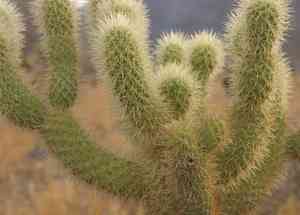
Teddy bear cholla (Cylindropuntia bigelovii)
Also known as: Teddy-bear cactus
The Teddy bear cholla (Cylindropuntia bigelovii) is a perennial succulent that thrives in arid regions such as sandy flats, rocky washes, and deserts. This plant produces lime green flowers with hints of lavender in the spring. Its spiny stem segments easily detach and fall to the ground, taking root to form new plants. Although its stems look soft and fuzzy like a teddy bear, they are covered with sharp spines.
In This Article
Attributes of Teddy bear cholla
Lifespan
Perennial
Plant Type
Shrub
Plant Height
30 cm to 1.5 m
Spread
1.5 m
Leaf Color
Leaves are reduced to small, ephemeral structures; the main body is green.
Flower Size
2.5 cm to 5 cm
Flower Color
Yellow Green White Pink Purple Red
Images of Teddy bear cholla
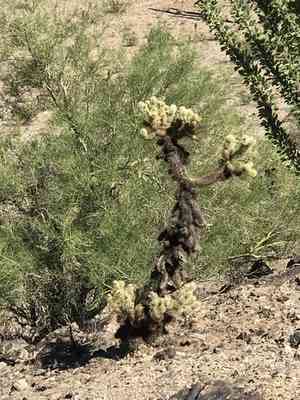
Quickly Identify Teddy bear cholla
1
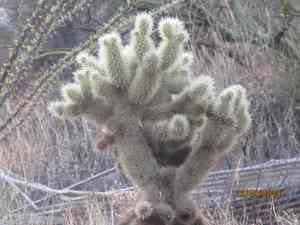
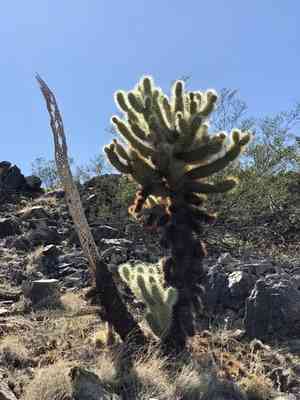
The Teddy Bear Cholla can be identified by its densely packed, star-like clusters of spines, which appear to glow in the sunlight. The spines are surrounded by a paper-like sheath giving the cactus a soft, teddy bear look from afar.
Scientific Classification of Teddy bear cholla
Phylum
Vascular plants
Class
Dicotyledons
Order
Caryophyllales
Family
Cactuses
Genus
Chollas
Species
Teddy bear cholla
Planting and Growing of Teddy bear cholla
Care Difficulty
Easy
Watering Schedule
Every day
Sunlight Requirements
Full sun
Sunshine Duration
4-8 hours
Ideal Temperature
70-90℉
Soil Type
Potting Mix, Peat Mix
Soil pH
6.5-7.5
Fertilizer Type
Balanced
Pruning Season
Spring, Summer
Pruning Area
Branches, Leaves
Pruning Frequency
2 times a year
Repotting Season
Spring
Pot Type
Plastic, Ceramic
 How to Water Teddy bear cholla?
Cylindropuntia bigelovii, commonly known as the teddy bear cholla, thrives in arid conditions. When watering, ensure that the soil is almost completely dry, yet not desiccated, before delivering water. Approximately 60 milliliters is ideal, wetting just enough of the root zone without causing pooling or oversaturation.
What are the symptoms of an underwatered Teddy bear cholla?
›
What should I do if my Teddy bear cholla is not getting enough water?
›
What are the symptoms of an overwatered Teddy bear cholla?
›
How to save an overwatered Teddy bear cholla?
›
 What Are the Sunlight Requirements for Teddy bear cholla?
Place this plant in full day sunny locations for best results. Ideal light conditions enable optimal photosynthesis, leading to vigorous growth and anchoring the plant's nutrient and water retention systems.
More About Sunlight Requirements Techniques→
How much sunlight does Cylindropuntia bigelovii need?
›
What can I do to ensure optimal lighting conditions?
›
What are the benefits of providing ideal lighting conditions?
›
 What Is the Ideal Temperature Range for Teddy bear cholla?
The ideal temperature range for Cylindropuntia bigelovii growth is between 70°F and 90°F. This range provides the best conditions for photosynthesis and other metabolic activities, ensuring healthy growth and resilience.
 What Soil is Best for Teddy bear cholla?
Cylindropuntia bigelovii thrives best in well-drained soil, which prevents root rot by allowing excess water to escape quickly. This is crucial for its healthy growth, as it mimics the plant's native arid dessert environment. This plant is accustomed to low-nutrient environments, reflecting the desert habitats where they originated. A nutrient-dense soil may actually hinder its growth by promoting unwanted microbial activity. A rocky, sandy soil structure is ideal as it closely simulates the natural desert terrain. This mixture encourages stronger root development by mimicking the plant's native growing conditions.
 How to Fertilize Teddy bear cholla?
For Cylindropuntia bigelovii, a balanced fertilizer with a 20-20-20 NPK ratio at half strength is recommended. Use approximately 1/4 cup for a medium-sized plant, diluted in water if using liquid fertilizers.
 How to Prune Teddy bear cholla?
Begin by removing any dead or dry segments at their base using the shears. This not only improves the aesthetic of the plant but also prevents disease. If your cholla is getting too large or unruly, cautiously trim the outer segments to control its growth. This should be done in small amounts to maintain the plant's natural shape.
 How to Propagate Teddy bear cholla plant?
1
Choose a healthy segment from the parent plant. Use clean pruning shears to make a cut at a joint, ensuring the piece has at least 2-3 segments for successful propagation.
2
Allow the cut end of the segment to callous over by placing it in a dry location for several days. This prevents rot when the cutting is planted.
3
Once calloused, plant the segment in a container with well-draining soil. Place the segment upright, ensuring at least one joint is buried to promote rooting.
 How to Repot Teddy bear cholla plant?
1
Cylindropuntia bigelovii needs repotting when its roots outgrow the current pot, or when the soil quality has degraded. Look for roots visibly protruding from the drainage holes as a key signal. Additionally, if the soil takes longer to dry out or compaction is evident, it's time for a change.
2
Select a new pot that is slightly larger than the current one, especially about 1 to 2 inches wider in diameter. Ensure it has adequate drainage holes to prevent waterlogging. A terracotta pot is preferable as it allows for better breathability, helping the soil dry out between waterings.
3
Use a cactus-specific potting mix that ensures excellent drainage and mimics the plant's natural desert environment. A well-chosen mix reduces the risk of root rot and provides adequate aeration and mineral content necessary for healthy growth.



