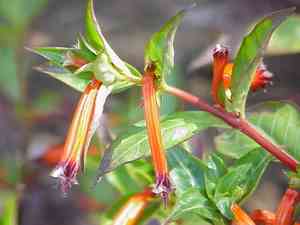
Cigar plant (Cuphea ignea)
Also known as: Cigar flower, Vegetable firecracker, Mexican cigar plant
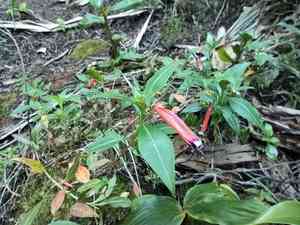
Cuphea ignea, also known as the cigar plant, firecracker plant, or Mexican cigar, belongs to the Lythraceae family. This tropical evergreen subshrub is native to Mexico and the West Indies. It features dense branching and produces small, tubular flowers that are bright red to orange with a white tip and two tiny purple-black petals, giving it a look reminiscent of a lit cigar. The leaves are small, elliptical, and bright green, and the plant typically grows up to 61 cm in height.
In temperate regions, Cuphea ignea is sensitive to frost and thus requires a warm, sheltered location. It can be grown outdoors in such conditions or cultivated indoors as a houseplant. Alternatively, it can be grown under glass. Ensuring well-drained soil and providing full sun to partial shade are key to its cultivation. Notably, in the UK, Cuphea ignea has been recognized with the Royal Horticultural Society's Award of Garden Merit.
Attributes of Cigar plant
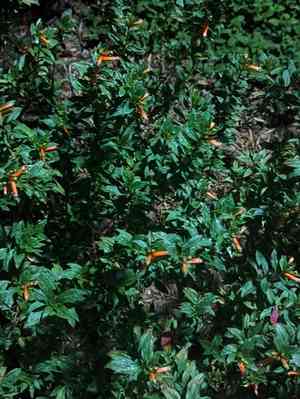
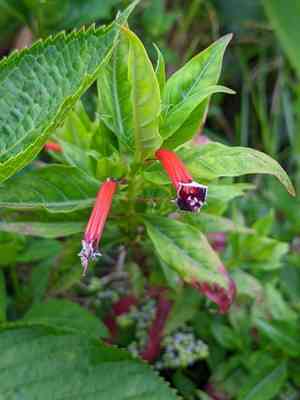
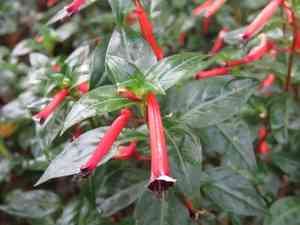
Images of Cigar plant
Quickly Identify Cigar plant
Scientific Classification of Cigar plant
Planting and Growing of Cigar plant
 How to Water Cigar plant?
 What Are the Sunlight Requirements for Cigar plant?
 What Is the Ideal Temperature Range for Cigar plant?
 What Soil is Best for Cigar plant?
 How to Fertilize Cigar plant?
 How to Prune Cigar plant?
 How to Propagate Cigar plant plant?
 How to Repot Cigar plant plant?
Toxicity of Cigar plant
Is Cigar plant toxic to humans?
The Cigar plant exhibits a mild level of toxicity to humans, with all parts of the plant being capable of inducing poisoning if ingested. Its toxic characteristics arise from the presence of alkaloids, glycosides, and saponins. Upon consumption, individuals may suffer from various symptoms, including gastrointestinal issues such as nausea, vomiting, and diarrhea. Moreover, some may experience neurological manifestations like dizziness or headaches. Given that the entire plant is toxic, precautions should be taken to avoid unintentional ingestion, especially by children or pets attracted to its vibrant appearance. While the cigar plant's mild toxicity necessitates caution, it is not generally linked to severe or life-threatening consequences.
Is Cigar plant toxic to cat?
The cigar plant is known to possess mild toxicity towards cats. If a feline friend inadvertently ingests any portion of this plant, they are at risk of toxicity due to the presence of toxic elements in its entire structure. The identified harmful compounds include alkaloids, glycosides, and saponins. Following consumption of the cigar plant, a cat may exhibit signs of physical distress, which requires prompt intervention from a veterinarian. Therefore, if a pet owner suspects that their cat has consumed the cigar plant, it is crucial to seek professional medical help at a veterinary clinic without delay.
Is Cigar plant toxic to dog?
The cigar plant is categorized as having mild toxicity for dogs. If canines consume any part of this plant, they may experience poisoning since the entire plant is toxic. Even small quantities ingested can lead to symptoms in dogs, including gastrointestinal distress, vomiting, and diarrhea. The adverse effects are due to the presence of alkaloids, glycosides, and saponins in the cigar plant. If a dog exhibits signs of poisoning after eating cigar plant, it is crucial to obtain immediate veterinary attention to secure the most favorable outcome for the pet.



