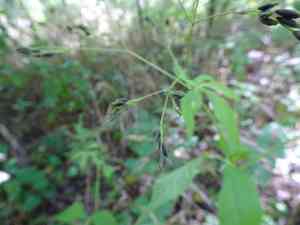
Canadian honewort (Cryptotaenia canadensis)
Also known as: Umbelweed
Sweet Cicely (Myrrhis odorata) is a perennial that typically reaches heights of 30 to 91 cm. It thrives in woodland settings with partial shade. The plant features edible stems and leaves that have a parsley-like taste. In the summer, it produces attractive creamy-white flower clusters.
In This Article
Attributes of Canadian honewort
Lifespan
Perennial
Plant Type
Herb
Plant Height
30 cm to 91 cm
Spread
60 cm
Leaf Color
Green
Flower Size
2.5 cm
Flower Color
White
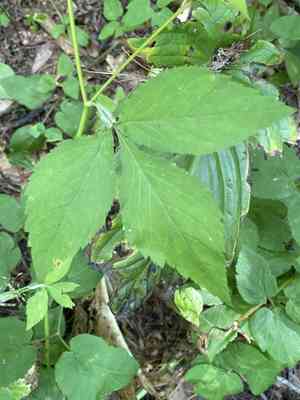
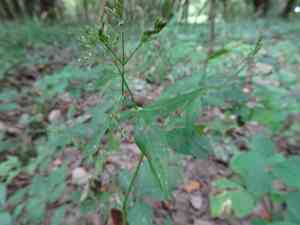
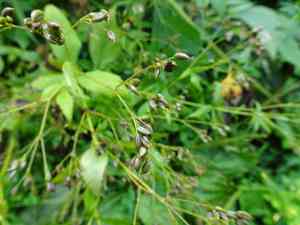
Images of Canadian honewort
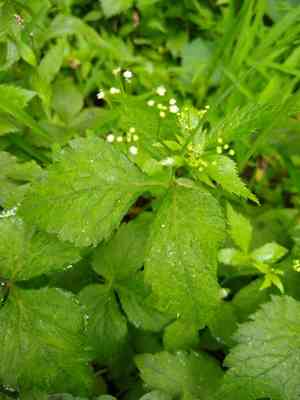
Quickly Identify Canadian honewort
1
This plant can be identified by its compound leaves, which are divided into three leaflets, each toothed and slightly lobed. The small, white, and inconspicuous flowers appear in umbels.
Scientific Classification of Canadian honewort
Phylum
Vascular plants
Class
Dicotyledons
Order
Apiales
Family
Umbellifers
Genus
Honeworts
Species
Canadian honewort
Planting and Growing of Canadian honewort
Care Difficulty
Easy
Watering Schedule
Every 4 days
Sunlight Requirements
Partial sun
Sunshine Duration
6-8 hours
Ideal Temperature
60-75℉
Soil Type
Potting Mix, Peat Mix
Soil pH
6.5-7.5
Fertilizer Type
Balanced
Pruning Season
Spring, Summer
Pruning Area
Branches, Leaves
Pruning Frequency
2 times a year
Repotting Season
Spring
Pot Type
Plastic, Ceramic
 How to Water Canadian honewort?
For Cryptotaenia canadensis, ensure the soil stays consistently moist but not soggy. During each watering session, aim for about 250 ml of water, applied gradually to allow absorption without runoff. Your goal is to reach the moisture level similar to a well-wrung-out sponge.
What are the symptoms of an underwatered Canadian honewort?
›
What should I do if my Canadian honewort is not getting enough water?
›
What are the symptoms of an overwatered Canadian honewort?
›
How to save an overwatered Canadian honewort?
›
 What Are the Sunlight Requirements for Canadian honewort?
Cryptotaenia canadensis prefers a light range of partial sun to full shade. In such environments, the plant flourishes with strong leaf coloration and robust growth, mimicking its native woodland settings.
What is the optimal light condition for Cryptotaenia canadensis?
›
How can I ensure these lighting conditions at home or in my garden?
›
What are the benefits of providing ideal lighting conditions for this plant?
›
 What Is the Ideal Temperature Range for Canadian honewort?
Cryptotaenia canadensis thrives best in temperatures ranging from 60°F to 75°F. These temperatures support optimal growth and physiological processes. In this range, the plant can efficiently carry out photosynthesis, absorb nutrients, and develop healthy foliage.
 What Soil is Best for Canadian honewort?
Cryptotaenia canadensis thrives in soil that can retain adequate moisture without becoming waterlogged. The benefit of retaining moisture is that it ensures the plant has consistent access to water, crucial for its growth and vitality. This plant benefits greatly from soil rich in organic matter. Nutrient-rich soil provides essential elements that support healthy growth, enhance leaf production, and boost the plant's overall resilience against pests and diseases. The soil should have good drainage properties to prevent root rot. Soils with good drainage allow excess water to exit, which is especially important after heavy rainfalls, thus maintaining root health.
 How to Fertilize Canadian honewort?
Cryptotaenia canadensis prefers modest amounts of fertilizer due to its native habitat preferences. Generally, applying a liquid fertilizer diluted to half strength provides balanced nutrition without overwhelming its gentle roots. Adjust based on plant response.
 How to Prune Canadian honewort?
Begin by identifying any dead or damaged stems and leaves, and remove them to promote healthy growth. Cut back the stems by around one-third, making the cut just above a node to encourage new shoots. This will help maintain a bushy and compact form. After targeting the unhealthy parts, focus on shaping. Trim the plant to your desired shape, ensuring a balanced look. It's recommended to shape the plant while considering its natural growth pattern to minimize stress.
 How to Propagate Canadian honewort plant?
1
Collect seeds from mature Cryptotaenia canadensis plants when they start turning brown. Ensure to do this just before they drop for maximum viability.
2
Prepare the soil by loosening and ensuring it’s well-drained. Add compost or organic matter to enhance nutrient availability for seed germination and root growth.
3
Plant the seeds roughly ¼ inch deep in the soil or in seed trays. Water gently and keep the soil consistently moist but not waterlogged.
 How to Repot Canadian honewort plant?
1
It's time to repot Cryptotaenia canadensis when roots start emerging from the drainage holes or when growth seems slow despite regular care. Spring or summer, during active growth, is ideal as the plant recovers faster.
2
Select a pot that is 1-2 inches larger in diameter than the current one. Ensure it has good drainage, as Cryptotaenia canadensis dislikes waterlogged conditions. A slightly deeper pot encourages healthy root development.
3
Use a rich, well-draining soil mix to prevent root rot. A mix that includes organic matter like compost and perlite offers the right balance of nutrients and air for robust growth.
Learn More About Canadian honewort Diseases
Anthracnose
Bacterial Leaf Spot
Bacterial Soft Rot
Bacterial Wilt
Chemical Injury
Crown Gall
Cyst Nematode
Damping-off
Downy Mildew
Drought Stress
Fusarium Wilt
Gray Mold
Leaf Spot
Mosaic
Nutrient Deficiency
Nutrient Toxicity
Powdery Mildew
Root Rot
Root-knot Nematode
Rusts
Sooty Mold
Spider Mites
Temperature Stress
Thrips Damage
White Mold



