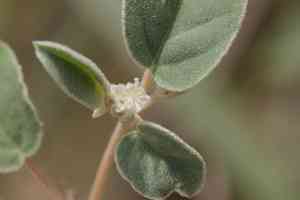
Three-seed croton (Croton lindheimerianus)
Also known as: Lindheimer's croton
Santolina, also known as Lavender Cotton, is a hardy, drought-resistant shrub ideal for dry landscapes. It boasts narrow, silver-gray leaves that shimmer in sunlight and clusters of small yellow flowers that provide a pop of color against its muted foliage. With a strong root system, it flourishes in rocky, nutrient-poor soils, making it perfect for xeriscaping and low-water gardening.
In This Article
Attributes of Three-seed croton
Lifespan
Perennial
Plant Type
Shrub
Plant Height
30 cm to 91 cm
Spread
Not applicable
Leaf Color
Grayish-green
Flower Size
3-5 mm
Flower Color
Yellowish-green or white
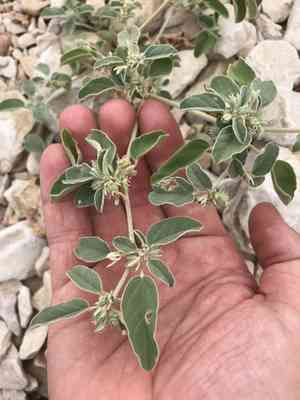
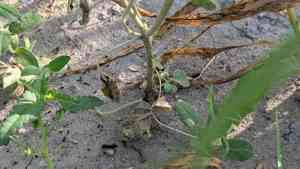
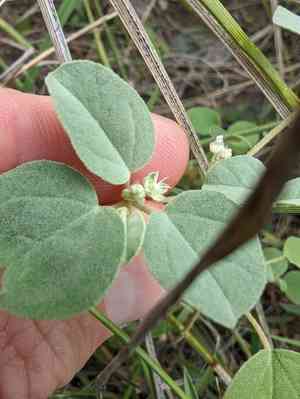
Images of Three-seed croton
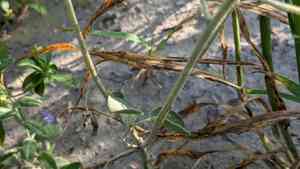
Quickly Identify Three-seed croton
1
Look for a low-growing herb with alternate, simple leaves that are grayish-green and slightly hairy. The plant often has a woody base, and the leaves emit a strong, medicinal smell when crushed.
Scientific Classification of Three-seed croton
Phylum
Vascular plants
Class
Dicotyledons
Order
Malpighiales
Family
Spurge
Genus
Rushfoils
Species
Three-seed croton
Planting and Growing of Three-seed croton
Care Difficulty
Moderate
Watering Schedule
Every 3 days
Sunlight Requirements
Full sun
Sunshine Duration
6-10 hours
Ideal Temperature
68-75℉
Soil Type
Potting Mix, Peat Mix
Soil pH
6.5-7.5
Fertilizer Type
Balanced
Pruning Season
Spring, Summer
Pruning Area
Branches, Leaves
Pruning Frequency
2 times a year
Repotting Season
Spring
Pot Type
Plastic, Ceramic
 How to Water Three-seed croton?
Croton lindheimerianus should be watered with enough quantity until the water starts to drain from the bottom of the pot. This ensures that the water reaches the root level effectively, promoting healthy root growth. Overwatering should be avoided, as the soil should not remain soggy; it just needs to be evenly moist. Adjust the amount based on environmental conditions, ensuring the soil doesn't feel too dry before the next watering session.
What are the symptoms of an underwatered Three-seed croton?
›
What should I do if my Three-seed croton is not getting enough water?
›
What are the symptoms of an overwatered Three-seed croton?
›
How to save an overwatered Three-seed croton?
›
 What Are the Sunlight Requirements for Three-seed croton?
Croton lindheimerianus ideally prefers a mix of full and partial sun throughout the day, benefiting its vibrant leaf coloration and vigorous growth due to elevated photosynthesis rates.
What is the best lighting environment for Croton lindheimerianus?
›
How can I ensure my Croton lindheimerianus gets adequate lighting?
›
What benefits does optimal lighting offer to Croton lindheimerianus?
›
 What Is the Ideal Temperature Range for Three-seed croton?
Croton lindheimerianus thrives best in temperatures ranging from 68°F to 75°F. This range allows for optimal growth and development, as the plant can efficiently carry out photosynthesis and other metabolic processes. Maintaining this range will help ensure vibrant foliage and overall plant health.
 What Soil is Best for Three-seed croton?
Croton lindheimerianus thrives in well-drained soil that prevents waterlogging. This condition helps the roots breathe properly, preventing root rot and other water-related issues. The plant benefits from soil enriched with organic matter, which provides essential nutrients and supports healthy growth and vibrant foliage. Soil that retains moderate moisture is ideal, as it supplies the plant with necessary hydration without drowning it, ensuring a balance between dryness and irrigation.
 How to Fertilize Three-seed croton?
For Croton lindheimerianus, use approximately half the recommended dose of a balanced liquid fertilizer every two weeks. Avoid over-fertilizing by ensuring the soil is moist before application.
 How to Prune Three-seed croton?
Begin by carefully examining the plant for any dead or damaged stems. These can be removed first, as they no longer contribute to the plant's vitality and can even hinder new growth. Look for areas where stems are growing too densely. Thinning them allows better air circulation and sunlight penetration, which helps in preventing disease and promoting healthy foliage. Focus on maintaining the plant's natural shape while trimming. Use the pruning shears to make angled cuts just above a leaf node, which encourages new growth in the desired direction.
More About Pruning Techniques→
 How to Propagate Three-seed croton plant?
1
Gather mature seeds from Croton lindheimerianus after the flowering period. It’s crucial to ensure that the seeds are ripe, as underdeveloped seeds will have low germination rates.
2
Choose healthy stems and make a clean cut at a 45-degree angle. Remove any leaves from the lower part of the cutting to prevent rotting once placed in the growing medium.
3
For both seeds and cuttings, plant them in a well-draining soil mix. Press them gently into the soil and water lightly to settle the soil around them.
 How to Repot Three-seed croton plant?
1
Croton lindheimerianus signals its repotting needs when roots start to emerge from the drainage holes or its growth slows significantly. Observing these signs in spring or summer is the ideal time for repotting, ensuring optimal growth.
2
Select a pot that's one size up from the current one, has adequate drainage holes, and complements the plant's aesthetic. This ensures healthy root growth, prevents waterlogging, and maintains the plant's visual appeal in your space.
3
Opt for a well-draining, loamy soil mix that retains enough moisture without becoming waterlogged. This soil type encourages healthy root development, provides essential nutrients, and reduces the risk of root rot, crucial for Croton's vibrant growth.
Toxicity
ingestion
WARNING
The judgment on toxicity and danger is for reference only. We DO NOT GUARANTEE any accuracy of such judgment. Therefore, you SHALL NOT rely on such judgment. It is IMPORTANT TO SEEK PROFESSIONAL ADVICE in advance when necessary.
Learn More About Three-seed croton Diseases
Anthracnose
Bacterial Leaf Spot
Bacterial Soft Rot
Bacterial Wilt
Black Spot
Chemical Injury
Crown Gall
Cyst Nematode
Damping-off
Downy Mildew
Drought Stress
Fusarium Wilt
Gray Mold
Leaf Curl
Leaf Spot
Mosaic
Nutrient Deficiency
Nutrient Toxicity
Powdery Mildew
Root Rot
Root-knot Nematode
Rusts
Sooty Mold
Spider Mites
Temperature Stress
Thrips Damage
White Mold



