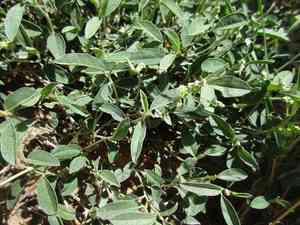
Grassland croton(Croton dioicus)

Grassland croton (Croton dioicus)

Also known as: Croton

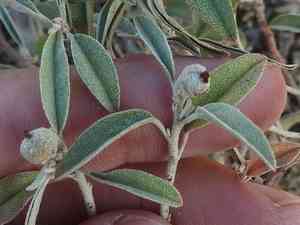
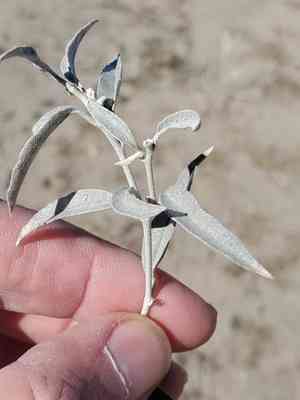
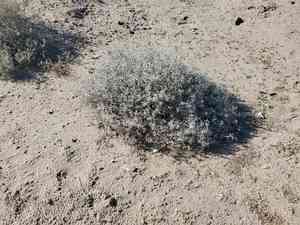
Grassland croton (Croton glandulosus) is a distinctive herbaceous plant recognized by its small, alternate leaves, often covered in tiny, glandular hairs that give it a sticky feel. Unlike some other crotons, its foliage is not split but generally oval to lance-shaped with pointed tips. The plant produces small, inconspicuous flowers, which can be either male or female on separate plants, classifying it as dioecious.

Key growing conditions include:
- Full sun exposure
- Well-drained soils, such as sandy or rocky substrates
- Adaptability to moderate to low water availability
- Commonly found in grasslands, prairies, and open woodlands

Grassland croton is adaptable and hardy, favoring open, sunny environments that mimic its native habitats. Its resilience in diverse conditions makes it a notable species in various ecosystems.

Attributes of Grassland croton

Lifespan
Perennial
Plant Type
Shrub
Plant Height
Typically up to 2 meters
Spread
Variable, usually around 1-1.5 meters
Leaf Color
Green, with some species exhibiting variegated patterns
Flower Size
Small, usually less than 1 cm
Flower Color
Yellow to greenish

ForwardPlant - Identify plants with a snap

Identify and diagnose plants, get toxicity alerts, and explore safety guides for all types of fungi.

Try for Free

Images of Grassland croton

Grassland croton(Croton dioicus)

Quickly Identify Grassland croton

1
Croton dioicus can be identified by its opposite leaves, dichotomous branching pattern, and small, inconspicuous flowers. The leaves are typically broad and may have a leathery texture.

Scientific Classification of Grassland croton

Phylum
Vascular plants
Class
Dicotyledons
Order
Malpighiales
Family
Spurge
Genus
Rushfoils
Species
Grassland croton

Planting and Growing of Grassland croton

Care Difficulty
Hard
Watering Schedule
Every 2 days
Sunlight Requirements
Partial sun
Sunshine Duration
4-6 hours
Ideal Temperature
65-85℉
Soil Type
Potting Mix, Peat Mix
Soil pH
6.5-7.5
Fertilizer Type
Balanced
Pruning Season
Spring, Summer
Pruning Area
Branches, Leaves
Pruning Frequency
2 times a year
Repotting Season
Spring
Pot Type
Plastic, Ceramic

water icon How to Water Grassland croton?

Watering Croton dioicus should always strive to mimic the natural rainfall patterns of its native habitat. Ensure that the soil is moist but not waterlogged. Use about 300 milliliters of water each time, aiming to moisten the root zone completely without water pooling at the bottom of the pot.
What are the symptoms of an underwatered Grassland croton?
What should I do if my Grassland croton is not getting enough water?
What are the symptoms of an overwatered Grassland croton?
How to save an overwatered Grassland croton?

sunlight icon What Are the Sunlight Requirements for Grassland croton?

Sunlight Requirements: Partial sun
Duration of light: 4 to 6 hours
Croton dioicus benefits from partial sunlight, ideally four to six hours of filtered light daily. This range supports robust growth and colorful foliage, keeping the plant lively and disease-resistant.
What is the ideal light level for Croton dioicus?
How can you provide the ideal lighting for Croton dioicus?
What benefits does Croton dioicus receive from ideal lighting?

temperature icon What Is the Ideal Temperature Range for Grassland croton?

Ideal Temperature: 65 ~ 85℉
Croton dioicus thrives best in temperatures ranging from 65°F to 85°F. This range supports optimal growth, maintaining the plant's vibrant coloration and leaf health. Consistent temperatures in this range prevent stress and encourage vigorous development.

soil icon What Soil is Best for Grassland croton?

Soil type: Loam, Sandy loam
Soil PH: 6.5 ~ 7.5
Croton dioicus thrives in soil that offers excellent drainage. This prevents waterlogging, ensuring that the roots remain healthy and prevent rot, promoting vibrant growth. A fertile soil packed with organic matter boosts the plant's growth. Nutrient-rich composition aids in robust leaf development and enhances the plant's natural coloration. While well-drained, the soil should retain enough moisture to sustain the plant between waterings. Consistent moisture levels support steady growth and prevent stress.

fertilize icon How to Fertilize Grassland croton?

Fertilizer type: Balanced
For Croton dioicus, the appropriate amount of fertilizer greatly depends on its growth stage and environmental conditions. During active growth, use 1/2 teaspoon of liquid fertilizer mixed with a gallon of water for every 2 to 4 weeks. For slow-release fertilizers, apply at the rate of 1 tablespoon per pot size of 12 inches once every four months to maintain steady nutrients release.

prune icon How to Prune Grassland croton?

Pruning Time: Spring, Summer
Begin by sterilizing your pruning shears with alcohol to prevent any disease transmission. Identify any dead or damaged branches and remove them by cutting just above a node or leaf set. Trim back any long or awkward branches to a desired shape, always cutting at a 45-degree angle to encourage healthy regrowth. Finish by picking off any yellow or withering leaves. After pruning, ensure your Croton dioicus is placed in a bright, indirect sunlight spot as this will aid in recovery and new growth. Water the plant moderately, allowing topsoil to dry out between waterings to prevent root rot. Feeding with a balanced liquid fertilizer can also support new growth following a pruning session. More About Pruning Techniques

propagate icon How to Propagate Grassland croton plant?

Propagate Time: Spring, Early summer
1
Harvest mature seeds from the plant and clean them thoroughly. Let them dry naturally to prevent mold growth before planting.
2
Select healthy stems, approximately 4-6 inches long, and use sterile scissors to make the cuts. Remove any leaves from the lower half to avoid them rotting in the soil.
3
Plant seeds or cuttings in well-draining potting mix. Lightly water after planting and ensure they are covered or placed in a greenhouse to provide a humid environment.
More About Propagating Techniques

repot icon How to Repot Grassland croton plant?

Repotting frequency: Once every year
1
Croton dioicus should be repotted when the roots visibly outgrow the pot or when its growth seems stunted despite optimal care conditions. If you notice roots poking through drainage holes, it's a clear signal that your plant is yearning for a larger space. Meanwhile, if the soil seems compacted or drains poorly, a fresh potting mix could invigorate your croton's growth. Choosing the right time to repot ensures the plant adjusts quickly, minimizing stress and promoting healthy growth spurts.
2
Pick a pot that is one size larger than the current one and has good drainage holes. The extra space provides ample room for root growth, reducing the need for frequent repotting, while the drainage holes prevent waterlogging, ensuring roots remain healthy and rot-free. The material of the pot can influence its moisture retention properties; terra-cotta pots allow the soil to dry out evenly, beneficial for crotons, which prefer not to sit in overly wet soil.
3
A well-draining, sandy soil mix is the ideal choice for repotting Croton dioicus. This type of soil facilitates proper drainage, preventing root rot and allowing for sufficient airflow, promoting robust root health. Adding perlite or coarse sand further enhances drainage, a crucial factor given that crotons can be quite sensitive to over-watering. The soil should also retain some moisture to keep the plant adequately hydrated without suffocating the roots.

ForwardPlant - Identify plants with a snap

Find the best spots for them to optimize their health, simply using your phone.

Try for Free

Toxicity

Ingestion, Contact with Sap

Identify toxic plants for your safety

Learn which plants are harmful to you and your pets, and make informed choices for a safer home!

Try for Free
WARNING
The judgment on toxicity and danger is for reference only. We DO NOT GUARANTEE any accuracy of such judgment. Therefore, you SHALL NOT rely on such judgment. It is IMPORTANT TO SEEK PROFESSIONAL ADVICE in advance when necessary.