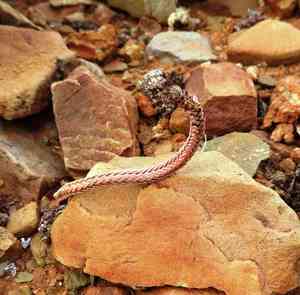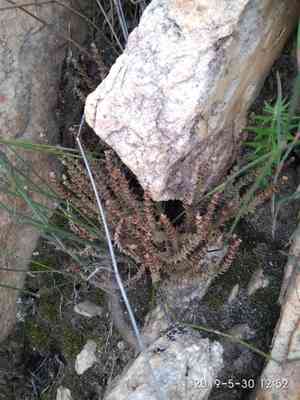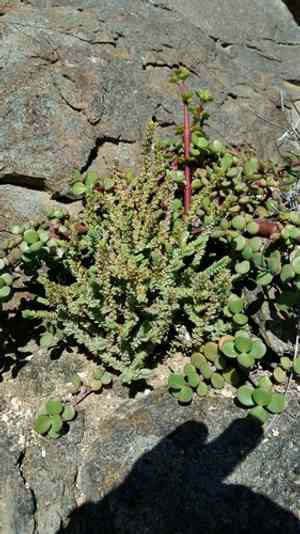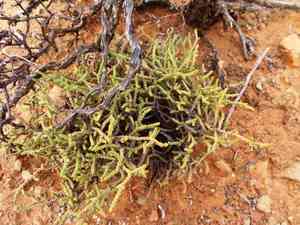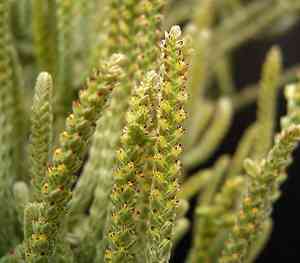
Watch chain(Crassula muscosa)

Watch chain (Crassula muscosa)

Also known as: Lizard's tail, Princess pine

The succulent houseplant species known as **Living Stones** (_Lithops_) originates from South Africa and Namibia. In addition to Living Stones, this plant is sometimes referred to as the **Pebble Plant** or **Ice Plant**. Its popularity as a houseplant stems from its remarkable ability to endure low temperatures and extended periods without water.

Attributes of Watch chain

Lifespan
Perennial
Plant Type
Succulent, Herb
Plant Height
15 cm to 30 cm
Spread
25 cm
Leaf Color
Green
Flower Size
2.5 cm
Flower Color
Green Yellow White

ForwardPlant - Identify plants with a snap

Identify and diagnose plants, get toxicity alerts, and explore safety guides for all types of fungi.

Try for Free

Images of Watch chain

Watch chain(Crassula muscosa)

Quickly Identify Watch chain

1
Coral-like branching stems
2
Tightly overlapping narrow leaves
3
Light green foliage color
4
Upright stems cascading due to leaf weight
5
Small, pale yellowish-green flowers in spring to mid-summer

Scientific Classification of Watch chain

Phylum
Vascular plants
Class
Dicotyledons
Order
Saxifragales
Family
Stonecrop
Genus
Crassula
Species
Watch chain

Planting and Growing of Watch chain

Care Difficulty
Easy
Watering Schedule
Every 2 days
Sunlight Requirements
Partial sun
Sunshine Duration
4-6 hours
Ideal Temperature
65-75℉
Soil Type
Potting Mix, Peat Mix
Soil pH
6.5-7.5
Fertilizer Type
Balanced
Pruning Season
Spring, Summer
Pruning Area
Branches, Leaves
Pruning Frequency
2 times a year
Repotting Season
Spring
Pot Type
Plastic, Ceramic

water icon How to Water Watch chain?

Crassula muscosa is a succulent plant that requires minimal water. Ensure that the soil dries out completely between watering sessions. Water until the soil is moistened but avoid soaking it, which could lead to root rot.
What are the symptoms of an underwatered Watch chain?
What should I do if my Watch chain is not getting enough water?
What are the symptoms of an overwatered Watch chain?
How to save an overwatered Watch chain?
More About Watering Techniques

sunlight icon What Are the Sunlight Requirements for Watch chain?

Sunlight Requirements: Partial sun
Duration of light: 4 to 5 hours
Partial sun, receiving 4 to 5 hours of indirect light daily ensures healthy, compact growth and prevents issues like etiolation and slow growth.
Optimal Duration of Sunlight
Achieving Ideal Sunlight
Benefits of Ideal Sunlight
More About Sunlight Requirements Techniques

temperature icon What Is the Ideal Temperature Range for Watch chain?

Ideal Temperature: 65 ~ 75℉
Crassula muscosa thrives best in temperatures ranging from 65°F to 75°F. This range ensures that the plant's metabolic processes run smoothly, promoting healthy growth and vibrant green foliage. At these temperatures, photosynthesis operates efficiently, and the risk of stress-induced damage is minimized.

soil icon What Soil is Best for Watch chain?

Soil type: Sandy soil, Loam, Calcareous soil
Soil PH: 6.5 ~ 7.5
Crassula muscosa thrives in well-draining soil, which prevents waterlogging and root rot. The rapid drainage ensures roots receive the necessary air to breathe, creating a healthier plant. While not overly demanding, Crassula muscosa benefits from soil with a balance of essential nutrients. Ensuring your soil mix includes organic matter helps promote robust growth and vibrant foliage. This plant prefers soil pH ranging from neutral to slightly alkaline. Maintaining this pH level ensures optimal nutrient absorption and supports overall plant health. More About Soil

fertilize icon How to Fertilize Watch chain?

Fertilizer type: Balanced
For Crassula muscosa, it’s crucial to use a balanced, water-soluble fertilizer at half the recommended strength. During the growing season, usually spring and summer, applying this diluted solution ensures the plant gets essential nutrients without the risk of burning its roots.

prune icon How to Prune Watch chain?

Pruning Time: Spring, Summer
Begin by identifying any dead or diseased stems, which should be removed completely to prevent the spread of disease. Use sharp, sterilized scissors or pruning shears to make clean cuts. Trim back the tops of stems to encourage bushier growth and maintain the desired shape, leaving at least one leaf pair on each stem for continued growth.

propagate icon How to Propagate Watch chain plant?

Propagate Time: Spring, Summer
1
Choose mature and healthy stems for cuttings. Avoid stems that look wilted, diseased, or infested with pests, as these may not root successfully.
2
Using sharp scissors, cut the stems to about 3-4 inches in length. Remove the lower leaves to expose stem nodes where roots will develop.
3
Dip the cut end into rooting hormone and insert it into a well-draining soil mixture. Ensure that at least one node is beneath the soil surface.
More About Propagating Techniques

repot icon How to Repot Watch chain plant?

Repotting frequency: Every 2-3 years
1
Crassula muscosa plants indicate the need for repotting when they become root-bound. If roots are visible through drainage holes or the plant outgrows its pot rapidly, it's time. The plant may also show slower growth, indicating it's yearning for more room to thrive.
2
Select a pot that offers excellent drainage to prevent root rot. Pots made from terracotta can provide breathability, enhancing moisture control. Ensure the new pot is only slightly larger than the existing one to avoid excess soil, which can lead to waterlogging.
3
Opt for a well-draining cactus mix enriched with perlite or pumice. This soil mimics the plant's natural habitat and prevents root rot by allowing water to flow freely, ensuring the roots are neither soggy nor overly dry.
More About Repotting Techniques

ForwardPlant - Identify plants with a snap

Find the best spots for them to optimize their health, simply using your phone.

Try for Free

Toxicity of Watch chain

Is Watch chain toxic to cat?

Watch chain poses a moderate level of toxicity risk for cats. Any part of the plant can be harmful if ingested by felines, potentially leading to symptoms of distress or illness. It is crucial for cat owners to keep a close eye on their pets and discourage them from chewing or eating watch chain. In the event that a cat consumes watch chain, it is essential to promptly seek veterinary assistance to effectively address the effects of the poisoning. Timely intervention at a veterinary facility is vital to safeguard the health of the affected feline.

Is Watch chain toxic to dog?

The watch chain plant presents a moderate toxicity threat to dogs. If any sections of this plant are ingested, dogs may suffer from negative health effects. All components of the watch chain are classified as toxic and may result in poisoning when consumed by a dog. Toxicity symptoms can include vomiting, diarrhea, lethargy, or more serious indications depending on the quantity ingested. Dog owners must be attentive and ensure their pets do not have access to or chew on watch chain. If a dog consumes any portion of the watch chain, it is essential to obtain prompt veterinary assistance to secure the best possible recovery for the affected animal.

Identify toxic plants for your safety

Learn which plants are harmful to you and your pets, and make informed choices for a safer home!

Try for Free
WARNING
The judgment on toxicity and danger is for reference only. We DO NOT GUARANTEE any accuracy of such judgment. Therefore, you SHALL NOT rely on such judgment. It is IMPORTANT TO SEEK PROFESSIONAL ADVICE in advance when necessary.
More About Toxic Techniques