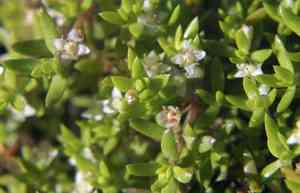
Swamp stonecrop (Crassula helmsii)
Also known as: New zealand pygmyweed
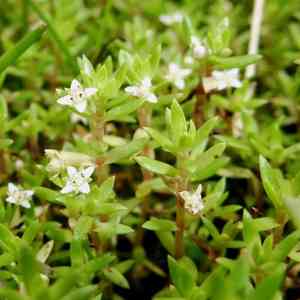
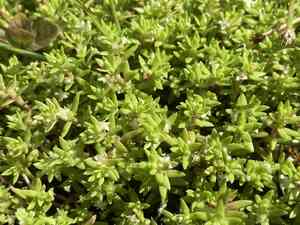
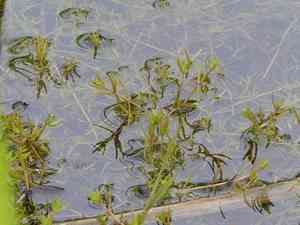
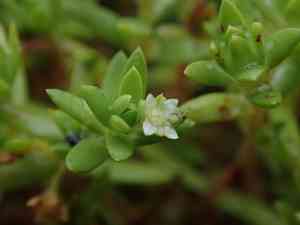
Swamp stonecrop (Crassula helmsii) is a robust, perennial succulent that can thrive both in water and on wet land. The plant has small, cylindrical, fleshy leaves that are opposite and cling closely to its sprawling stems. These stems can root at the nodes when they come into contact with moist soil or water, enabling the plant to spread easily. It forms dense, vibrant green mats that can either float on water surfaces or cover wet ground. Small, star-shaped white flowers bloom from June to September, providing a striking contrast against its green foliage. Swamp stonecrop prefers nutrient-rich, damp environments and can flourish in full sun to partial shade.
In This Article
Attributes of Swamp stonecrop
Lifespan
Perennial
Plant Type
Succulent
Plant Height
5 cm
Spread
50 cm
Leaf Color
Green
Flower Size
Up to 5 mm (0.2 inch)
Flower Color
White
Images of Swamp stonecrop
Quickly Identify Swamp stonecrop
1
Look for short, slender stems that are less than 1 meter in length, small opposite leaves that are linear or cylindrical in shape, and tiny, white, star-shaped flowers.
Scientific Classification of Swamp stonecrop
Phylum
Vascular plants
Class
Dicotyledons
Order
Saxifragales
Family
Stonecrop
Genus
Crassula
Species
Swamp stonecrop
Planting and Growing of Swamp stonecrop
Care Difficulty
Easy
Watering Schedule
Every 8 days
Sunlight Requirements
Full sun
Sunshine Duration
4-8 hours
Ideal Temperature
65-75℉
Soil Type
Potting Mix, Peat Mix
Soil pH
6.5-7.5
Fertilizer Type
Balanced
Pruning Season
Spring, Summer
Pruning Area
Branches, Leaves
Pruning Frequency
2 times a year
Repotting Season
Spring
Pot Type
Plastic, Ceramic
 How to Water Swamp stonecrop?
When watering Crassula helmsii, it's essential to ensure the soil is thoroughly moist but not waterlogged. The principle to follow is to let the soil mostly dry out between watering sessions. Water until you see a little excess water draining from the pot, indicating that the soil is adequately saturated.
What are the symptoms of an underwatered Swamp stonecrop?
›
What should I do if my Swamp stonecrop is not getting enough water?
›
What are the symptoms of an overwatered Swamp stonecrop?
›
How to save an overwatered Swamp stonecrop?
›
 What Are the Sunlight Requirements for Swamp stonecrop?
Crassula helmsii prefers a lighting condition ranging from partial to full sun. Within this range, the plant flourishes with vibrant colors and strong, compact growth, optimizing its natural photosynthesis and energy use.
How much sunlight does Crassula helmsii need?
›
What happens if it doesn't receive enough light?
›
What are the benefits of ideal lighting?
›
 What Is the Ideal Temperature Range for Swamp stonecrop?
For optimal growth, Crassula helmsii thrives in a climate where the temperature consistently remains between 65°F and 75°F. This range promotes healthy photosynthesis and metabolic functions within the plant, ensuring robust growth. A stable temperature minimizes stress and potential disease susceptibility, helping the plant to flourish with minimal intervention.
 What Soil is Best for Swamp stonecrop?
Crassula helmsii thrives in well-drained soils that prevent water-logging, which can lead to root rot. This helps the plant stay healthy by ensuring roots can access enough oxygen. Although resilient, Crassula helmsii benefits from loamy soil rich in nutrients. This supports robust growth and vibrant foliage, making the plant more resistant to pests and disease. A soil pH range of 6.5 to 7.5 enables optimal nutrient uptake for Crassula helmsii, ensuring healthy development and minimizing deficiency-related issues.
 How to Fertilize Swamp stonecrop?
For Crassula helmsii, it is vital to ensure that the amount of fertilizer does not exceed the plant's requirements. During the growing season, use a diluted liquid fertilizer at half-strength to avoid over-nourishment. A small amount regularly is preferred over a large amount infrequently.
 How to Prune Swamp stonecrop?
Carefully examine your Crassula helmsii for any dead or dying stems and leaves. Use a pair of clean, sharp scissors or pruning shears to remove these parts. This helps prevent disease and encourages new growth. Identify any areas of the plant that have become overgrown or are shading other parts of the plant. Trim back these areas to maintain a balanced shape and ensure light reaches all parts of the plant. Pinching the tips of the stems can promote bushier growth. Simply use your fingers to pinch off the top segment of a stem, encouraging the plant to produce side shoots.
More About Pruning Techniques→
 How to Propagate Swamp stonecrop plant?
1
Choose a healthy and established stem from the Crassula helmsii for propagation. Ensure that the selected stem is disease-free and has visible nodes from where roots can potentially grow.
2
Using a sharp and sterilized knife or scissors, cut a section of the stem above a leaf node. The cutting should be around 4-6 inches long. Optionally, dip the cut end into rooting hormone to encourage root development.
3
Plant the cut end of the cutting into a pot filled with well-draining soil. Water the cutting gently to ensure soil contact without over-saturating it. Place the pot in a well-lit area, avoiding direct sunlight.
 How to Repot Swamp stonecrop plant?
1
Crassula helmsii shows signs it's ready for repotting when its roots start to outgrow the current pot or become visible through drainage holes. Additionally, a slowdown in growth or decreased water absorption indicates it may need more space to thrive. The ideal time to repot is during the active growth periods in spring and summer as this gives the plant ample time to settle in before colder months.
2
Choosing the right pot for your Crassula helmsii is crucial for its health. Opt for a pot that is one size larger than the current one, providing enough space for root expansion. Ensure the pot has sufficient drainage holes to prevent waterlogging, which is essential for optimal root health and prevents root rot.
3
When selecting soil for repotting Crassula helmsii, prioritize a sandy, well-drained mixture. This type of soil mimics its native conditions and prevents water retention, reducing the risk of root rot. A suitable blend would be a cactus or succulent mix, possibly enhanced with perlite for improved aeration.



