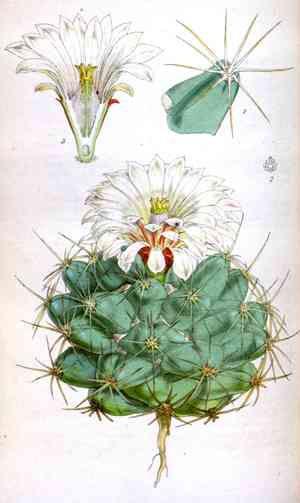
Scheer's beehive cactus (Coryphantha robustispina)
Also known as: Scheer's strong-spined cory cactus, Devil's pincushion
Scheer's beehive cactus thrives in rocky desert areas due to its compact, spherical form, which helps conserve water. Its dense array of sharp spines not only offers protection but also creates shade to reduce moisture loss. The cactus blooms with bright yellow flowers in spring, contrasting its sturdy, green body and contributing to its survival strategy.
In This Article
Attributes of Scheer's beehive cactus
Lifespan
Perennial
Plant Type
Succulent
Plant Height
Up to 15 cm
Spread
Up to 10 cm
Leaf Color
Not applicable (spines)
Flower Size
2-4 cm
Flower Color
Bright yellow
Images of Scheer's beehive cactus


Quickly Identify Scheer's beehive cactus
1
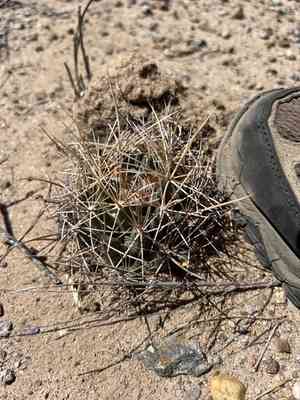
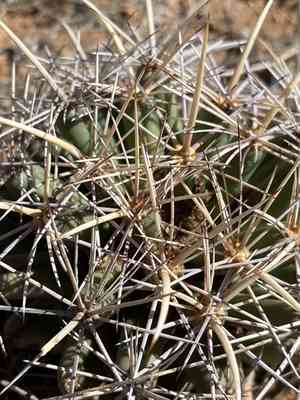
This cactus can be identified by its solitary or clustered globular form, its large white or yellowish spines, and its deeply grooved tubercles. Flowers typically are bright yellow and bloom at the top of the plant.
Scientific Classification of Scheer's beehive cactus
Phylum
Vascular plants
Class
Dicotyledons
Order
Caryophyllales
Family
Cactuses
Genus
Beehive cactusses
Species
Scheer's beehive cactus
Planting and Growing of Scheer's beehive cactus
Care Difficulty
Moderate
Watering Schedule
Every 2 days
Sunlight Requirements
Full sun
Sunshine Duration
4-8 hours
Ideal Temperature
70-85℉
Soil Type
Potting Mix, Peat Mix
Soil pH
6.5-7.5
Fertilizer Type
Balanced
Pruning Season
Spring, Summer
Pruning Area
Branches, Leaves
Pruning Frequency
2 times a year
Repotting Season
Spring
Pot Type
Plastic, Ceramic
 How to Water Scheer's beehive cactus?
The Coryphantha robustispina requires a careful approach to watering. When you water, aim for about 250 milliliters each time. The goal is to moisten the soil thoroughly but to allow it to dry out almost completely before the next watering. This simulates its natural desert habitat where water is scarce and rainfall is infrequent.
What are the symptoms of an underwatered Scheer's beehive cactus?
›
What should I do if my Scheer's beehive cactus is not getting enough water?
›
What are the symptoms of an overwatered Scheer's beehive cactus?
›
How to save an overwatered Scheer's beehive cactus?
›
 What Are the Sunlight Requirements for Scheer's beehive cactus?
Coryphantha robustispina prefers full sun exposure. Adequate sunlight ensures healthy growth, maintaining its compact form and enhancing spine coloration, essential for its vigor.
What is the optimal light exposure for Coryphantha robustispina?
›
How can I ensure my Coryphantha gets ideal lighting?
›
What are the benefits of ideal light exposure for this cactus?
›
 What Is the Ideal Temperature Range for Scheer's beehive cactus?
Coryphantha robustispina thrives in temperatures ranging from 70°F to 85°F. This ideal temperature range mimics its natural semi-arid habitat conditions. Maintaining this temperature ensures optimal metabolic processes, aiding in growth and flowering.
 What Soil is Best for Scheer's beehive cactus?
Coryphantha robustispina thrives in well-draining soil that allows excess water to escape quickly. This prevents root rot and ensures the roots are well-oxygenated, promoting healthy growth. This cactus prefers nutrient-poor soil, mimicking its natural habitat. This reduces the risk of over-fertilization, which can harm the plant. A loose, sandy texture is ideal as it mirrors the plant's native desert environment, supporting robust root development and reducing compaction.
 How to Fertilize Scheer's beehive cactus?
For Coryphantha robustispina, use a balanced liquid fertilizer diluted to half strength for liquid applications. For slow-release, use a teaspoon of cactus-specific fertilizer annually. Over-fertilizing can harm the plant, so be cautious with amounts.
 How to Prune Scheer's beehive cactus?
When pruning your Coryphantha robustispina, make sure to use clean and sharp tools. Start by removing any dead or decaying parts of the cactus to prevent disease spread. Carefully approach the plant to avoid damaging the spines, gently cut around the dead section and dispose of it safely. It's important to cut close to the base without damaging healthy tissue. After pruning, allow any cuts to dry and callous over to prevent rot. Periodic inspection and selective pruning will help keep your cactus vibrant and healthy.
More About Pruning Techniques→
 How to Propagate Scheer's beehive cactus plant?
1
Clean and dry the seeds before sowing to prevent fungal infections. Soak the seeds overnight to soften their coating and improve germination rates.
2
Choose healthy, mature stems for cuttings, about 4-6 inches long. Allow the cut ends to callous over for a few days before planting them in a suitable substrate.
3
Select a healthy rootstock and a robust scion. Make precise cuts on both and join them securely, ensuring that the cambium layers are aligned for successful grafting.
 How to Repot Scheer's beehive cactus plant?
1
Repotting Coryphantha robustispina should be considered when you notice roots growing through the drainage holes or when the plant has visibly outgrown its container. Ideally, this is done during its active growing season. An overcrowded pot can hinder the plant's growth, so timely repotting ensures that it has enough space to thrive.
2
Select a pot that is only slightly larger than the current one to prevent waterlogging. Opt for a terracotta or clay pot because it offers better breathability and excellent drainage, helping to prevent root rot and promoting healthy growth. Ensure that the chosen pot has adequate drainage holes to allow excess water to escape.
3
It is crucial to choose a well-draining cactus mix when repotting. A good mix will typically contain a combination of sand, pumice, or perlite, and potting soil. This allows for excellent drainage. A well-draining soil mix mimics the natural growing conditions, reducing the risk of root rot and providing a stable base for healthy growth.



