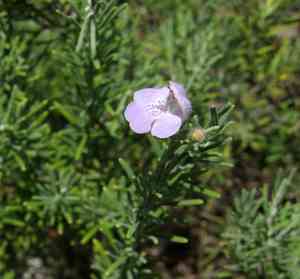
False rosemary (Conradina canescens)
Also known as: False Rosemary, Scrub Mint
False rosemary, or Conradina, brings a pleasant mint-like fragrance to gardens, enhancing the sensory experience. It typically blooms from spring to fall but can flower at any time, offering continuous visual appeal. The plant is especially attractive to pollinators, including bees, making it a valuable addition to promote garden biodiversity.
In This Article
Attributes of False rosemary
Lifespan
Perennial
Plant Type
Shrub
Plant Height
61 cm to 1.2 m
Spread
60 cm to 1.2 m
Leaf Color
Green Gray Silver
Flower Size
2.5 cm
Flower Color
White Purple Blue Lavender Pink Violet
Images of False rosemary
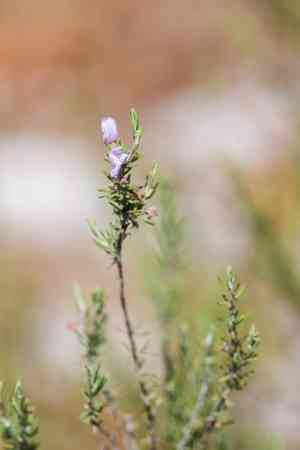
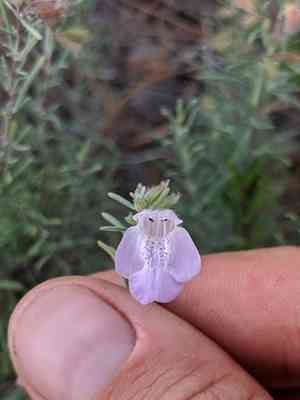
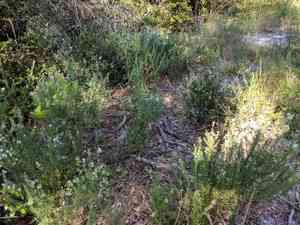
Quickly Identify False rosemary
1
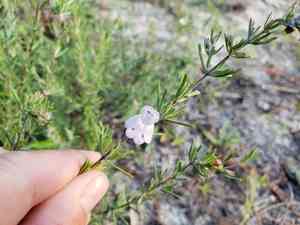
Oppositely arranged, needle-like leaves with a gray-green hue and a minty fragrance.
2
Lavender, blue, or white two-lipped flowers with distinctive dark spots, about 0.5 inches (1.27 cm) long.
3
Small fruit consisting of tetrad nutlets with a hard, brown texture and slightly wrinkled surface.
4
Pubescent stem with fine hairs, ranging from reddish-brown to green, and irregular branching pattern.
5
Overall bushy appearance with fragrant foliage and flowers, reaching a few feet in height.
Scientific Classification of False rosemary
Phylum
Vascular plants
Class
Dicotyledons
Order
Lamiales
Family
Mint
Genus
False rosemary
Species
False rosemary
Planting and Growing of False rosemary
Care Difficulty
Easy
Watering Schedule
Every 2 days
Sunlight Requirements
Full sun
Sunshine Duration
4-6 hours
Ideal Temperature
70-85℉
Soil Type
Potting Mix, Peat Mix
Soil pH
6.5-7.5
Fertilizer Type
Balanced
Pruning Season
Spring, Summer
Pruning Area
Branches, Leaves
Pruning Frequency
2 times a year
Repotting Season
Spring
Pot Type
Plastic, Ceramic
 How to Water False rosemary?
For Conradina canescens, also known as false rosemary, it is crucial to let the soil dry out between waterings. Aim for an amount that fully saturates the soil without leaving it soggy—around 200 milliliters should suffice. Ensure the water penetrates deeply to reach the root zone but avoid water pooling at the surface.
What are the symptoms of an underwatered False rosemary?
›
What should I do if my False rosemary is not getting enough water?
›
What are the symptoms of an overwatered False rosemary?
›
How to save an overwatered False rosemary?
›
 What Are the Sunlight Requirements for False rosemary?
Conradina canescens ideally requires full sun, benefiting from at least 6-8 hours of sunlight. This enhances photosynthesis, promotes floral production, and sustains health.
More About Sunlight Requirements Techniques→
How much sunlight does Conradina canescens need?
›
What solutions exist to provide ideal lighting?
›
What are the benefits of ideal lighting for this plant?
›
 What Is the Ideal Temperature Range for False rosemary?
Conradina canescens thrives best in temperatures ranging from 70 to 85°F. These conditions mimic its natural habitat in the southeastern United States, where warm and stable temperatures encourage strong growth and healthy foliage.
 What Soil is Best for False rosemary?
The plant thrives on well-drained soils, which prevent waterlogging. Well-drained conditions ensure adequate aeration, essential for healthy root growth and plant stability. Conradina canescens prefers nutrient-poor soils. This feature mimics its natural habitat and reduces dependency on fertilization, enabling the plant to maintain its innate hardiness. A loose and grainy texture is ideal, providing the plant with the structure needed for easy root penetration and optimal water drainage, supporting overall health.
 How to Fertilize False rosemary?
For Conradina canescens, it is crucial to not over-fertilize as it is well-adapted to poorer, sandy soils. A balanced liquid fertilizer diluted to half the recommended strength is ideal. Apply approximately 100 ml per application, ensuring the soil is moist before application to enhance nutrient absorption.
 How to Prune False rosemary?
Always make sure your pruning shears are clean before starting. This prevents the spread of disease among plants and ensures that cuts are clean, which promotes faster healing. When pruning, make cuts just above a leaf node or bud. This encourages new growth to emerge from the right places, maintaining the plant's natural shape and promoting vigorous growth. Begin by removing any dead, diseased, or damaged branches. This helps in keeping the plant healthy and prevents the spread of diseases to healthy sections of the plant.
More About Pruning Techniques→
 How to Propagate False rosemary plant?
1
Choose a robust and disease-free parent plant for cuttings or seed collection. This increases the success rate of vegetative and seed propagation.
2
Prepare a well-draining soil medium, ideally a mix of perlite and peat moss, to provide a hospitable environment for roots to develop.
3
Place seeds on top of moist, prepared soil, or plant cuttings by inserting them gently into the soil. Ensure stable positioning for cuttings to prevent toppling.
 How to Repot False rosemary plant?
1
Conradina canescens should be repotted when you notice the roots growing out of the drainage holes or the plant begins to look crowded. Another sign is if water takes too long to drain, indicating compacted soil. Spring and summer are the ideal seasons as the plant is actively growing and can recover from the repotting process quickly.
2
Select a pot that is 1-2 inches larger in diameter than the current one. Use a pot with adequate drainage holes to prevent waterlogging. A terracotta pot is a good choice as it allows the soil to dry out more efficiently, reducing the chances of root rot.
3
Opt for a well-draining sandy soil mix, which mimics the plant’s native habitat. This type of soil ensures proper aeration and prevents water retention that can lead to root rot. Adding perlite or coarse sand helps improve the drainage significantly, keeping your Conradina canescens healthy.
Learn More About False rosemary Diseases
Anthracnose
Bacterial Leaf Spot
Bacterial Soft Rot
Chemical Injury
Crown Gall
Damping-off
Downy Mildew
Drought Stress
Fusarium Wilt
Gray Mold
Leaf Curl
Leaf Spot
Mosaic
Nutrient Deficiency
Nutrient Toxicity
Powdery Mildew
Root Rot
Root-knot Nematode
Rusts
Sooty Mold
Spider Mites
Temperature Stress
Thrips Damage
White Mold



