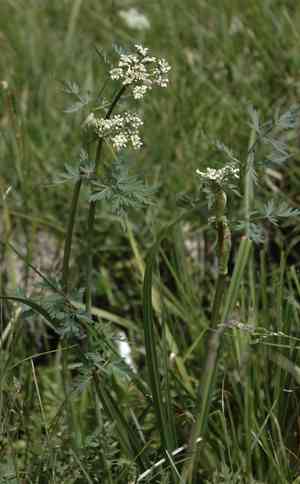
Rocky mountain hemlockparsley (Conioselinum scopulorum)
Also known as: Mountain Hemlock Parsley
The wildflower you're referring to is Rocky Mountain hemlockparsley. This hardy plant thrives in rocky alpine settings, featuring tall, slender stems crowned with broad, umbrella-shaped clusters of tiny white flowers that resemble delicate lace. Its finely divided, fern-like leaves are well-suited to the harsh conditions of high altitudes, providing a lush green backdrop against the rugged mountain landscape.
In This Article
Attributes of Rocky mountain hemlockparsley
Lifespan
Perennial
Plant Type
Herb
Plant Height
30-100 cm
Spread
Not applicable
Leaf Color
Green
Flower Size
2-4 mm
Flower Color
White
Images of Rocky mountain hemlockparsley
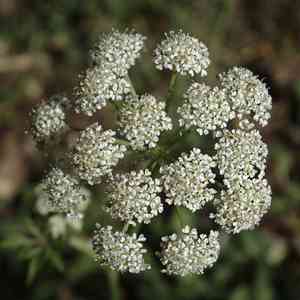
Quickly Identify Rocky mountain hemlockparsley
1
Conioselinum scopulorum can be identified by its finely divided, fern-like leaves and the small, white flowers that form umbrella-shaped clusters. It often has a noticeable scent and grows in moist, shaded areas at higher elevations.
Scientific Classification of Rocky mountain hemlockparsley
Phylum
Vascular plants
Class
Dicotyledons
Order
Apiales
Family
Umbellifers
Genus
Hemlock-parsleys
Species
Rocky mountain hemlockparsley
Planting and Growing of Rocky mountain hemlockparsley
Care Difficulty
Hard
Watering Schedule
Every 3 days
Sunlight Requirements
Partial sun
Sunshine Duration
6-10 hours
Ideal Temperature
60-75℉
Soil Type
Potting Mix, Peat Mix
Soil pH
6.5-7.5
Fertilizer Type
Balanced
Pruning Season
Spring, Summer
Pruning Area
Branches, Leaves
Pruning Frequency
2 times a year
Repotting Season
Spring
Pot Type
Plastic, Ceramic
 How to Water Rocky mountain hemlockparsley?
When watering Conioselinum scopulorum, aim for a moderate saturation without drowning the roots. Ensure the soil is moist but not waterlogged. If water seeps out of the drainage holes too quickly, reduce the watering speed.
What are the symptoms of an underwatered Rocky mountain hemlockparsley?
›
What should I do if my Rocky mountain hemlockparsley is not getting enough water?
›
What are the symptoms of an overwatered Rocky mountain hemlockparsley?
›
How to save an overwatered Rocky mountain hemlockparsley?
›
 What Are the Sunlight Requirements for Rocky mountain hemlockparsley?
Partial sun exposure benefits Conioselinum scopulorum by supporting balanced growth while avoiding the harsh impacts of full sun, leading to an optimized environment for vitality and resilience.
What is the optimal light condition for Conioselinum scopulorum?
›
How to achieve ideal lighting for Conioselinum scopulorum?
›
Benefits of ideal lighting for Conioselinum scopulorum?
›
 What Is the Ideal Temperature Range for Rocky mountain hemlockparsley?
Conioselinum scopulorum thrives best between 60 to 75°F. In this range, metabolic processes such as photosynthesis and respiration occur efficiently, ensuring healthy growth. These temperatures mimic the plant's native environment, promoting robust development and minimizing stress.
 What Soil is Best for Rocky mountain hemlockparsley?
Conioselinum scopulorum thrives in well-draining soil, which prevents water from accumulating around the roots. This helps the plant avoid root rot, enhancing its growth and survival. A nutrient-rich substrate boosts the health of Conioselinum scopulorum by providing essential minerals and nutrients. This promotes robust growth and vibrant foliage. Maintaining a certain level of soil moisture helps keep Conioselinum scopulorum hydrated. Adequate moisture retention supports consistent growth and prevents wilting.
 How to Fertilize Rocky mountain hemlockparsley?
Conioselinum scopulorum thrives with a measured amount of fertilizer, especially during its growth season. Ideally, for liquid fertilizers, use a diluted solution at 1/4 the recommended strength every two weeks. This ensures the plant receives nutrients without risk of root burn. For slow-release granules, 2 to 3 grams per plant annually will suffice. Always observe plant response and adjust if necessary.
 How to Prune Rocky mountain hemlockparsley?
Start by using sterilized pruning shears to trim away dead or damaged foliage. Focus on cutting just above a node or bud to encourage new growth. Remove any crossing branches that may hinder the plant’s development. For optimal aesthetics, cut back stems that cause asymmetry. This encourages a fuller appearance. Regular shaping can also ensure that the plant does not become too tall or unwieldy, enhancing its visual appeal.
More About Pruning Techniques→
 How to Propagate Rocky mountain hemlockparsley plant?
1
Begin by filling your seed tray with a well-draining seed starting mix. Sow the Conioselinum scopulorum seeds on the surface and lightly cover them with a fine layer of soil. Water gently and place the tray in a warm, well-lit area. Maintain consistent moisture levels to ensure successful germination.
2
Use a garden fork to carefully lift a mature Conioselinum scopulorum plant out of the ground. Gently separate the root clumps, ensuring each division has a healthy amount of roots and shoots. Replant the divisions promptly to avoid drying out, maintaining adequate spacing for growth.
3
Once the seedlings develop true leaves, they are ready for transplanting. Prepare small pots with potting soil and carefully move each seedling, ensuring the root system remains intact. Water thoroughly after transplanting and acclimatize the seedlings to outdoor conditions gradually.
 How to Repot Rocky mountain hemlockparsley plant?
1
Conioselinum scopulorum should be repotted when you notice roots growing out of the pot's drainage holes, indicating the plant is root-bound. If the soil's surface dries out quickly or the plant shows signs of stunted growth, it’s also time to consider repotting.
2
Select a pot that is about 2 inches larger in diameter than the current one. A pot that is too large can retain too much water, leading to root rot. Ensure the pot has sufficient drainage holes to facilitate excess water escape, preventing waterlogged soil.
3
Opt for well-draining sandy soil to prevent water accumulation around the roots, which can cause rot. This type of soil also mimics the plant's natural habitat and promotes healthy root growth by encouraging adequate air circulation.
Learn More About Rocky mountain hemlockparsley Diseases
Anthracnose
Bacterial Leaf Spot
Bacterial Soft Rot
Bacterial Wilt
Chemical Injury
Crown Gall
Cyst Nematode
Damping-off
Downy Mildew
Drought Stress
Fusarium Wilt
Gray Mold
Leaf Spot
Mosaic
Nutrient Deficiency
Nutrient Toxicity
Powdery Mildew
Root Rot
Root-knot Nematode
Rusts
Sooty Mold
Spider Mites
Temperature Stress
Thrips Damage
White Mold



