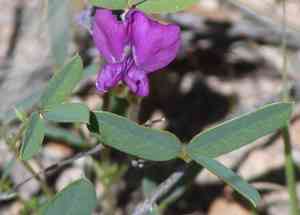
Longleaf cologania (Cologania angustifolia)
Also known as: None
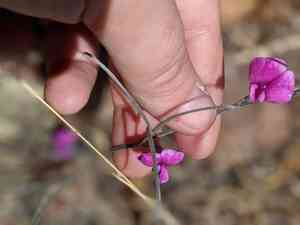
The longleaf cologania is a perennial plant that can trail along the ground or climb when supported by other plants or structures. As a member of the legume family (Fabaceae), it produces notable purple, pea-like flowers that develop into unique, flattened seedpods.
In This Article
Attributes of Longleaf cologania
Lifespan
Perennial
Plant Type
Herb
Plant Height
46 cm
Spread
Not applicable
Leaf Color
Green
Flower Size
1.9 cm
Flower Color
Purple Red
Images of Longleaf cologania
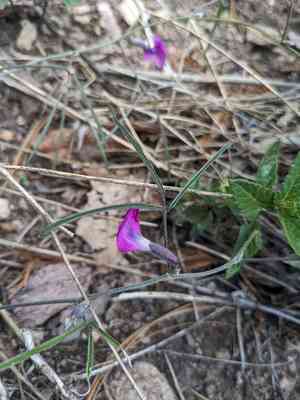
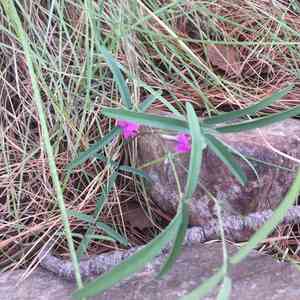
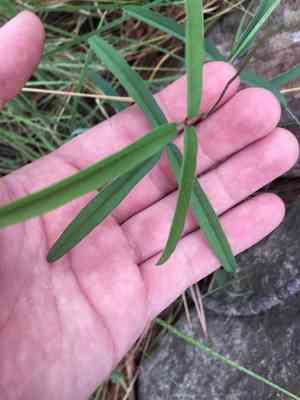
Quickly Identify Longleaf cologania
1
To identify Cologania angustifolia, look for its narrow, lanceolate leaves that are arranged alternately along the stem. It often has small purple or pink flowers. The plant usually forms a scrambling or climbing habit.
Scientific Classification of Longleaf cologania
Phylum
Vascular plants
Class
Dicotyledons
Order
Fabales
Family
Legume
Genus
Cologania
Species
Longleaf cologania
Planting and Growing of Longleaf cologania
Care Difficulty
Easy
Watering Schedule
Every 3 days
Sunlight Requirements
Full sun
Sunshine Duration
6-10 hours
Ideal Temperature
60-75℉
Soil Type
Potting Mix, Peat Mix
Soil pH
6-8
Fertilizer Type
Balanced
Pruning Season
Spring, Summer
Pruning Area
Branches, Leaves
Pruning Frequency
2 times a year
Repotting Season
Spring
Pot Type
Plastic, Terracotta
 How to Water Longleaf cologania?
For Cologania angustifolia, ensure the soil remains consistently moist but not soggy. Water it with 200 ml each time, ensuring the water reaches the roots without pooling on the surface. The aim is to maintain an adequately damp environment for optimal growth.
What are the symptoms of an underwatered Longleaf cologania?
›
What should I do if my Longleaf cologania is not getting enough water?
›
What are the symptoms of an overwatered Longleaf cologania?
›
How to save an overwatered Longleaf cologania?
›
 What Are the Sunlight Requirements for Longleaf cologania?
Cologania angustifolia thrives in conditions offering full to partial sun, ideally maintaining exposure for about 4 to 6 hours daily. These ideal conditions promote healthy growth, robust foliage, and prolific flowering, crucial for its development.
What is the ideal lighting condition for Cologania angustifolia?
›
How can I achieve ideal lighting conditions?
›
What benefits arise from ideal lighting conditions?
›
 What Is the Ideal Temperature Range for Longleaf cologania?
The ideal temperature range for Cologania angustifolia is between 60 and 75°F. This range ensures optimal metabolic processes and nutrient assimilation, allowing the plant to grow vigorously. Consistently maintaining this temperature range can significantly contribute to robust and healthy development.
 What Soil is Best for Longleaf cologania?
Cologania angustifolia thrives in well-draining soil that prevents waterlogging. This is crucial for preventing root rot and ensuring healthy plant growth, as the roots remain oxygenated and free from excess moisture. This plant requires soil with moderate nutrient levels to support its growth. Balanced nutrients allow the plant to develop robust foliage and healthy blooms, enhancing its visual appeal and overall vitality. Incorporating organic matter into the soil can greatly benefit Cologania angustifolia. Organic matter not only improves soil structure but also provides essential nutrients, supporting the plant's growth and resilience against pests and diseases.
 How to Fertilize Longleaf cologania?
Cologania angustifolia generally requires moderate fertilization. When using liquid fertilizers, it's important to mix them to half or three-quarters of the recommended strength. For solid fertilizers, use around two tablespoons around each plant, ensuring it is spread evenly.
 How to Prune Longleaf cologania?
Begin by examining Cologania angustifolia for dead or diseased branches. Removing these first will reduce the risk of disease spread and allow you to focus on shaping the healthy parts of the plant. Ensure that the base of the plant is not overcrowded to improve air circulation. Cut back all overgrown and leggy branches to encourage denser foliage. Aim to trim branches at a 45-degree angle about 1/4 inch away from a bud facing outward. This encourages new shoots to grow outward, improving the plant's overall shape and appearance.
More About Pruning Techniques→
 How to Propagate Longleaf cologania plant?
1
Choose mature seeds or a healthy section of the plant for cuttings. For seeds, ensure they are fully dried. In the case of cuttings, select semi-hardwood sections with at least a few leaves.
2
Use a well-draining potting mix suitable for legumes. You may mix perlite or sand into the soil to enhance drainage. Moisten the soil slightly before planting seeds or inserting cuttings.
3
Plant seeds at a shallow depth or insert cuttings so that at least two nodes are below the soil. Keep the soil consistently moist but not waterlogged and provide enough light for germination.
 How to Repot Longleaf cologania plant?
1
Identifying the right time to repot Cologania angustifolia involves observing its roots. If roots are visible through drainage holes or circling the pot surface, it's time for a larger home. Moreover, if growth slows significantly even with ample nutrients, it signals a need for repotting as the soil may have become compacted.
2
Choose a pot that is about 2 inches larger in diameter than the current one to allow new root growth but not so large that soil remains too wet. A well-chosen pot with appropriate drainage holes ensures effective water runoff, preventing water-logging and root rot, thus keeping the plant healthy.
3
Opt for a well-draining, sandy soil mix to ensure excess water flows away, mimicking Cologania angustifolia's natural habitat. This soil type prevents water retention, reduces root rot risk, and provides a stable medium for nutrient exchange, supporting robust plant growth.



