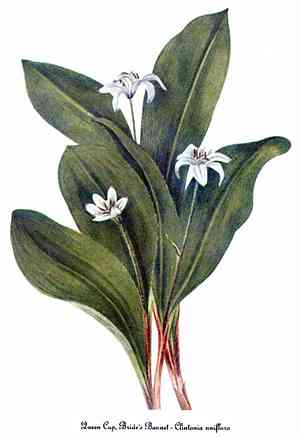
Bride's Bonnet (Clintonia uniflora)
Also known as: Queen Cup
Bride's Bonnet (Clintonia uniflora) is native to the mountainous regions of northwestern North America. This plant features bright white flowers that bloom in the spring and summer. Its fruit serves as a food source for ruffed grouse.
In This Article
Attributes of Bride's Bonnet
Lifespan
Perennial
Plant Type
Herb
Plant Height
5 cm to 15 cm
Spread
30 cm to 60 cm
Leaf Color
Shiny Green
Flower Size
1.8 cm to 2 cm
Flower Color
White
Images of Bride's Bonnet
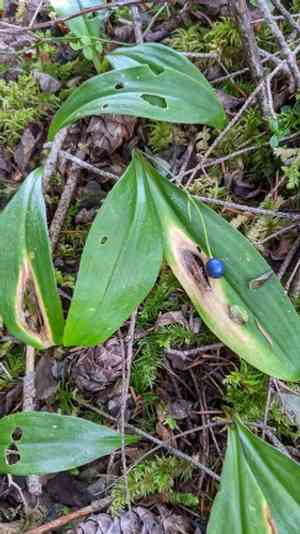
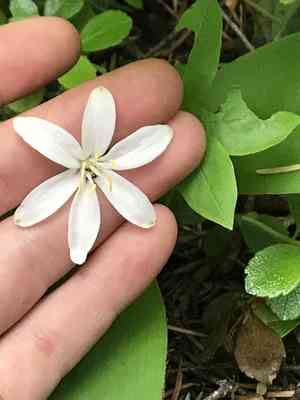
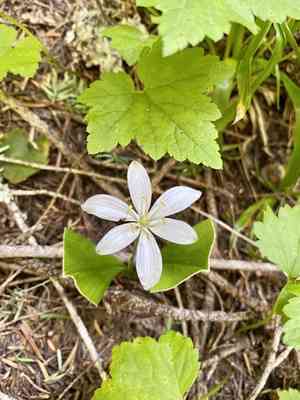
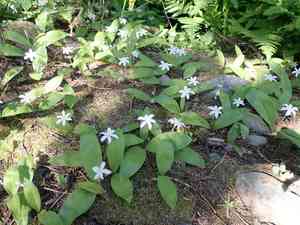
Quickly Identify Bride's Bonnet
1
Single or duo white star-like flowers on stalk, each with six delicate petals.
2
Glossy-green, oblong leaves in rosettes, up to 8 inches (20 cm) tall.
3
Amethyst-blue, solitary berry with smooth surface, 0.3-0.4 inches (8-10 mm) in diameter.
4
Distinct flowering trait with typically one bloom, attracting pollinators with subtle scent.
5
Lush appearance with slow expansion through underground rhizomes, can be cultivated by division or seed.
Scientific Classification of Bride's Bonnet
Phylum
Vascular plants
Class
Monocotyledons
Order
Liliales
Family
Lily
Genus
Bluebead Lily
Species
Bride's Bonnet
Planting and Growing of Bride's Bonnet
Care Difficulty
Hard
Watering Schedule
Every 3 days
Sunlight Requirements
Partial sun
Sunshine Duration
6-10 hours
Ideal Temperature
50-70℉
Soil Type
Potting Mix, Peat Mix
Soil pH
6.5-7.5
Fertilizer Type
Balanced
Pruning Season
Spring, Summer
Pruning Area
Branches, Leaves
Pruning Frequency
2 times a year
Repotting Season
Spring
Pot Type
Plastic, Ceramic
 How to Water Bride's Bonnet?
For Clintonia uniflora, it's crucial to keep the soil consistently moist but not waterlogged. Aim for an amount of about 150 milliliters per watering session. Ensure that the water reaches deep into the root zone but avoid puddles on the surface. This balanced approach helps to mimic the plant's natural habitat.
What are the symptoms of an underwatered Bride's Bonnet?
›
What should I do if my Bride's Bonnet is not getting enough water?
›
What are the symptoms of an overwatered Bride's Bonnet?
›
How to save an overwatered Bride's Bonnet?
›
 What Are the Sunlight Requirements for Bride's Bonnet?
Partial sun allows photosynthesis without overwhelming the plant, enhancing foliar and floral development by providing balanced energy.
More About Sunlight Requirements Techniques→
What is the ideal light?
›
How to achieve ideal light?
›
Benefits of ideal light?
›
 What Is the Ideal Temperature Range for Bride's Bonnet?
Clintonia uniflora thrives best in a temperate climate with an ideal temperature range between 50°F and 70°F. These temperatures closely mimic the plant’s natural habitat, ensuring optimal growth and flowering. Maintaining temperatures within this range will help the plant manifest its full potential by encouraging robust foliage and healthy blooms.
 What Soil is Best for Bride's Bonnet?
Clintonia uniflora thrives in soil that retains moisture well, providing consistent hydration without waterlogging. This helps the plant maintain lush foliage and healthy growth. While retaining moisture, the soil must also be well-drained to prevent root rot. A balance in drainage ensures the plant's roots receive essential nutrients and stay oxygenated. Rich organic content in the soil supports healthy bacterial and fungal activity, crucial for nutrient availability. This enhances the overall health and resilience of Clintonia uniflora.
 How to Fertilize Bride's Bonnet?
For Clintonia uniflora, the fertilizer amount should be moderate. Use a balanced 10-10-10 liquid fertilizer diluted to half-strength monthly during the growing season. For slow-release pellets, apply a small amount around the base of the plant in early spring, ensuring not to over-concentrate in any one spot to avoid root burn.
 How to Prune Bride's Bonnet?
Begin by inspecting the plant for any dead or damaged leaves or flowers. Gently remove these first. Focus on snipping off old blooms at their base to encourage more flowering. Always cut at a slight angle to prevent water accumulation. Monitor the plant's growth pattern and prune to maintain an open structure for better airflow and sun exposure. After pruning, ensure the plant is placed in an optimal location for its light and moisture needs to recover quickly. Apply a light layer of organic mulch around the base to help retain soil moisture and temperature, which is especially beneficial after pruning to reduce stress on the plant.
More About Pruning Techniques→
 How to Propagate Bride's Bonnet plant?
1
Collect seeds from mature plants in late summer. Clean them well and store them in a cool, dry place until spring for the best results.
2
Dig up the plant in early spring and carefully separate the rhizomes with clean tools. Plant the divisions at the original depth for optimal root establishment.
3
Sow seeds in early spring into seed trays filled with seed-starting mix. Maintain consistent moisture levels until germination occurs.
 How to Repot Bride's Bonnet plant?
1
The best time to repot Clintonia uniflora is in early spring, just before new growth begins. You're looking for signs like crowded roots, slow growth, or when the soil no longer holds moisture. These are indicators that your plant needs a new pot and fresh soil.
2
Choose a pot slightly larger than the current one to accommodate growth but not too large, which can lead to excessive moisture retention. A pot with good drainage prevents root rot and helps maintain optimal moisture levels. Terracotta pots are often a great choice for this plant.
3
Opt for a rich, well-draining soil mix tailored for woodland or shade-loving plants. This type of soil helps maintain a balanced moisture level while providing adequate nutrients, essential for the healthy growth of Clintonia uniflora.
Learn More About Bride's Bonnet Diseases
Anthracnose
Bacterial Leaf Spot
Bacterial Soft Rot
Bacterial Wilt
Crown Gall
Cyst Nematode
Damping-off
Downy Mildew
Drought Stress
Fusarium Wilt
Gray Mold
Leaf Spot
Mosaic
Nutrient Deficiency
Nutrient Toxicity
Powdery Mildew
Root Rot
Root-knot Nematode
Rusts
Sooty Mold
Spider Mites
Temperature Stress
Thrips Damage
White Mold



