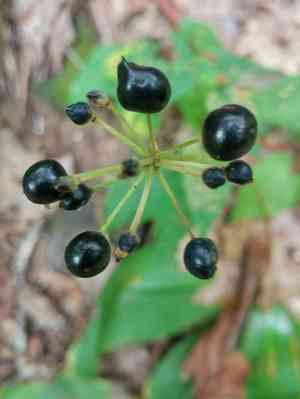
White clintonia (Clintonia umbellulata)
Also known as: Bead lily
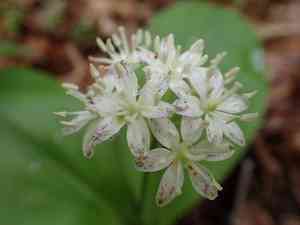
The plant in question is White clintonia (Clintonia umbellulata), also known as speckled wood lily or Clinton's lily. Found in the forests of the Appalachian Mountains, it features broad leaves that remain near the ground and produces flower stalks reaching up to 50 cm in height during late spring. While the plant’s small black berries are not toxic, they are not regarded as edible.
In This Article
Attributes of White clintonia
Lifespan
Perennial
Plant Type
Herb
Plant Height
27 cm to 60 cm
Spread
10 cm to 20 cm
Leaf Color
Glossy green
Flower Size
1.3 cm
Flower Color
White Pink Purple Lavender
Images of White clintonia
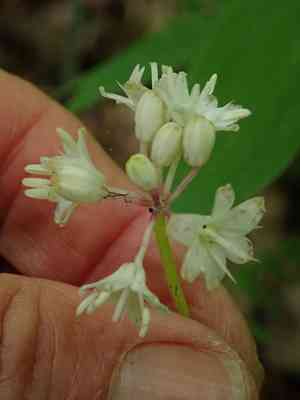
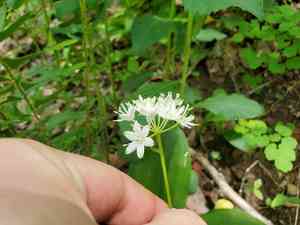
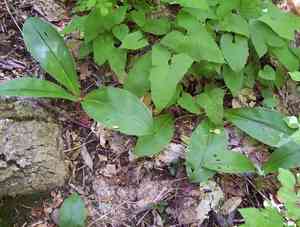
Quickly Identify White clintonia
1
Basal rosette of broad, glossy leaves.
2
Distinctive umbel of white flowers with green and purple speckles.
3
Dark blue to black berries, quarter-inch in size.
4
Elliptical leaves with pronounced hairs along the margins and midrib.
5
Matte black spherical berries with embedded seeds.
Scientific Classification of White clintonia
Phylum
Vascular plants
Class
Monocotyledons
Order
Liliales
Family
Lily
Genus
Bluebead Lily
Species
White clintonia
Planting and Growing of White clintonia
Care Difficulty
Easy
Watering Schedule
Every 3 days
Sunlight Requirements
Full shade
Sunshine Duration
6-10 hours
Ideal Temperature
60-70℉
Soil Type
Potting Mix, Peat Mix
Soil pH
6.5-7.5
Fertilizer Type
Balanced
Pruning Season
Spring, Summer
Pruning Area
Branches, Leaves
Pruning Frequency
2 times a year
Repotting Season
Spring
Pot Type
Plastic, Ceramic
 How to Water White clintonia?
Clintonia umbellulata prefers evenly moist soil, so aim for about 500 milliliters per watering session to keep the roots adequately hydrated. Ensure the water reaches the deeper roots without water logging the plant.
What are the symptoms of an underwatered White clintonia?
›
What should I do if my White clintonia is not getting enough water?
›
What are the symptoms of an overwatered White clintonia?
›
How to save an overwatered White clintonia?
›
 What Are the Sunlight Requirements for White clintonia?
Clintonia umbellulata ideally needs full shade to partial sun. This setup aids in maintaining healthy foliage and vibrant blossoms as it mirrors its natural woodland conditions.
More About Sunlight Requirements Techniques→
What is the best lighting condition for Clintonia umbellulata?
›
How can I achieve ideal lighting for Clintonia umbellulata indoors?
›
What benefits does ideal lighting provide for Clintonia umbellulata?
›
 What Is the Ideal Temperature Range for White clintonia?
For Clintonia umbellulata to thrive, it requires a surrounding environment with temperatures ranging between 60°F and 70°F. This range provides the optimal conditions for growth, where the plant can photosynthesize efficiently without any thermal stress. Consistently maintaining temperatures in this range assures that metabolic processes proceed smoothly.
 What Soil is Best for White clintonia?
Clintonia umbellulata thrives in well-drained soil as it prevents root rot and ensures the plant receives adequate oxygen. Proper drainage is vital to maintain its lush foliage. The plant benefits greatly from soil rich in organic matter, which retains moisture and provides essential nutrients. This supports robust growth and vibrant flowering. Maintaining moderate moisture levels is crucial as it ensures the plant neither dries out nor sits in water. This balance is key for healthy plant development.
 How to Fertilize White clintonia?
Clintonia umbellulata benefits from a balanced fertilizer. For liquid fertilizers, use a diluted solution at half the recommended strength. Apply roughly one tablespoon of solid slow-release fertilizer for each plant per session.
 How to Prune White clintonia?
Begin by assessing the plant for any dead, damaged, or diseased stems. This includes looking for any discoloration, rot, or breakage. Remove these first as they can be detrimental to the plant's health. To maintain the natural form of Clintonia umbellulata, target the longest and most unruly stems, trimming them back to the consistent height and shape of the plant. This helps to keep the plant neat and visually pleasing. While it may be tempting to cut back a significant portion of the plant, ensure that you leave more than half the plant intact. Over-pruning can hinder growth and lead to plant shock, impeding its recovery.
More About Pruning Techniques→
 How to Propagate White clintonia plant?
1
Start by gathering seeds from mature Clintonia umbellulata plants. Clean and dry them thoroughly before planting to prevent fungal growth. Use a seed tray filled with a well-draining soil mix for sowing.
2
Sow the seeds on the soil surface and gently press them down. Lightly cover them with a thin layer of soil or vermiculite. Water gently to avoid displacing seeds and place the tray in a warm, indirect light location.
3
In early spring, use a garden spade to dig around the base of mature Clintonia umbellulata plants. Gently lift the plant with its root ball, and use the spade to divide it into smaller sections, each with its own roots.
 How to Repot White clintonia plant?
1
Clintonia umbellulata should be repotted when you notice the roots starting to circle the base of the container, or when the soil becomes compacted and less absorbent. Spring and autumn provide the ideal conditions for repotting, as moderate temperatures reduce stress on the plant.
2
Select a pot that is one size larger than the current one to give the roots ample space to grow. Ensure it has good drainage holes to prevent waterlogging, which can lead to root rot. A slightly wider pot also helps in stabilizing the plant as it grows taller.
3
Opt for a well-draining soil mix rich in organic matter, like compost or leaf mold. This type of soil retains moisture without becoming waterlogged, promoting healthy root growth and providing essential nutrients to Clintonia umbellulata.
Learn More About White clintonia Diseases
Anthracnose
Bacterial Leaf Spot
Bacterial Soft Rot
Bacterial Wilt
Chemical Injury
Crown Gall
Cyst Nematode
Damping-off
Downy Mildew
Drought Stress
Fusarium Wilt
Gray Mold
Leaf Spot
Mosaic
Nutrient Deficiency
Nutrient Toxicity
Powdery Mildew
Root Rot
Root-knot Nematode
Rusts
Sooty Mold
Spider Mites
Temperature Stress
Thrips Damage
White Mold



