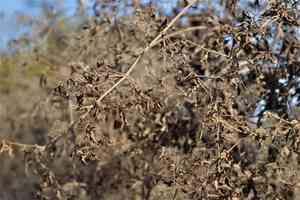
Traveler's-joy (Clematis brachiata)
Also known as: Bridalwreath
Traveler's-joy is a climbing plant known for its fragrant white flowers, which bloom abundantly. These flowers are notable for their unique, whisker-like stamens. In its natural setting, traveler's-joy uses its twisting leaf stalks to climb trees and shrubs, leveraging these structures to reach sunlight. This climbing ability is essential for its growth and flowering.
In This Article
Attributes of Traveler's-joy
Lifespan
Perennial
Plant Type
Vine, Herb
Plant Height
3-5 meters
Spread
N/A
Leaf Color
Green
Flower Size
1-2 cm
Flower Color
White
Images of Traveler's-joy
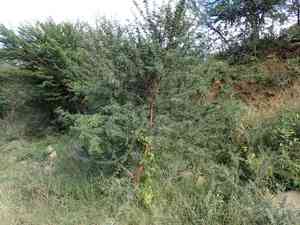
Quickly Identify Traveler's-joy
1
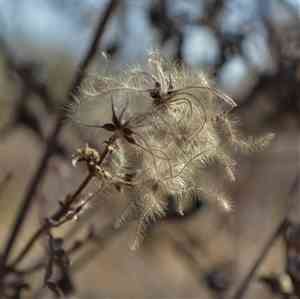
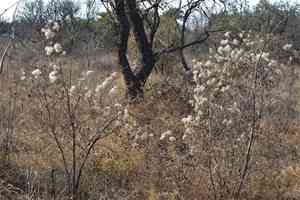
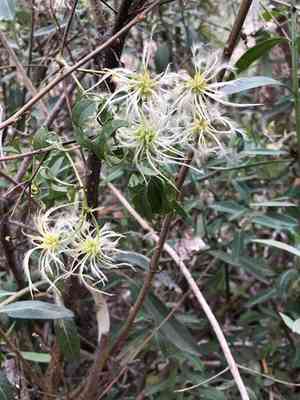
The plant can be identified by its long, woody stems and clusters of small, white flowers. The leaves are compound, with several oval or lance-shaped leaflets. In the autumn, the plant produces silky, beard-like seed heads.
Scientific Classification of Traveler's-joy
Phylum
Vascular plants
Class
Dicotyledons
Order
Ranunculales
Family
Buttercup
Genus
Clematis
Species
Traveler's-joy
Planting and Growing of Traveler's-joy
Care Difficulty
Moderate
Watering Schedule
Every 4 days
Sunlight Requirements
Full sun
Sunshine Duration
6-10 hours
Ideal Temperature
65-75℉
Soil Type
Potting Mix, Peat Mix
Soil pH
6.5-7.5
Fertilizer Type
Balanced
Pruning Season
Spring, Summer
Pruning Area
Branches, Leaves
Pruning Frequency
2 times a year
Repotting Season
Spring
Pot Type
Plastic, Terracotta
 How to Water Traveler's-joy?
Clematis brachiata requires a moderate amount of water, ideally 500 ml per watering session, ensuring the soil is moist but not waterlogged. It's essential to let the top inch of soil dry out between waterings to prevent root rot.
What are the symptoms of an underwatered Traveler's-joy?
›
What should I do if my Traveler's-joy is not getting enough water?
›
What are the symptoms of an overwatered Traveler's-joy?
›
How to save an overwatered Traveler's-joy?
›
 What Are the Sunlight Requirements for Traveler's-joy?
Clematis brachiata thrives best in full to partial sun, ideally receiving 6 to 8 hours of direct sunlight daily. These conditions optimize growth and flowering while supporting a strong structural development.
What is the ideal lighting condition for Clematis brachiata?
›
How do you achieve optimal lighting for Clematis brachiata?
›
What benefits does Clematis brachiata gain from optimal lighting?
›
 What Is the Ideal Temperature Range for Traveler's-joy?
The ideal temperature range for Clematis brachiata is between 65°F and 75°F. Maintaining this temperature allows optimal growth and flowering. Within this range, the plant performs best as it encourages balanced nutrient uptake and photosynthesis.
 What Soil is Best for Traveler's-joy?
Clematis brachiata thrives in nutrient-dense soil that provides essential minerals for growth. Using organic matter like compost can significantly improve soil fertility, providing a robust framework for healthy plant development. This plant prefers loamy or sandy loam soils that have excellent drainage. Proper drainage prevents waterlogging, which can lead to root rot—a common threat to clematis species. Clematis brachiata grows best in soils with a pH ranging from 6.5 to 7.5. Maintaining soil pH within this range ensures that the plant can effectively absorb available nutrients, promoting vigorous growth.
 How to Fertilize Traveler's-joy?
For Clematis brachiata, use a balanced liquid fertilizer diluted to half strength. During the growth season, apply 250-300 ml of solution per plant. Over-fertilizing can harm the plant, so precise measurement is essential.
 How to Prune Traveler's-joy?
Clematis brachiata should ideally be pruned in early spring before new growth starts or in autumn after blooming. This ensures that you encourage robust growth and vibrant flowers for the next blooming season. Begin by removing any dead or damaged stems at the base. 2. Trim back around one-third of the plant to encourage bushier growth. 3. Focus on thinning out congested areas to increase air circulation.
 How to Propagate Traveler's-joy plant?
1
Gather the seeds from mature Clematis brachiata seed pods. Make sure the pods are dry and brown before collection, as this indicates seed maturity.
2
Select healthy stems for cuttings, preferably those with recent growth. The cutting should be about 6 inches long and include at least two sets of leaves.
3
For the layering process, choose a flexible stem and carefully bend it towards the ground. Make a shallow cut on the underside of the stem, bury this section in soil, and secure it with a small stake.
 How to Repot Traveler's-joy plant?
1
Clematis brachiata shows signs it's time to repot when the roots start to emerge through the drainage holes or the plant's growth slows down significantly. This usually happens every couple of years, so observe these signals carefully to ensure your plant remains healthy and thrives.
2
Select a pot that is one size larger than the current one and has ample drainage holes. This ensures there's enough room for root expansion and prevents waterlogging, which can cause root rot. A good pot makes it possible for your plant to grow robustly and flourish.
3
Opt for a well-draining potting mix that retains moisture yet drains excess water effectively. This type of soil prevents water stagnation at the roots, reducing the chances of root rot and ensuring sufficient aeration, which encourages healthy growth.
Toxicity
Ingestion, Skin contact
WARNING
The judgment on toxicity and danger is for reference only. We DO NOT GUARANTEE any accuracy of such judgment. Therefore, you SHALL NOT rely on such judgment. It is IMPORTANT TO SEEK PROFESSIONAL ADVICE in advance when necessary.
Learn More About Traveler's-joy Diseases
Anthracnose
Bacterial Leaf Spot
Black Spot
Chemical Injury
Crown Gall
Cyst Nematode
Damping-off
Downy Mildew
Drought Stress
Fusarium Wilt
Gray Mold
Leaf Curl
Leaf Spot
Mosaic
Nutrient Deficiency
Nutrient Toxicity
Powdery Mildew
Root Rot
Root-knot Nematode
Rusts
Sooty Mold
Spider Mites
Temperature Stress
Thrips Damage
White Mold



