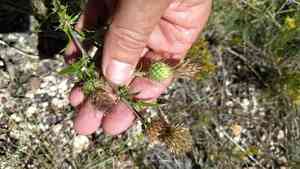
Wheeler's thistle (Cirsium wheeleri)
Also known as: Wheeler's Thistle
Wheeler's thistle (Cirsium wheeleri), a hardy perennial, flourishes in the arid and semi-arid terrains of the Southwestern United States. This plant features sturdy, upright stems topped with striking pink to purple blossoms that appear in late summer. Its leaves possess a distinctive silver-green color and spiny margins. Wheeler's thistle is well-suited to challenging environments, growing in well-drained soils and utilizing its extensive root system to endure drought.
In This Article
Attributes of Wheeler's thistle
Lifespan
Perennial
Plant Height
30 to 100 cm (1 to 3 feet)
Spread
Typically not applicable as it has a rosette growth form.
Leaf Color
Green, often with a silvery underside
Flower Size
2-4 cm (0.8-1.6 inches)
Flower Color
Purple to pink
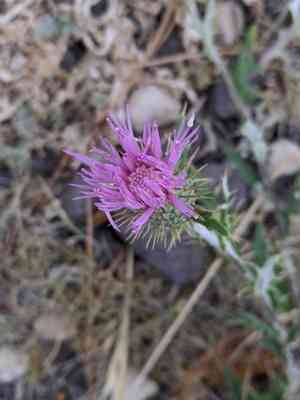
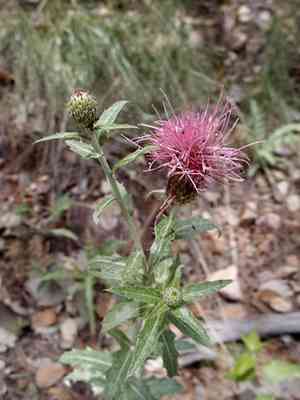
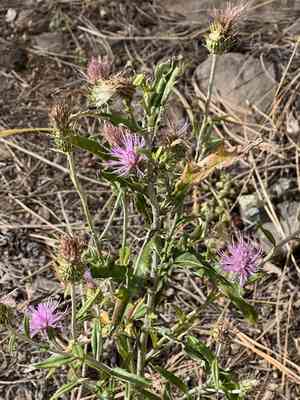
Images of Wheeler's thistle
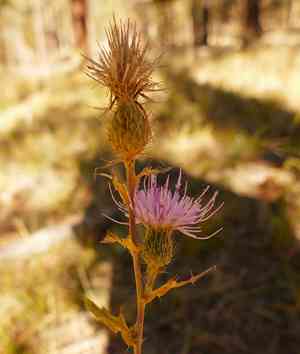
Quickly Identify Wheeler's thistle
1
To identify Cirsium wheeleri, look for a perennial herb with deeply lobed leaves and spiny margins. The plant typically has purple to pink flowers arranged in dense clusters. Its stems are erect and covered with fine hairs.
Scientific Classification of Wheeler's thistle
Phylum
Vascular plants
Class
Dicotyledons
Order
Asterales
Family
Daisy
Genus
Thistles
Species
Wheeler's thistle
Planting and Growing of Wheeler's thistle
Care Difficulty
Moderate
Watering Schedule
Every 2 days
Sunlight Requirements
Full sun
Sunshine Duration
6-12 hours
Ideal Temperature
60-75℉
Soil Type
Potting Mix, Peat Mix
Soil pH
6.5-7.5
Fertilizer Type
Balanced
Pruning Season
Spring, Summer
Pruning Area
Branches, Leaves
Pruning Frequency
2 times a year
Repotting Season
Spring
Pot Type
Terracotta, Plastic
 How to Water Wheeler's thistle?
For Cirsium wheeleri, it's best to water when the top inch of soil feels dry. Typically, this means giving around 500 ml of water per session. Ensure that water reaches the root zone but avoid making the soil soggy. This mimicry of dry and wet cycles is crucial for the plant’s health.
What are the symptoms of an underwatered Wheeler's thistle?
›
What should I do if my Wheeler's thistle is not getting enough water?
›
What are the symptoms of an overwatered Wheeler's thistle?
›
How to save an overwatered Wheeler's thistle?
›
 What Are the Sunlight Requirements for Wheeler's thistle?
Cirsium wheeleri thrives with full to partial sun, ideally receiving 4 to 6 hours of direct sunlight. Ideal lighting promotes better flowering, foliage development, and overall plant vigor.
What kind of sunlight does Cirsium wheeleri prefer?
›
How to ensure Cirsium wheeleri gets ideal light?
›
What benefits does ideal lighting bring to Cirsium wheeleri?
›
 What Is the Ideal Temperature Range for Wheeler's thistle?
Maintaining an ideal temperature range between 60°F to 75°F is crucial for the optimal growth and health of Cirsium wheeleri. This temperature range supports its metabolic processes and ensures its physiological requirements are met, allowing the plant to thrive and reproduce effectively.
 What Soil is Best for Wheeler's thistle?
Cirsium wheeleri thrives in well-draining soil to prevent root rot and other water-related issues. This type of soil ensures that the roots remain healthy by allowing excess water to flow away easily, thus providing a conducive environment for growth. Access to a nutrient-rich soil is essential for Cirsium wheeleri's robust growth. The presence of organic matter and essential minerals enhances plant vigor and bloom production, ensuring the plant remains lush and vibrant throughout its growth cycle. While drainage is crucial, the soil should also retain adequate moisture to sustain Cirsium wheeleri during dry spells. Achieving this balance helps to avoid both waterlogging and drought stress, promoting steady and healthy growth.
 How to Fertilize Wheeler's thistle?
When feeding Cirsium wheeleri, it's crucial to use a balanced fertilizer with an N-P-K ratio, such as 10-10-10. For liquid feed, mix at half the recommended strength to prevent any potential harm to roots. For solid, use approximately one teaspoon per plant.
 How to Prune Wheeler's thistle?
Prune during early spring or late summer when the plant is not in full bloom. This timing helps avoid stress on the plant while encouraging recovery and new growth. Avoid pruning during the hottest part of the day to minimize stress. Take care not to over-prune; ensure you leave enough foliage to sustain photosynthesis. Focus on creating a balanced shape for the plant, preserving its natural form while keeping size in check for aesthetic and practical purposes.
More About Pruning Techniques→
 How to Propagate Wheeler's thistle plant?
1
Fill the seed tray with well-draining potting soil up to about 0.5 cm from the top. Ensure the soil is lightly pressed down and evenly moistened but not soaked.
2
Sprinkle Cirsium wheeleri seeds evenly across the surface of the soil. It's crucial to maintain adequate spacing between seeds to ensure good air circulation and prevent overcrowding.
3
Gently cover the seeds with a thin layer of soil, approximately 0.5 cm thick. Water gently using a fine mist spray to avoid displacing the seeds. Keep the soil consistently moist throughout germination.
 How to Repot Wheeler's thistle plant?
1
Cirsium wheeleri should be repotted when you notice the roots are crowding out of the drainage holes, or the soil dries out faster than usual, signaling it's root-bound. Also, if the plant is not thriving or the soil composition is poor, consider repotting to refresh the nutrients.
2
Choose a pot that is 2-3 inches larger in diameter than the current one. Ensure it has adequate drainage holes to prevent waterlogging, which can lead to root rot. Using clay pots can help enhance evaporation, beneficial for the plant's root health.
3
Opt for well-draining sandy loam soil. This type of soil mimics their natural habitat, providing adequate drainage and aeration. It helps prevent root rot and supports robust root growth, ensuring the plant gets the nutrients it needs.
Learn More About Wheeler's thistle Diseases
Anthracnose
Bacterial Leaf Spot
Bacterial Wilt
Chemical Injury
Cyst Nematode
Damping-off
Downy Mildew
Drought Stress
Fusarium Wilt
Gray Mold
Leaf Spot
Mosaic
Nutrient Deficiency
Nutrient Toxicity
Powdery Mildew
Root Rot
Root-knot Nematode
Rusts
Sooty Mold
Spider Mites
Temperature Stress
Thrips Damage
White Mold



