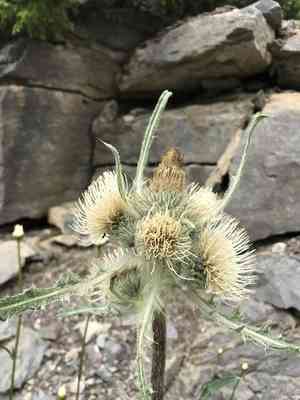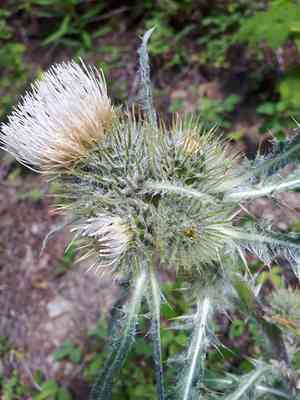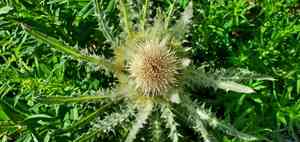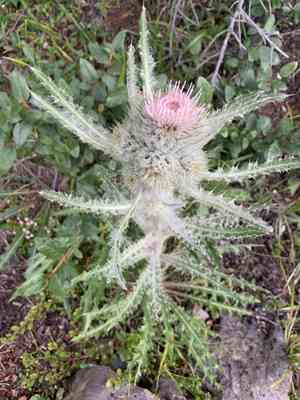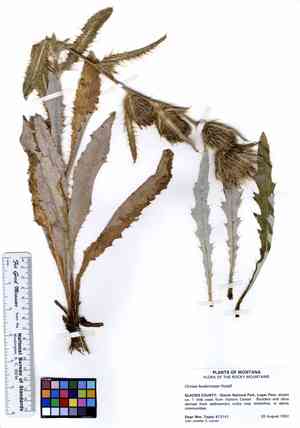
White thistle(Cirsium hookerianum)

White thistle (Cirsium hookerianum)

Also known as: Hooker's Thistle, Alberta Thistle

The white thistle (Cirsium spp.) stands out with its unique white or pale flower heads perched on tall, upright stems. Its spiny, deeply lobed leaves add to its distinctive look. This hardy plant flourishes in various soils and is commonly seen in meadows, grasslands, and disturbed sites.

Ecologically, white thistles play a crucial role by providing nectar for pollinators such as bees and butterflies. Their seeds also offer nourishment to birds and small mammals. Additionally, their robust root systems help prevent soil erosion, contributing to soil health and supporting a diverse ecosystem. Despite often being labeled as a weed, white thistles enhance biodiversity and supply essential resources for wildlife.

Attributes of White thistle

Lifespan
Biennial
Plant Type
Herb
Plant Height
1-1.5 meters
Spread
0.3-0.5 meters
Leaf Color
Green with white spiny edges
Flower Size
2-4 cm
Flower Color
Purple

ForwardPlant - Identify plants with a snap

Identify and diagnose plants, get toxicity alerts, and explore safety guides for all types of fungi.

Try for Free

Images of White thistle

White thistle(Cirsium hookerianum)

Quickly Identify White thistle

1
Identifying Cirsium hookerianum involves looking for its deeply lobed leaves with spiny edges and its solitary purple flower heads that bloom in the summer. The plant can reach up to 1.5 meters in height.

Scientific Classification of White thistle

Phylum
Vascular plants
Class
Dicotyledons
Order
Asterales
Family
Daisy
Genus
Thistles
Species
White thistle

Planting and Growing of White thistle

Care Difficulty
Easy
Watering Schedule
Every 2 days
Sunlight Requirements
Full sun
Sunshine Duration
6-12 hours
Ideal Temperature
60-70℉
Soil Type
Potting Mix, Peat Mix
Soil pH
6.5-7.5
Fertilizer Type
Balanced
Pruning Season
Spring, Summer
Pruning Area
Branches, Leaves
Pruning Frequency
2 times a year
Repotting Season
Spring
Pot Type
Plastic, Ceramic

water icon How to Water White thistle?

Cirsium hookerianum prefers moderate watering. Ensure the soil is thoroughly damp but not waterlogged. The goal is to aim for about 250 ml of water each time, allowing it to evenly soak the soil until moisture drips from the drainage holes, giving the roots enough hydration without drowning them.
What are the symptoms of an underwatered White thistle?
What should I do if my White thistle is not getting enough water?
What are the symptoms of an overwatered White thistle?
How to save an overwatered White thistle?

sunlight icon What Are the Sunlight Requirements for White thistle?

Sunlight Requirements: Full sun, Partial sun
Duration of light: 6 to 8 hours
Cirsium hookerianum ideally requires full sun to partial sun conditions, which means receiving direct sunlight for part of the day with some protection during peak hours. This balance promotes optimal blooming and robust plant structure.
What is the best lighting for Cirsium hookerianum?
What measures can be taken to ensure ideal light conditions?
What are the benefits of providing ideal light?

temperature icon What Is the Ideal Temperature Range for White thistle?

Ideal Temperature: 60 ~ 70℉
The ideal temperature range for cultivating Cirsium hookerianum is between 60°F and 70°F. These conditions provide the plant with the optimal environment to thrive without overheating or suffering from cold stress. Average indoor temperatures during the spring and summer generally meet these requirements. It is essential to maintain such conditions for optimal plant growth and development.

soil icon What Soil is Best for White thistle?

Soil type: Loam, Sandy loam, Sandy soil
Soil PH: 6.5 ~ 7.5
Cirsium hookerianum thrives best in soil that is rich in organic matter. A nutrient-rich composition provides the necessary elements for vigorous growth and contributes to robust flowering. Regular incorporation of compost or well-aged manure can significantly enhance soil fertility, resulting in healthier plants. Well-drained soil is essential for Cirsium hookerianum to prevent root rot and other water-related issues. Sandy loam and loamy soil types allow for excess water to drain effectively, preventing waterlogging and maintaining the perfect moisture balance for optimal plant health. Cirsium hookerianum prefers a soil pH range between 6.5 and 7.5, which facilitates the absorption of essential nutrients. Maintaining this pH range ensures that the plant has access to a balanced nutrient profile, promoting strong growth and vibrant blooms.

fertilize icon How to Fertilize White thistle?

Fertilizer type: Balanced
Cirsium hookerianum, commonly known as Hooker's thistle, thrives best with a well-balanced fertilization regime. When using a liquid fertilizer, apply at a rate of half the recommended strength to avoid nutrient burn, as this plant prefers modest amounts. For solid fertilizers, a slow-release type applied sparingly at recommended doses suffices.

prune icon How to Prune White thistle?

Pruning Time: Spring, Summer, Autumn
Start by examining your Cirsium hookerianum for any dead or diseased stems, which should be cut back to healthy tissue. This encourages new growth and prevents the spread of disease. Next, trim the plant back by about one-third to maintain its shape and promote bushier growth. Always use sharp, sterile pruning shears to make clean cuts. Focus on thinning out dense areas of the plant to ensure adequate air circulation, which helps in reducing fungal diseases. Prune branches crossing over each other and cut just above healthy buds to direct new growth. Thinning also helps reduce weight on limbs, preventing breakage. More About Pruning Techniques

propagate icon How to Propagate White thistle plant?

Propagate Time: Spring, Early summer
1
Fill a seed tray with a mix of potting soil and sand. Sow the seeds thinly on the surface and cover lightly with a thin layer of soil. Water gently to maintain moisture, but avoid overwatering as it can rot the seeds.
2
Once the seedlings become large enough to handle, usually with at least two sets of true leaves, transplant them into individual pots. Ensure each pot has well-draining soil and keep them in a sunny location to encourage strong growth.
3
In early spring or early summer, use a garden fork to dig around a mature plant's root system. Gently lift the plant from the ground. Carefully separate sections of the plant, ensuring each division has healthy roots. Replant each division at the same depth as the original plant.

repot icon How to Repot White thistle plant?

Repotting frequency: Every 2-3 years
1
Cirsium hookerianum should be repotted when you notice roots protruding from the drainage holes. Also, if growth seems stunted or water pools on the surface, it's time for a new home. Repotting in spring or early summer offers the best results as the plant can acclimate easily.
2
Select a pot that's about 1-2 inches larger in diameter than the current one. Opt for pots with good drainage holes to avoid waterlogging. A slightly bigger pot will encourage growth without overwhelming the plant, providing stability and space for roots.
3
Choose a well-draining, sandy soil mix to keep roots healthy and prevent rot. This type of soil allows for good airflow, replicating its natural environment, which helps maintain a balanced moisture level vital for its growth.

ForwardPlant - Identify plants with a snap

Find the best spots for them to optimize their health, simply using your phone.

Try for Free