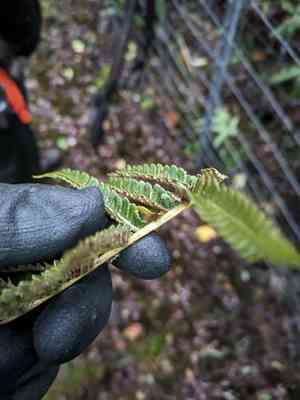
Hapu'u (Cibotium glaucum)
Also known as: Hawaiian Tree Fern, Hapuu pulu
The hapu'u, a remarkable Hawaiian tree fern, stands out with its tall, majestic stature, often reaching up to 20 feet. Its large, arching fronds, which can form intricate and lush canopies, are a key feature. The fern's thick, fibrous trunk not only supports its impressive height but also helps with moisture retention and insulation, essential for thriving in its subtropical habitat. The hapu'u's prehistoric look, coupled with its ecological role in providing habitat and shelter, makes it an enchanting and vital presence in its forest environment.
In This Article
Attributes of Hapu'u
Lifespan
Perennial
Plant Type
Fern
Plant Height
1.8 m to 11 m
Spread
4 m
Leaf Color
Dark Green
Flower Size
Not Applicable (ferns do not have flowers)
Flower Color
Not Applicable (ferns do not have flowers)
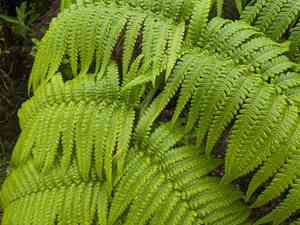
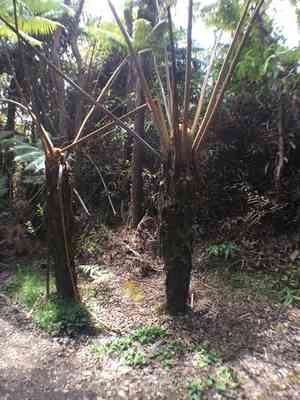
Images of Hapu'u


Quickly Identify Hapu'u
1
Cibotium glaucum can be identified by its tall, woody trunk covered with a fibrous, woolly material and large, arching, pinnate fronds. The undersides of the fronds are often silvery or glaucous, which is a key characteristic.
Scientific Classification of Hapu'u
Phylum
Vascular plants
Class
Ferns
Order
Cyatheales
Family
Cibotiaceae
Genus
Manferns
Species
Hapu'u
Planting and Growing of Hapu'u
Care Difficulty
Hard
Watering Schedule
Every 3 days
Sunlight Requirements
Partial sun
Sunshine Duration
6-10 hours
Ideal Temperature
60-75℉
Soil Type
Potting Mix, Peat Mix
Soil pH
6.5-7.5
Fertilizer Type
Balanced
Pruning Season
Spring, Summer
Pruning Area
Branches, Leaves
Pruning Frequency
2 times a year
Repotting Season
Spring
Pot Type
Terracotta, Plastic
 How to Water Hapu'u?
Cibotium glaucum, known for its lush, fern-like fronds, thrives best when its soil is kept consistently moist but not soggy. Watering should aim to simulate its natural humid environment without drowning the roots. A good deal would be to provide around 500 ml per watering session, allowing the water to gently seep into the soil, ensuring it's absorbed evenly. It's critical to check that the top inch of soil feels slightly moist before watering again.
What are the symptoms of an underwatered Hapu'u?
›
What should I do if my Hapu'u is not getting enough water?
›
What are the symptoms of an overwatered Hapu'u?
›
How to save an overwatered Hapu'u?
›
 What Are the Sunlight Requirements for Hapu'u?
Cibotium glaucum prefers partial sun with dappled light, ideally benefiting from exposure between 3 to 6 hours. This range promotes lush foliage and prevents stress while optimizing its natural habitat conditions.
Optimal Environment
›
Solution Design
›
Expected Benefits
›
 What Is the Ideal Temperature Range for Hapu'u?
Cibotium glaucum thrives best in temperatures between 60°F and 75°F. This range ensures optimal metabolic activity, facilitating robust growth and vibrancy in foliage. Maintaining consistent warmth within this range helps prevent stress and allows the plant to flourish in its environment.
 What Soil is Best for Hapu'u?
Cibotium glaucum thrives in soils that are rich in organic matter. A nutrient-rich soil ensures robust fern growth and vigorous frond development. Regular incorporation of compost helps retain moisture and provides essential nutrients. This plant requires soil with excellent drainage capabilities to prevent root rot. Ensuring proper drainage helps maintain an ideal moisture balance, which is crucial for the plant's health and longevity. The soil should be able to hold some moisture without becoming waterlogged. This balances the water needs of the plant, preventing drought stress while avoiding excessive moisture that can lead to root issues.
 How to Fertilize Hapu'u?
For Cibotium glaucum, it is important to apply fertilizer sparingly to avoid over-nourishing the plant. When using liquid fertilizer, mix it at half the recommended strength and apply about 200ml directly to the soil. For slow-release granular fertilizers, scatter around 50 grams per application, ensuring even distribution around the root zone.
 How to Prune Hapu'u?
Begin pruning at the base of the plant, making clean cuts where the fronds attach to the stem. This encourages new growth at the base and helps maintain the overall aesthetic of the plant. Cibotium glaucum is slow-growing, so be cautious not to remove too many fronds at once. Over-pruning can stress the plant, potentially impairing its growth and overall health.
More About Pruning Techniques→
 How to Propagate Hapu'u plant?
1
Ensure that the Cibotium glaucum chosen for propagation is healthy and mature, as this increases the likelihood of successful division and establishment of new plant divisions.
2
Carefully remove the plant from its pot or ground and divide the root ball into sections. Each section should have a portion of roots attached to ensure proper growth.
3
After dividing, replant each section into a suitable container with appropriate soil. Space them well in the pot and water them immediately to reduce transplant shock.
 How to Repot Hapu'u plant?
1
Repotting Cibotium glaucum should be done when you notice its roots peeking out from the drainage holes or when its growth seems stunted. Ideally, this should be during the growing seasons of spring or autumn, when the plant can recover more efficiently from the repotting process. This timing ensures that the plant has enough energy to root into the new soil without much stress.
2
Select a pot that is just slightly larger than the current one, with a diameter increase of a couple of inches. The pot must have adequate drainage holes to prevent water from accumulating and causing root rot. A slightly larger pot provides enough space for root expansion, which encourages healthier growth and helps the Cibotium glaucum plant thrive.
3
Choose a well-draining loamy soil mix that is rich in organic matter. This type of soil ensures that excess water is swiftly drained away while providing the essential nutrients for the plant to grow. A nutrient-rich mix can support healthy root development and vigorous growth, ensuring the vibrant health of Cibotium glaucum.
Learn More About Hapu'u Diseases
Anthracnose
Bacterial Leaf Spot
Bacterial Soft Rot
Bacterial Wilt
Black Spot
Chemical Injury
Crown Gall
Damping-off
Downy Mildew
Drought Stress
Fusarium Wilt
Gray Mold
Leaf Curl
Leaf Spot
Mosaic
Nutrient Deficiency
Nutrient Toxicity
Powdery Mildew
Root Rot
Root-knot Nematode
Rusts
Sooty Mold
Spider Mites
Temperature Stress
Thrips Damage
White Mold



