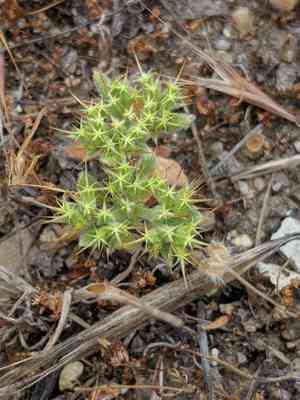
One-awn spineflower (Chorizanthe uniaristata)
Also known as: Whiskerbrush, Spineflower
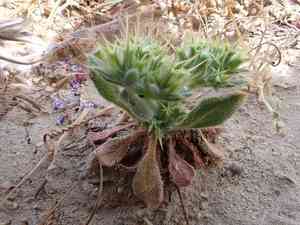
The one-awn spineflower is notable for its solitary spine at the tip of each floral bract. Its adaptation to dry environments is evident in its low, spreading growth pattern, which aids in water conservation. The plant's bright flowers and sharp, needle-like spines stand out against the sandy or rocky terrains, highlighting its distinctiveness in its natural habitat.
In This Article
Attributes of One-awn spineflower
Lifespan
Annual
Plant Height
0.1 to 0.5 feet
Spread
N/A
Leaf Color
Green
Flower Size
Less than 1 inch
Flower Color
Pink
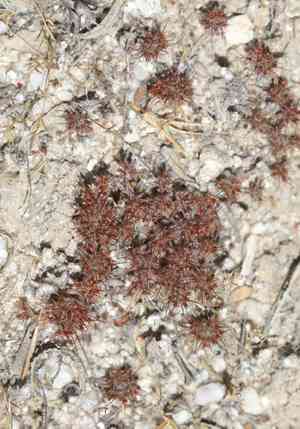
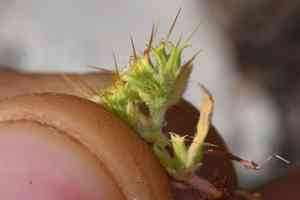
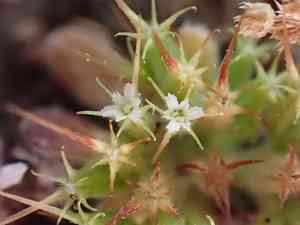
Images of One-awn spineflower
Quickly Identify One-awn spineflower
1
To identify Chorizanthe uniaristata, look for its small size, whorl of bracts with spine-like tips around the flowers, and its overall tawny to reddish color. Flowers are small and pinkish.
Scientific Classification of One-awn spineflower
Phylum
Vascular plants
Class
Dicotyledons
Order
Caryophyllales
Family
Buckwheat
Genus
Spineflowers
Species
One-awn spineflower
Planting and Growing of One-awn spineflower
Care Difficulty
Hard
Watering Schedule
Every 2 days
Sunlight Requirements
Full sun
Sunshine Duration
4-8 hours
Ideal Temperature
60-75℉
Soil Type
Potting Mix, Peat Mix
Soil pH
6.5-7.5
Fertilizer Type
Balanced
Pruning Season
Spring, Summer
Pruning Area
Branches, Leaves
Pruning Frequency
2 times a year
Repotting Season
Spring
Pot Type
Plastic, Ceramic
 How to Water One-awn spineflower?
Chorizanthe uniaristata appreciates a moderate amount of water, around 250 ml per session. Watering should ensure the soil is thoroughly moist but not overly saturated. This plant prefers well-drained soil, and the roots shouldn't sit in water as they are susceptible to rot.
What are the symptoms of an underwatered One-awn spineflower?
›
What should I do if my One-awn spineflower is not getting enough water?
›
What are the symptoms of an overwatered One-awn spineflower?
›
How to save an overwatered One-awn spineflower?
›
 What Are the Sunlight Requirements for One-awn spineflower?
Chorizanthe uniaristata prefers environments where it can receive full sun or at least partial sun exposure. Adequate sunlight enhances photosynthesis, growth vigor, and blooms' vibrancy.
What lighting is best for Chorizanthe uniaristata?
›
How to achieve ideal lighting for Chorizanthe uniaristata?
›
What are the benefits of ideal lighting for Chorizanthe uniaristata?
›
 What Is the Ideal Temperature Range for One-awn spineflower?
The ideal temperature range for Chorizanthe uniaristata, between 60°F and 75°F, ensures that the plant can perform essential physiological functions effectively. This range supports optimal enzyme activity and facilitates proper nutrient uptake, critical for plant health and growth. Keeping the environment within this range will help maintain both the vegetative and blooming stages efficiently.
 What Soil is Best for One-awn spineflower?
Chorizanthe uniaristata thrives in well-drained soil as it prevents waterlogging which can lead to root rot. A soil that drains efficiently ensures that the roots receive adequate oxygen, promoting healthy growth. This plant can flourish in nutrient-poor soils, a feature that allows it to compete in habitats with limited resources. Low nutrient availability encourages the plant to develop strong root systems for anchorage and stability. While drainage is important, the soil should still be capable of retaining some moisture to support the plant during dry periods. Balanced moisture retention helps prevent stress and wilting.
 How to Fertilize One-awn spineflower?
For Chorizanthe uniaristata, a conservative approach to fertilization is recommended. Utilize a balanced liquid fertilizer, diluted to half strength, applying approximately 500 ml evenly around the plant base each time.
 How to Prune One-awn spineflower?
Begin by examining the plant to identify any dead or damaged stems. These sections often appear brown or frail. Cut these back to healthy tissue or to the base of the plant. If needed, gently shape the plant to your desired form, removing any straggly or unruly growth. This helps to maintain aesthetic balance and contributes to overall plant vigor. Trim just above a healthy leaf node to encourage new growth. This promotes branching and results in a fuller appearance, enhancing the plant's ornamental value.
More About Pruning Techniques→
 How to Propagate One-awn spineflower plant?
1
Fill the seed tray with potting soil, leaving about half an inch from the top. Ensure the soil is evenly spread and gently pack it down to eliminate large air pockets while maintaining a loose structure for aeration.
2
Scatter the seeds over the soil surface and cover them with a thin layer of soil. The depth should not exceed twice the diameter of the seeds. Mist the soil lightly with water to ensure moisture without displacement of seeds.
3
Place the tray in a sunny location where it can receive adequate light. Maintain a consistent temperature and moisture level to ensure proper seed germination and growth. Avoid direct draft or extreme temperature fluctuations.
 How to Repot One-awn spineflower plant?
1
Chorizanthe uniaristata signals repotting needs when you notice that its growth slows down or roots start to circle around the pot edges. Typically, it's time to repot during spring or autumn when the plant is not actively flowering.
2
Select a pot that is slightly larger than the current one, ideally with drainage holes to prevent waterlogging. A terracotta pot is excellent to aid ventilation and moisture control, ensuring the plant's roots can breathe.
3
Opt for a well-drained sandy soil mix to mimic its natural habitat. This type of soil ensures excess water drains away, reducing the risk of root rot and providing a light structure for root expansion.
Learn More About One-awn spineflower Diseases
Anthracnose
Bacterial Leaf Spot
Bacterial Soft Rot
Bacterial Wilt
Chemical Injury
Cyst Nematode
Damping-off
Downy Mildew
Drought Stress
Fusarium Wilt
Gray Mold
Leaf Curl
Leaf Spot
Mosaic
Nutrient Deficiency
Nutrient Toxicity
Powdery Mildew
Root Rot
Root-knot Nematode
Rusts
Sooty Mold
Spider Mites
Temperature Stress
Thrips Damage
White Mold



