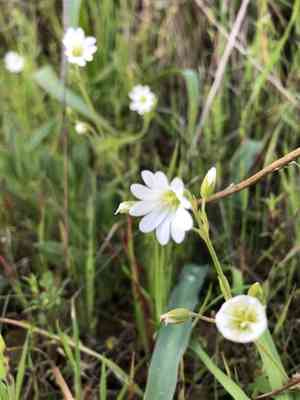
Western field mouse-ear chickweed (Cerastium viride)
Also known as: Green Mouse-ear, Green Cerastium
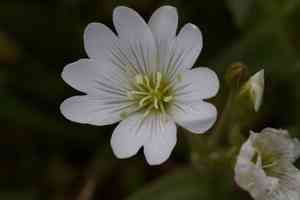
The Western field mouse-ear chickweed (Cerastium arvense) is a low-growing perennial herb known for its vibrant green leaves, which form a dense, carpet-like layer. The leaves are slender, lanceolate, and have a soft, delicate texture. This plant produces small, white flowers with five deeply notched petals, blooming on thin stems, adding a touch of subtle beauty to its surroundings.
It thrives in open, rocky terrains, such as grasslands and meadows, where it can endure harsh conditions. This hardy plant is well-suited to temperate regions in North America and Eurasia, preferring well-drained soils and plenty of sunlight.
In This Article
Attributes of Western field mouse-ear chickweed
Lifespan
Perennial
Plant Type
Herb
Plant Height
10-20 cm
Spread
15-30 cm
Leaf Color
Green
Flower Size
0.5-1 cm
Flower Color
White
Images of Western field mouse-ear chickweed
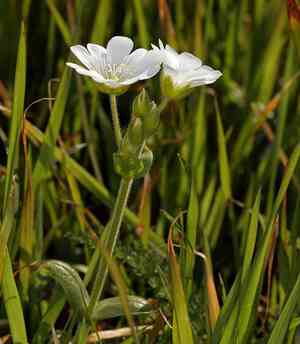
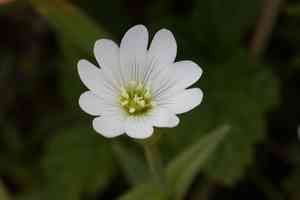
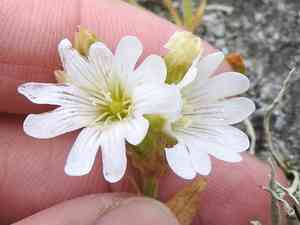
Quickly Identify Western field mouse-ear chickweed
1
To identify Cerastium viride, look for its dense mats of green, hairy leaves and small white flowers with notched petals. It typically grows in rocky or sandy soils.
Scientific Classification of Western field mouse-ear chickweed
Phylum
Vascular plants
Class
Dicotyledons
Order
Caryophyllales
Family
Pink
Genus
Mouse-ear chickweed
Species
Western field mouse-ear chickweed
Planting and Growing of Western field mouse-ear chickweed
Care Difficulty
Easy
Watering Schedule
Every 4 days
Sunlight Requirements
Partial sun
Sunshine Duration
4-8 hours
Ideal Temperature
60-75℉
Soil Type
Potting Mix, Peat Mix
Soil pH
6.5-7.5
Fertilizer Type
Balanced
Pruning Season
Spring, Summer
Pruning Area
Branches, Leaves
Pruning Frequency
2 times a year
Repotting Season
Spring
Pot Type
Plastic, Ceramic
 How to Water Western field mouse-ear chickweed?
For Cerastium viride, moderate water levels are crucial. Each time you water, ensure the soil is moistened with about 150 ml of water. The key is to water just enough to keep the soil moist, but not soggy, preventing root rot and ensuring healthy growth.
What are the symptoms of an underwatered Western field mouse-ear chickweed?
›
What should I do if my Western field mouse-ear chickweed is not getting enough water?
›
What are the symptoms of an overwatered Western field mouse-ear chickweed?
›
How to save an overwatered Western field mouse-ear chickweed?
›
 What Are the Sunlight Requirements for Western field mouse-ear chickweed?
Cerastium viride ideally thrives under partial sun conditions, receiving around four to six hours of sunlight daily. Such light exposure supports its growth while preventing the adverse effects of excessive heat and light.
How much sunlight does Cerastium viride need?
›
How can Cerastium viride get ideal lighting?
›
What are the benefits of ideal lighting for Cerastium viride?
›
 What Is the Ideal Temperature Range for Western field mouse-ear chickweed?
For Cerastium viride, the ideal temperature range is between 60°F and 75°F. This range supports its metabolic processes, ensuring optimal growth and photosynthesis. Temperatures below or above this range may lead to suboptimal growth conditions, making it crucial to monitor ambient temperatures closely.
 What Soil is Best for Western field mouse-ear chickweed?
Cerastium viride thrives in well-draining soil that allows excess water to escape efficiently. This prevents root rot and ensures that the plant's roots receive sufficient oxygen, promoting healthy growth. While not overly demanding, Cerastium viride benefits from soil that contains organic matter, such as compost. This provides essential nutrients that enhance the plant's growth and overall vigor, making it flourish consistently. Soil that holds moisture moderately yet dries out between waterings is ideal. This balance prevents water stress and keeps the plant hydrated without causing soggy conditions that could lead to disease.
 How to Fertilize Western field mouse-ear chickweed?
For Cerastium viride, ensure that you are providing the right amount of fertilizer, neither overwhelming nor underwhelming it. Typically, use a balanced 10-10-10 soluble fertilizer at a rate of one tablespoon per gallon of water, ensuring adequate nutrient supply while preventing nutrient burnout.
 How to Prune Western field mouse-ear chickweed?
When pruning Cerastium viride, always use sharp, sterilized scissors or pruning shears to make clean cuts. Remove any dead or damaged stems first to prevent disease. Cut back the plant to just above a pair of leaves to encourage new growth. After the blooming period, carefully remove spent flowers by cutting their stems back to the base. This not only tidies up the plant but also promotes a second flush of blooms and prevents unwanted self-seeding.
More About Pruning Techniques→
 How to Propagate Western field mouse-ear chickweed plant?
1
Begin by preparing a well-drained potting mix that retains moisture yet drains excess water. Mix components like peat, perlite, and sand to achieve the right balance. A well-prepared soil ensures healthy root development and better survival rates of seedlings and cuttings.
2
Place seeds evenly across the surface of the moistened soil. Lightly cover them with a thin layer of soil, as some light seeds require exposure to light for germination. Maintain consistent moisture by misting to support germination, but avoid overwatering.
3
Once seedlings or cuttings have developed enough roots, transplant them into individual pots or the garden. Ensure the new location has similar soil and environmental conditions to reduce transplant shock. Handle the young plants carefully, supporting the root ball to prevent damage.
 How to Repot Western field mouse-ear chickweed plant?
1
Look for signs like roots growing out of drainage holes or reduced growth rate. If the plant's growth seems stunted or it becomes root-bound, it's time to repot. Choose early Spring or Autumn so that the plant has optimal growing conditions to adjust.
2
Select a pot that is one size larger than the current one, with adequate drainage holes. This ensures the roots have enough room to grow, reducing the risk of waterlogging, which can lead to root rot and other issues.
3
Opt for a sandy, well-draining soil mix suited for alpine plants. This type of soil ensures proper water drainage and provides the necessary aeration for the roots, preventing them from water buildup and fungal diseases.
Learn More About Western field mouse-ear chickweed Diseases
Anthracnose
Bacterial Leaf Spot
Bacterial Soft Rot
Bacterial Wilt
Black Spot
Chemical Injury
Damping-off
Downy Mildew
Drought Stress
Fusarium Wilt
Gray Mold
Leaf Curl
Leaf Spot
Mosaic
Nutrient Deficiency
Nutrient Toxicity
Powdery Mildew
Root Rot
Root-knot Nematode
Rusts
Sooty Mold
Spider Mites
Temperature Stress
Thrips Damage
White Mold



