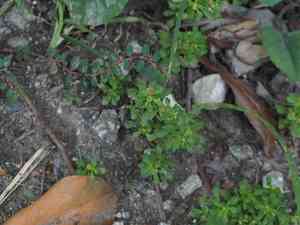
Spreading sneezeweed(Centipeda minima)

Spreading sneezeweed (Centipeda minima)

Also known as: Small Centipeda, Sneezeweed

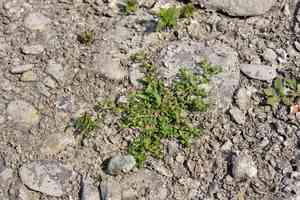
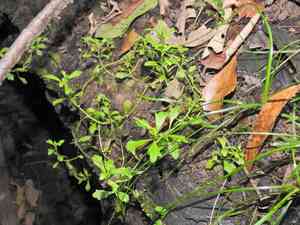
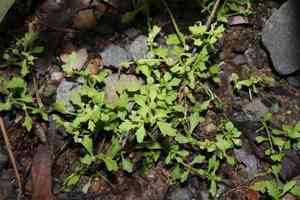
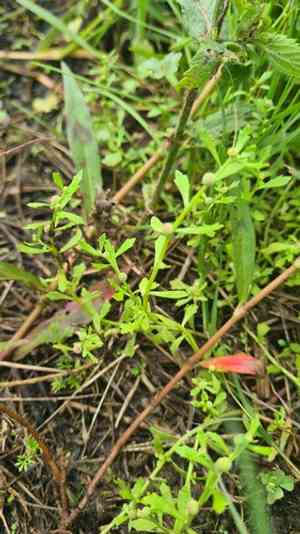
The plant has a creeping stem that stretches 5 to 20 cm along the ground. Its alternate, wedge-shaped leaves measure 8 to 20 mm in length and feature rough serrations along the edges. The green flower heads are small, 2.5 to 5 mm in diameter, and lack a distinct floral pattern, appearing as green round lumps about 1.5 mm in size. The flower head is hemispherical and does not have tongue-like flowers; instead, it consists of cylindrical female flowers on the outside and cylindrical bisexual flowers in the center. Both types of flowers have very small, cylindrical corollas, with the female flowers' corollas being even smaller. The fruit is 1.3 mm long, has five ridges, and lacks crown hair.

Attributes of Spreading sneezeweed

Lifespan
Annual
Plant Type
Herb
Plant Height
5 cm to 20 cm
Spread
30 cm
Leaf Color
Green
Flower Size
3 mm
Flower Color
Green Purple Brown

ForwardPlant - Identify plants with a snap

Identify and diagnose plants, get toxicity alerts, and explore safety guides for all types of fungi.

Try for Free

Images of Spreading sneezeweed

Spreading sneezeweed(Centipeda minima)

Quickly Identify Spreading sneezeweed

1
Centipeda minima can be identified by its low-growing habit, small, opposite leaves, and tiny, greenish-yellow flowers that form in dense clusters. It often emits a distinctive odor when crushed.

Scientific Classification of Spreading sneezeweed

Phylum
Vascular plants
Class
Dicotyledons
Order
Asterales
Family
Daisy
Genus
Centipeda
Species
Spreading sneezeweed

Planting and Growing of Spreading sneezeweed

Care Difficulty
Easy
Watering Schedule
Every 2 days
Sunlight Requirements
Full sun
Sunshine Duration
4-8 hours
Ideal Temperature
68-77℉
Soil Type
Potting Mix, Peat Mix
Soil pH
6.5-7.5
Fertilizer Type
Balanced
Pruning Season
Spring, Summer
Pruning Area
Branches, Leaves
Pruning Frequency
2 times a year
Repotting Season
Spring
Pot Type
Plastic, Ceramic

water icon How to Water Spreading sneezeweed?

For Centipeda minima, it's important to keep the soil slightly moist but not waterlogged. Aim for about 100 ml per watering session. Ensure the water evenly soaks the soil without pooling on the surface. This quantity allows consistent moisture while preventing the roots from sitting in water.
What are the symptoms of an underwatered Spreading sneezeweed?
What should I do if my Spreading sneezeweed is not getting enough water?
What are the symptoms of an overwatered Spreading sneezeweed?
How to save an overwatered Spreading sneezeweed?

sunlight icon What Are the Sunlight Requirements for Spreading sneezeweed?

Sunlight Requirements: Full sun, Partial sun
Duration of light: 4 to 8 hours
Centipeda minima thrives best under full sun to partial sun conditions. Ensuring at least four to eight hours of sun exposure maximizes growth, bolsters vibrant greenery, and boosts resilience against environmental stressors, promoting overall plant health.
What is the ideal lighting condition for Centipeda minima?
How can Centipeda minima achieve ideal lighting conditions?
What are the benefits of proper lighting for Centipeda minima?
More About Sunlight Requirements Techniques

temperature icon What Is the Ideal Temperature Range for Spreading sneezeweed?

Ideal Temperature: 68 ~ 77℉
For optimal growth, Centipeda minima thrives in temperatures between 68°F and 77°F. This range provides a balanced environment that supports healthy photosynthesis and nutrient absorption, ensuring robust development. Maintaining this temperature helps to avoid stress and promotes better growth habits, ultimately leading to more vigorous and healthy plants.

soil icon What Soil is Best for Spreading sneezeweed?

Soil type: Loam, Sandy loam
Soil PH: 6.5 ~ 7.5
Centipeda minima thrives in well-drained soil conditions, which prevent waterlogging and root rot. The plant benefits because proper drainage ensures oxygen availability to roots, promoting healthy growth. This plant favors soil that's rich in organic matter, offering essential nutrients needed for growth. Such soil supports strong stems and lush foliage, enhancing its medicinal properties. Centipeda minima requires soil that holds moisture without becoming soggy. This balance provides a stable moisture environment, which is crucial for consistent growth and reduces the risk of drought stress.

fertilize icon How to Fertilize Spreading sneezeweed?

Fertilizer type: Balanced
Centipeda minima is a resilient plant that doesn't demand excessive nutrient supplementation. For liquid fertilizers, a dilution ratio of 1:4 is ideal. Apply evenly over the soil, being cautious not to saturate it, to avoid root-rot caused by excess moisture.

prune icon How to Prune Spreading sneezeweed?

Pruning Time: Spring, Summer
Locate any dead, damaged, or overgrown stems and leaves. Focus on trimming these areas to maintain the plant's health and encourage more vigorous growth. Avoid cutting back more than one-third of the plant at any one time. Centipeda minima responds well to light, regular pruning, so it's better to prune little and often rather than all at once. For ornamental purposes, sculpt Centipeda minima into desirable shapes by selectively trimming. This can add aesthetic value while ensuring balanced growth. More About Pruning Techniques

propagate icon How to Propagate Spreading sneezeweed plant?

Propagate Time: Early spring, Spring, Early summer
1
Gather seeds from mature plants in early spring when the seed heads are dry. Store them in a cool, dry place until you're ready to plant.
2
Cut healthy stems at least 4 inches long. Remove lower leaves and dip ends in rooting hormone before planting them in a moist growing medium.
3
Dig up mature plants in spring or early summer. Gently separate the roots into smaller sections, each with its own shoots and roots, then replant immediately.

repot icon How to Repot Spreading sneezeweed plant?

Repotting frequency: Every two years
1
Centipeda minima needs repotting when it outgrows its pot, visible by roots emerging from the drainage holes or a slowdown in growth. Spring and autumn are ideal as they provide mild conditions that help the plant recover more efficiently and promote root establishment.
2
Opt for a pot that is one size larger than the current one and has good drainage holes. This prevents waterlogging, promoting healthy root growth. A pot made of clay or terracotta can be beneficial as it allows for better air circulation around the roots.
3
Choose a well-draining potting mix with compost and perlite to ensure aeration and nutrient availability. Such soil prevents the roots from sitting in water, reducing the risk of root rot, and supports the quick adaptation of the plant into its new home.

ForwardPlant - Identify plants with a snap

Find the best spots for them to optimize their health, simply using your phone.

Try for Free