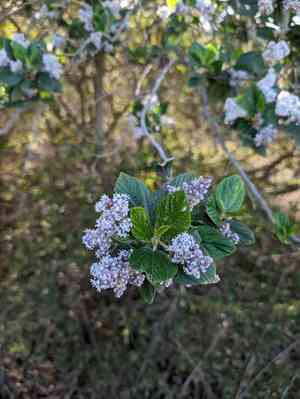
Feltleaf ceanothus (Ceanothus arboreus)
Also known as: Island mountain lilac, Catalina ceanothus
Feltleaf ceanothus (Ceanothus arboreus) is an evergreen shrub that can reach up to 7 meters in height. Its felt-like leaves are a favorite for deer. Blooming from spring to summer, it produces lilac-blue flowers that attract bees. For optimal growth, it requires well-drained soil, preferably sandy loam or rich soil, and thrives in full sun to partial shade.
In This Article
Attributes of Feltleaf ceanothus
Lifespan
Perennial
Plant Type
Tree, Shrub
Plant Height
3.5 m to 11 m
Spread
8 m
Leaf Color
Green
Flower Size
5 cm to 8 cm
Flower Color
Blue Purple
Images of Feltleaf ceanothus
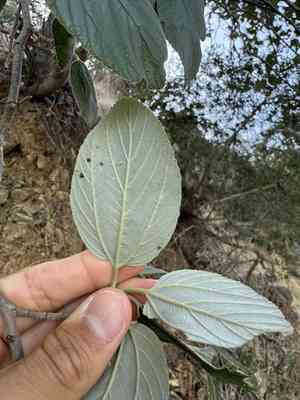

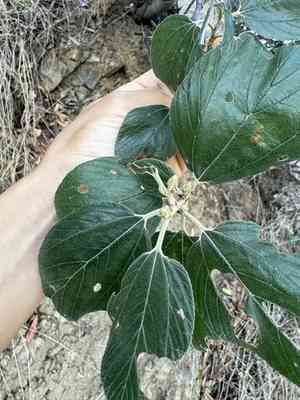
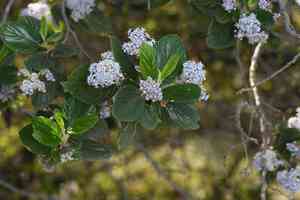
Quickly Identify Feltleaf ceanothus
1
Identify Ceanothus arboreus by its tree-like form, glossy dark green leaves, and clusters of small, fragrant blue to purple flowers. Its bark can also be an identifying feature, being smooth and dark.
Scientific Classification of Feltleaf ceanothus
Phylum
Vascular plants
Class
Dicotyledons
Order
Rosales
Family
Buckthorn
Genus
Redroots
Species
Feltleaf ceanothus
Planting and Growing of Feltleaf ceanothus
Care Difficulty
Easy
Watering Schedule
Every 3 days
Sunlight Requirements
Full sun
Sunshine Duration
4-6 hours
Ideal Temperature
60-75℉
Soil Type
Potting Mix, Peat Mix
Soil pH
6.5-7.5
Fertilizer Type
Balanced
Pruning Season
Spring, Summer
Pruning Area
Branches, Leaves
Pruning Frequency
2 times a year
Repotting Season
Spring
Pot Type
Plastic, Ceramic
 How to Water Feltleaf ceanothus?
When watering Ceanothus arboreus, ensure that the soil is moistened deeply but not waterlogged. It's recommended to use around 500 ml of water per session, adjusting based on local climate and soil conditions. The goal is to allow water to reach the root depth, ensuring the plant effectively absorbs moisture without drowning the roots.
What are the symptoms of an underwatered Feltleaf ceanothus?
›
What should I do if my Feltleaf ceanothus is not getting enough water?
›
What are the symptoms of an overwatered Feltleaf ceanothus?
›
How to save an overwatered Feltleaf ceanothus?
›
 What Are the Sunlight Requirements for Feltleaf ceanothus?
Ceanothus arboreus requires full sun to partial sun conditions, translating to 6 to 8 hours of light daily. Ideal lighting supports its photosynthesis, boosts flowering, and ensures robust growth.
More About Sunlight Requirements Techniques→
How much sunlight does Ceanothus arboreus need?
›
What solutions ensure ideal lighting?
›
What are the benefits of ideal lighting for Ceanothus arboreus?
›
 What Is the Ideal Temperature Range for Feltleaf ceanothus?
The ideal temperature range for Ceanothus arboreus, commonly known as the island ceanothus, is between 60°F and 75°F. This range is considered optimal because it mimics its native habitat's climate conditions, promoting healthy growth and flowering. Keeping the plant within this range ensures that it can maximize physiological functions such as photosynthesis and respiration, leading to vibrant foliage and robust blooms.
 What Soil is Best for Feltleaf ceanothus?
Ceanothus arboreus thrives in well-drained soil which ensures that the roots do not remain waterlogged, preventing root rot and allowing the plant to access oxygen efficiently for healthier growth. This plant benefits from soil enriched with organic matter, supplying essential nutrients that promote vigorous growth and an abundance of blossoms. While tolerant of dry conditions, Ceanothus arboreus grows best with soil that maintains moderate moisture levels, supporting its health and reducing stress during dry spells.
 How to Fertilize Feltleaf ceanothus?
For Ceanothus arboreus, apply a balanced liquid fertilizer at half strength. Over-fertilizing can lead to excessive growth, so measure carefully. Use approximately 5 ml per liter of water.
 How to Prune Feltleaf ceanothus?
Begin by examining the plant for any dead, diseased, or damaged branches. Remove these sections back to the healthy tissue. This will prevent the spread of disease and improve air circulation, contributing to the overall health of Ceanothus arboreus. Using sharp pruning shears, trim the outermost branches to maintain a round or oval shape. This keeps the shrub looking neat and encourages dense foliage. Shape pruning could be done by reducing about one-third of the branch length, focusing on preserving the plant’s natural form. Prune branches that cross or rub against each other to encourage vigorous new growth. Ceanothus arboreus responds well to pruning that opens up the plant structure, allowing light to penetrate the center. This not only encourages even growth but also enhances flowering potential.
More About Pruning Techniques→
 How to Propagate Feltleaf ceanothus plant?
1
Collect seeds from mature Ceanothus arboreus plants in early spring. Look for healthy seeds with no signs of damage. Store seeds in a cool, dry place until you are ready to plant them. This method ensures you have a fresh and viable seed source.
2
Select non-flowering stems from healthy, mature plants for cuttings. Cut the stem at a 45-degree angle just below a leaf node. Remove leaves from the lower half of the cutting to promote root development and reduce moisture loss.
3
Dip the cut end of the stem into rooting hormone to encourage root growth. Plant the cutting in a prepared potting mix in a pot or tray. Water the cutting lightly and cover with a plastic dome or bag to retain humidity during root development.
 How to Repot Feltleaf ceanothus plant?
1
Ceanothus arboreus shows signs of needing repotting when its growth slows significantly, roots start circling inside the pot or growing out of the drainage holes, or when water drains too quickly from the pot due to root-bound conditions.
2
Choose a pot that is one size larger than the current one, with good drainage holes. A slightly larger pot prevents overwatering by ensuring excess water can escape, reducing the risk of root rot while allowing space for healthy root development.
3
Select a well-drained sandy soil mix that contains organic matter. Such soil ensures proper moisture retention while allowing excess water to drain away quickly, mimicking the natural rocky and dry conditions Ceanothus arboreus thrives in.



