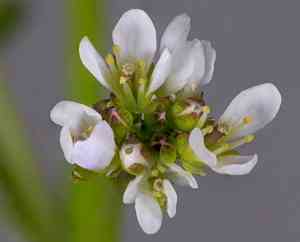
Payson's wild cabbage (Caulanthus simulans)
Also known as: Robust Wild Cabbage, Scrub Cabbage
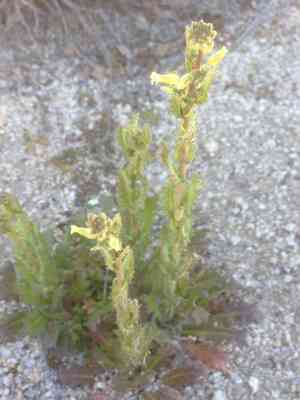
Payson’s wild cabbage, or Caulanthus crassicaulis, is a remarkable flowering plant that thrives in arid, rocky, or sandy environments. It is distinguished by its robust, fleshy stems and narrow, elongated leaves. The plant features clusters of small, tubular flowers, often in shades of white to purple, which adorn the upper portions of the stems. These striking blooms contribute to its unique appearance and ability to stand out in its desert and scrubland habitats.
In This Article
Attributes of Payson's wild cabbage
Lifespan
Annual
Plant Type
Herb
Plant Height
1-1.5 meters
Spread
N/A
Leaf Color
Green
Flower Size
1-1.5 cm
Flower Color
Yellow-green
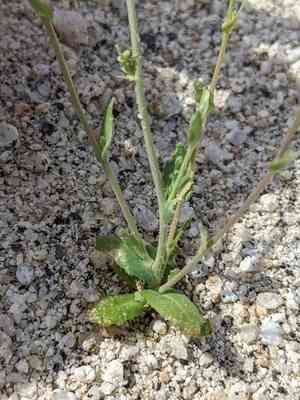
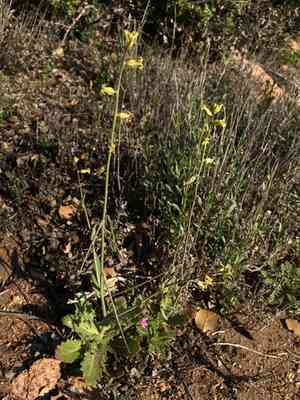
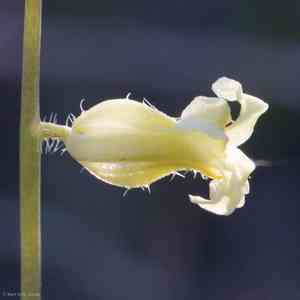
Images of Payson's wild cabbage
Quickly Identify Payson's wild cabbage
1
The plant can be identified by its thick, robust stem and elongated, narrow leaves with wavy edges. The flowers are small and yellow-green, gathered in dense clusters at the top of the stem.
Scientific Classification of Payson's wild cabbage
Phylum
Vascular plants
Class
Dicotyledons
Order
Brassicales
Family
Cruciferae
Genus
Wild cabbage
Species
Payson's wild cabbage
Planting and Growing of Payson's wild cabbage
Care Difficulty
Hard
Watering Schedule
Every 2 days
Sunlight Requirements
Full sun
Sunshine Duration
4-8 hours
Ideal Temperature
60-75℉
Soil Type
Potting Mix, Peat Mix
Soil pH
6.5-7.5
Fertilizer Type
Balanced
Pruning Season
Spring, Summer
Pruning Area
Leaves, Branches
Pruning Frequency
2 times a year
Repotting Season
Spring
Pot Type
Plastic, Ceramic
 How to Water Payson's wild cabbage?
When watering Caulanthus simulans, ensure that the soil is moistened to a depth of about 5-10 centimeters. You want the water to reach the roots effectively without leaving the soil waterlogged. This ensures the roots can access the moisture they need for healthy growth without risking rot.
What are the symptoms of an underwatered Payson's wild cabbage?
›
What should I do if my Payson's wild cabbage is not getting enough water?
›
What are the symptoms of an overwatered Payson's wild cabbage?
›
How to save an overwatered Payson's wild cabbage?
›
 What Are the Sunlight Requirements for Payson's wild cabbage?
Caulanthus simulans thrives best in full, direct sunlight, offering robust growth and vibrant blooms. Ideal light exposure allows it to maximize photosynthesis and nutrient synthesis.
What is the ideal lighting condition for Caulanthus simulans?
›
How can you ensure Caulanthus simulans receives ideal light?
›
What are the benefits of ideal lighting for Caulanthus simulans?
›
 What Is the Ideal Temperature Range for Payson's wild cabbage?
Caulanthus simulans thrives best in temperatures ranging from 60°F to 75°F. This range provides optimal conditions for photosynthesis, encouraging robust growth and healthy foliage. Maintaining this temperature ensures the plant efficiently utilizes resources for growth and development.
 What Soil is Best for Payson's wild cabbage?
Caulanthus simulans requires soil that drains well to prevent waterlogging, which can lead to root rot. This characteristic helps the plant thrive by allowing its roots to breathe and access nutrients more efficiently. This species thrives in soils with moderate fertility, ensuring balanced nutrient availability. It doesn't need overly rich soil, which supports sustainable growth without encouraging excessive foliage that might detract from flowering. Preferring sandy soils, Caulanthus simulans can establish itself in its native conditions, where drainage is excellent, and the soil warms up quickly, promoting optimal root health and plant vigor.
 How to Fertilize Payson's wild cabbage?
For Caulanthus simulans, the amount of fertilizer should be carefully measured. During the growing season, liquid fertilizer should be diluted to half the recommended strength and applied every two weeks. Over-fertilizing can lead to nutrient burn, while under-fertilizing can stunt growth.
 How to Prune Payson's wild cabbage?
The best time to prune Caulanthus simulans is during its active growing seasons, spring and summer, to encourage new growth. Avoid pruning in late autumn or winter to prevent frost damage. Start by removing any dead, diseased, or damaged branches. This helps the plant direct its energy to healthier areas and reduces the risk of spreading disease. Shape the plant by cutting back overgrown areas, focusing on maintaining an open center to facilitate air circulation. This encourages robust growth and a pleasing shape.
More About Pruning Techniques→
 How to Propagate Payson's wild cabbage plant?
1
Harvest mature seeds from a healthy Caulanthus simulans plant. Ensure they are clean and dry before sowing to avoid fungal infections.
2
Scatter the seeds evenly on a seed tray filled with a well-draining soil mix. Cover them lightly with a thin layer of soil mix.
3
Water the seeds gently and place the tray in a warm location with indirect sunlight. Keep the soil moist, but not waterlogged, to encourage germination.
 How to Repot Payson's wild cabbage plant?
1
Caulanthus simulans shows signs of needing repotting when the roots start growing through the drainage holes or if you notice a slowdown in growth or wilting leaves despite proper care. Ideally, repot in early spring or autumn, as it allows the plant to recover without the stress of extreme weather.
2
Opt for a pot that's just one size larger than the current one to prevent waterlogging. A pot with drainage holes is crucial to prevent root rot. Ensure the material, whether clay or plastic, provides stability and suits your decor needs.
3
A well-draining cactus soil is essential. It ensures that the plant's roots do not stay waterlogged and helps simulate the plant's natural environment, reducing the risk of root rot and promoting healthy growth.
Learn More About Payson's wild cabbage Diseases
Bacterial Leaf Spot
Bacterial Soft Rot
Chemical Injury
Damping-off
Downy Mildew
Drought Stress
Fusarium Wilt
Gray Mold
Leaf Curl
Leaf Spot
Mosaic
Nutrient Deficiency
Nutrient Toxicity
Powdery Mildew
Root Rot
Root-knot Nematode
Rusts
Sooty Mold
Spider Mites
Temperature Stress
Thrips Damage
White Mold



