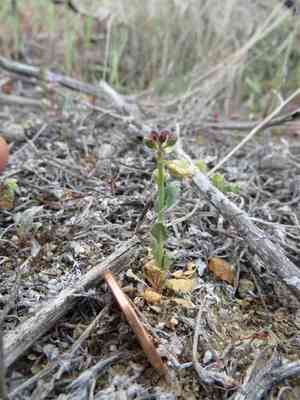
California jewelflower (Caulanthus californicus)
Also known as: California jewelflower, California mustard
The California jewelflower, native to California's dry regions, showcases slender stems that can grow up to 1 meter tall and are adorned with striking clusters of purple flowers. Adapted to arid conditions, this plant features bluish-green, waxy leaves that minimize water loss. Its ability to thrive with minimal water and its distinctive blossoms make it a notable part of California's native plant life.
In This Article
Attributes of California jewelflower
Lifespan
Annual
Plant Type
Herb
Plant Height
Up to 2 meters
Spread
Not applicable; plant does not form a crown
Leaf Color
Green
Flower Size
1-2 centimeters
Flower Color
Purple
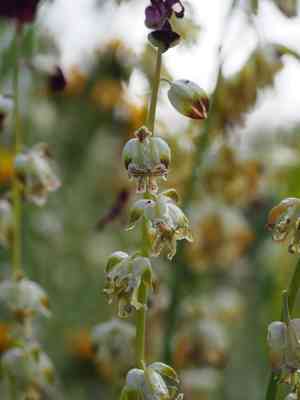
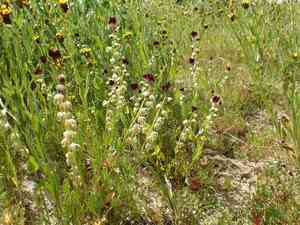
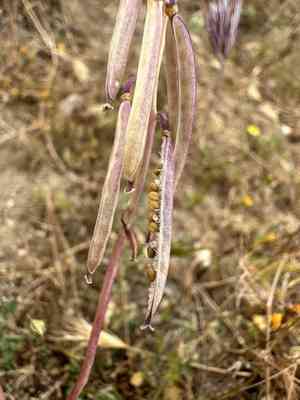
Images of California jewelflower
Quickly Identify California jewelflower
1
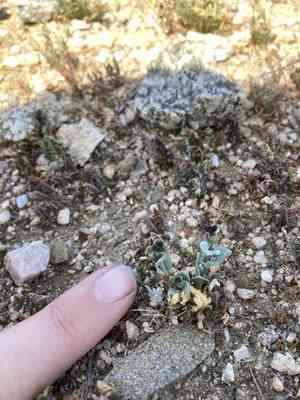
Caulanthus californicus can be identified by its tall, slender stature, often reaching heights of up to 2 meters. It has long, narrow, and slightly serrated leaves. The flowers are clustered at the top of the stems, typically purple in color, and have a distinctive sweet aroma.
Scientific Classification of California jewelflower
Phylum
Vascular plants
Class
Dicotyledons
Order
Brassicales
Family
Cruciferae
Genus
Wild cabbage
Species
California jewelflower
Planting and Growing of California jewelflower
Care Difficulty
Moderate
Watering Schedule
Every day
Sunlight Requirements
Full sun
Sunshine Duration
4-6 hours
Ideal Temperature
68-77℉
Soil Type
Potting Mix, Peat Mix
Soil pH
6.5-7.5
Fertilizer Type
Balanced
Pruning Season
Spring, Summer
Pruning Area
Branches, Leaves
Pruning Frequency
Once a year
Repotting Season
Spring
Pot Type
Plastic, Terracotta
 How to Water California jewelflower?
The California jewel flower requires around 250 ml of water per session. It's crucial to keep the soil moist but not soggy. Watering should be thorough, ensuring that water permeates through the soil giving the roots ample hydration without waterlogging them.
What are the symptoms of an underwatered California jewelflower?
›
What should I do if my California jewelflower is not getting enough water?
›
What are the symptoms of an overwatered California jewelflower?
›
How to save an overwatered California jewelflower?
›
 What Are the Sunlight Requirements for California jewelflower?
Caulanthus californicus thrives best under full sun with a minimum of 6 hours of light. Ideal light conditions ensure vigorous growth, optimal flowering, and a healthy, vibrant plant.
What is the best location for Caulanthus californicus?
›
How can you ensure it gets optimal light?
›
What benefits does optimal lighting bring?
›
 What Is the Ideal Temperature Range for California jewelflower?
The ideal temperature range for Caulanthus californicus cultivation is between 68°F and 77°F. This range provides optimal conditions for photosynthesis, growth, and overall health of the plant. Ensuring that the plant remains within this range helps prevent stress and promotes vigorous growth.
 What Soil is Best for California jewelflower?
Caulanthus californicus thrives in well-draining soils that prevent waterlogging, which could lead to root rot. This requirement allows the roots to breathe and absorb nutrients efficiently, promoting a healthy growth cycle. This plant prefers slightly fertile soil compositions with essential nutrients such as nitrogen and potassium. Providing nutrient-rich soil helps enhance its flowering and overall vigor. A loose soil structure is essential for the optimal growth of this plant, as it facilitates root expansion and air penetration, crucial for robust growth and stability.
 How to Fertilize California jewelflower?
Caulanthus californicus is a sensitive plant that does not require heavy fertilization. A light application of a balanced fertilizer with an N-P-K ratio of 10-10-10 is sufficient. Use about 1 tablespoon per gallon of water if using a liquid formula. For slow-release pellets, about 1 teaspoon per plant base spread evenly in the soil is ideal.
 How to Prune California jewelflower?
For pruning Caulanthus californicus, equip yourself with clean, sharp shears to make precise cuts without damaging stems. Disinfect your tools before and after use to prevent the spread of plant diseases. Ensure cuts are clean and angled to prevent water from settling on the cuts, which minimizes the risk of rot. Angle the cuts slightly above a node to encourage new growth at the right spot. Thinning is vital for Caulanthus californicus to maintain its natural shape and improve air circulation. Remove crowded branches to avoid fungal diseases and to ensure sunlight penetrates the plant evenly.
More About Pruning Techniques→
 How to Propagate California jewelflower plant?
1
Fill seed trays with sterile potting soil, ensuring it's evenly distributed. Lightly water the soil to provide a moist environment for seed germination. Check for evenness and necessary soil compaction to maintain stability.
2
Sow Caulanthus californicus seeds evenly across the prepared soil. Ensure seeds are lightly covered with soil or press gently to ensure contact. Maintain shallow planting to provide adequate moisture and light penetration.
3
Place seed trays in a location with indirect sunlight and maintain a constant temperature around 65-70°F (18-21°C). Ensure proper ventilation, avoiding extreme temperatures for healthy seed development.
 How to Repot California jewelflower plant?
1
Repotting Caulanthus californicus should be done when you see roots emerging from the drainage holes or when the plant's growth seems stunted. This indicates that the plant has outgrown its current pot and needs more space to thrive. Ideally, you should aim to repot during its active growth seasons, spring or summer, to minimize stress.
2
Choose a pot that is one size larger than the current one, with excellent drainage holes. A slightly larger pot will encourage healthy root expansion without contributing to root rot, as excess water can escape easily. Using a clay pot can further help with moisture control and provide good airflow around the roots.
3
Select a well-draining, sandy soil mix that replicates its natural habitat. This type of soil will ensure good drainage and prevent waterlogging, which is crucial for avoiding root rot. Additionally, adding some grit or perlite can improve aeration and help keep the roots healthy and oxygenated.
Learn More About California jewelflower Diseases
Bacterial Leaf Spot
Bacterial Soft Rot
Bacterial Wilt
Clubroot
Crown Gall
Cyst Nematode
Damping-off
Downy Mildew
Drought Stress
Fusarium Wilt
Gray Mold
Leaf Curl
Leaf Spot
Mosaic
Nutrient Deficiency
Nutrient Toxicity
Powdery Mildew
Root Rot
Root-knot Nematode
Rusts
Spider Mites
Temperature Stress
Thrips Damage
White Mold



