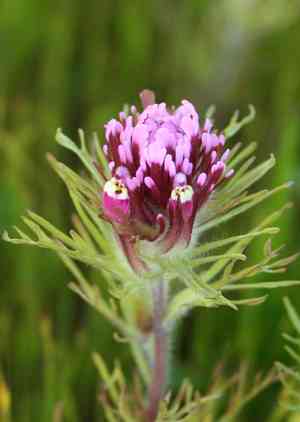
Exserted indian paintbrush (Castilleja exserta)
Also known as: Exerted indian paintbrush, Owlclover indian paintbrush
The exserted Indian paintbrush (Castilleja exserta) exhibits prominent flowers and reduced foliage thanks to its semi-parasitic lifestyle. By forming underground connections with the roots of nearby plants, it siphons off water and nutrients. This ability enables it to thrive in less fertile soils and allocate more resources to producing vibrant flowers. Additionally, the exserted Indian paintbrush is vital for the survival of the endangered bay checkerspot butterfly.
In This Article
Attributes of Exserted indian paintbrush
Lifespan
Annual
Plant Type
Herb
Plant Height
10 cm to 46 cm
Spread
30 cm
Leaf Color
Green
Flower Size
6 mm to 2.5 cm
Flower Color
Purple
Images of Exserted indian paintbrush
Quickly Identify Exserted indian paintbrush
1
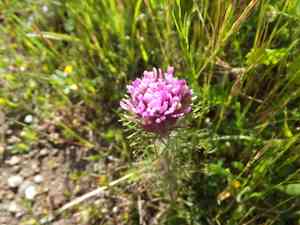
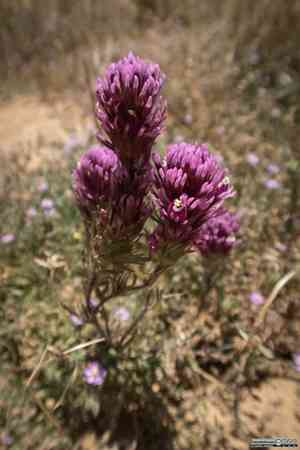
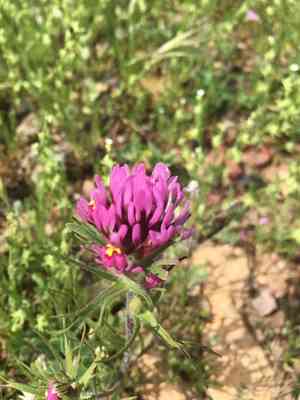
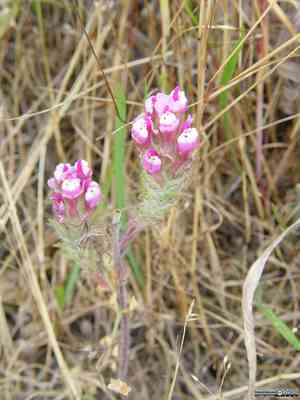
Castilleja exserta can be identified by its striking purple to pinkish flowers that are arranged in a dense, spike-like inflorescence. The leaves are deeply lobed and it typically grows up to 12-18 inches in height. The plant\'s bracts have a unique appearance with notches at the tips.
Scientific Classification of Exserted indian paintbrush
Phylum
Vascular plants
Class
Dicotyledons
Order
Lamiales
Family
Broomrape
Genus
Indian paintbrush
Species
Exserted indian paintbrush
Planting and Growing of Exserted indian paintbrush
Care Difficulty
Moderate
Watering Schedule
Every 2 days
Sunlight Requirements
Full sun
Sunshine Duration
4-8 hours
Ideal Temperature
60-75℉
Soil Type
Potting Mix, Peat Mix
Soil pH
6.5-7.5
Fertilizer Type
Balanced
Pruning Season
Spring, Summer
Pruning Area
Branches, Leaves
Pruning Frequency
2 times a year
Repotting Season
Spring
Pot Type
Plastic, Ceramic
 How to Water Exserted indian paintbrush?
For Castilleja exserta, water each session should be about 250 ml, enough to moisten the soil without waterlogging it. This plant enjoys well-drained environments, so allowing the soil surface to dry slightly before the next watering is crucial.
What are the symptoms of an underwatered Exserted indian paintbrush?
›
What should I do if my Exserted indian paintbrush is not getting enough water?
›
What are the symptoms of an overwatered Exserted indian paintbrush?
›
How to save an overwatered Exserted indian paintbrush?
›
 What Are the Sunlight Requirements for Exserted indian paintbrush?
Castilleja exserta is best in environments that offer partial to full sun, benefiting from direct sunlight during the morning and late afternoon. Adequate light ensures robust growth and vibrant blossoms.
More About Sunlight Requirements Techniques→
How much direct sunlight does Castilleja exserta need?
›
What if full sun isn't available?
›
What benefits does ideal sunlight provide?
›
 What Is the Ideal Temperature Range for Exserted indian paintbrush?
The ideal temperature range for Castilleja exserta cultivation effectively supports photosynthesis and overall plant health. This range, between 60°F and 75°F, provides optimal growing conditions, minimizing stress on the plant and promoting robust growth. Maintaining these temperatures helps ensure that the plant resources are directed towards productivity and resilience.
 What Soil is Best for Exserted indian paintbrush?
Castilleja exserta requires well-drained soil to prevent root rot and other waterlogging issues. This condition is crucial, as it allows the roots to access both water and air, facilitating healthy plant growth. While it is relatively adaptable, Castilleja exserta thrives in soil rich in organic matter. A nutrient-rich environment supports vigorous growth, enhances flowering, and strengthens the plant's resistance to pests and diseases. The soil should retain some moisture without becoming waterlogged, ensuring that Castilleja exserta receives consistent hydration. This balance helps maintain the plant's vitality and promotes consistent blooming.
 How to Fertilize Exserted indian paintbrush?
For Castilleja exserta, apply a liquid fertilizer diluted to half strength every two weeks during the growing season. This ensures that the delicate roots aren't overwhelmed by nutrients, promoting steady and healthy growth while preventing potential nutrient burn.
 How to Prune Exserted indian paintbrush?
Prune Castilleja exserta during the active growing seasons of spring and early summer. This ensures that the plant has ample time to recover and encourages a fuller growth pattern. Make sure to cut just above a node to stimulate new sprouts. Focus on removing any misshaped, damaged, or dead stems to enhance the plant's natural form. Regular pruning promotes healthy growth and a more aesthetically pleasing appearance, which can help this plant feature more prominently in your landscape.
More About Pruning Techniques→
 How to Propagate Exserted indian paintbrush plant?
1
First, prepare a seed bed by filling a seed tray with a mixture of potting soil and sand. This mix helps with drainage and provides a suitable environment for seed germination. Lightly water the soil to ensure it's moist but not waterlogged.
2
Sprinkle the Castilleja exserta seeds evenly over the moist soil surface. Lightly cover them with a thin layer of soil or fine sand. Since these seeds need light to germinate, avoid covering them too deeply.
3
To propagate through cuttings, select a healthy parent plant and cut a young, non-flowering stem. Ensure the cutting is at least 10 centimeters long and has several leaves. Dip the cut end in rooting hormone before planting in a potting mix.
 How to Repot Exserted indian paintbrush plant?
1
Castilleja exserta should be repotted when you notice its roots start to circle the inside of the pot or when its growth rate slows down significantly. Spring or early summer is the optimal time as the plant is actively growing, which helps it recover quickly in the new pot.
2
When selecting a pot for Castilleja exserta, ensure that it has adequate drainage holes to prevent waterlogging. A pot just one size larger than the current one encourages healthy root growth. Terracotta pots are ideal because they allow excess moisture to evaporate, reducing the risk of root rot.
3
Opt for a well-draining, sandy loam soil mix for Castilleja exserta. This type of soil provides a balanced environment to hold moisture while allowing excess water to drain away. It helps prevent the roots from sitting in water, reducing the risk of fungal infections.
Learn More About Exserted indian paintbrush Diseases
Anthracnose
Bacterial Leaf Spot
Bacterial Wilt
Chemical Injury
Crown Gall
Cyst Nematode
Damping-off
Downy Mildew
Drought Stress
Fusarium Wilt
Gray Mold
Leaf Spot
Mosaic
Nutrient Deficiency
Nutrient Toxicity
Powdery Mildew
Root Rot
Root-knot Nematode
Rusts
Sooty Mold
Spider Mites
Temperature Stress
Thrips Damage
White Mold



