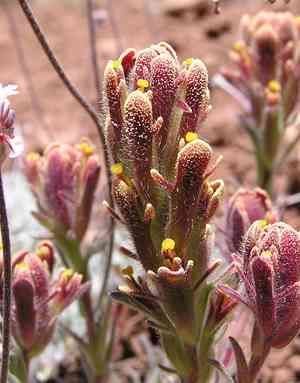
Ash-gray indian paintbrush (Castilleja cinerea)
Also known as: None
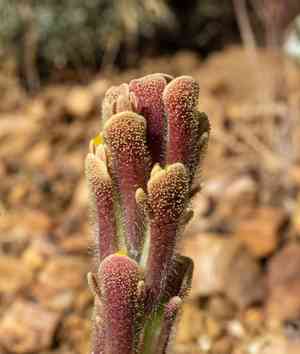
The ash-gray Indian paintbrush (Castilleja cinerea) is a perennial herb notable for its woolly, grayish-green foliage. Its vibrant inflorescence, commonly featuring red or pink bracts, offers a striking contrast to its muted leaves. This plant excels in gravelly soils, an environment that mirrors its adaptations to arid conditions, highlighting its specialized resilience and ecological niche.
In This Article
Attributes of Ash-gray indian paintbrush
Lifespan
Perennial
Plant Type
Herb
Plant Height
30-50 cm
Spread
Not typically measured as it grows in clusters
Leaf Color
Grayish-green
Flower Size
1-2 cm
Flower Color
Red, orange, sometimes pink
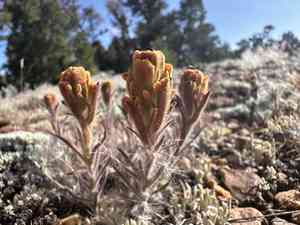
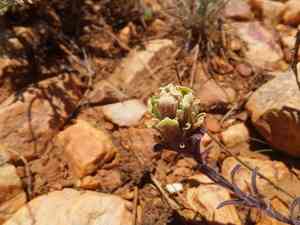
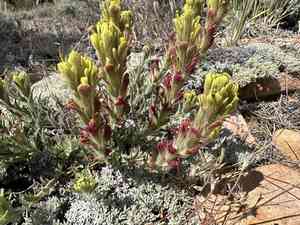
Images of Ash-gray indian paintbrush
Quickly Identify Ash-gray indian paintbrush
1
Look for its characteristic ash-gray leaves and brightly colored bracts, usually red to orange, which surround less conspicuous flowers. The plant generally grows in clusters in alpine regions.
Scientific Classification of Ash-gray indian paintbrush
Phylum
Vascular plants
Class
Dicotyledons
Order
Lamiales
Family
Broomrape
Genus
Indian paintbrush
Species
Ash-gray indian paintbrush
Planting and Growing of Ash-gray indian paintbrush
Care Difficulty
Moderate
Watering Schedule
Every 3 days
Sunlight Requirements
Partial sun
Sunshine Duration
4-8 hours
Ideal Temperature
60-75℉
Soil Type
Potting Mix, Peat Mix
Soil pH
6.5-7.5
Fertilizer Type
Balanced
Pruning Season
Spring, Summer
Pruning Area
Branches, Leaves
Pruning Frequency
2 times a year
Repotting Season
Spring
Pot Type
Plastic, Ceramic
 How to Water Ash-gray indian paintbrush?
For Castilleja cinerea, it's essential to mimic its native habitat by watering thoroughly but infrequently. To achieve this, aim to provide around 250 ml per watering session, ensuring that the soil is moist but never soggy. Water until you see moisture seep slightly from the drainage holes.
What are the symptoms of an underwatered Ash-gray indian paintbrush?
›
What should I do if my Ash-gray indian paintbrush is not getting enough water?
›
What are the symptoms of an overwatered Ash-gray indian paintbrush?
›
How to save an overwatered Ash-gray indian paintbrush?
›
 What Are the Sunlight Requirements for Ash-gray indian paintbrush?
Castilleja cinerea thrives best in partial sun environments, ensuring adequate energy for photosynthesis while minimizing stress from intense sunlight, supporting its vibrant growth and flowering.
What is the best lighting condition for Castilleja cinerea?
›
How can you achieve ideal lighting?
›
What are the benefits of ideal lighting for Castilleja cinerea?
›
 What Is the Ideal Temperature Range for Ash-gray indian paintbrush?
Castilleja cinerea thrives best in temperatures between 60°F and 75°F. This range provides the necessary warmth for optimal growth while ensuring that the plant doesn’t experience temperature stress. Maintaining this range supports vigorous growth and bloom production.
 What Soil is Best for Ash-gray indian paintbrush?
Castilleja cinerea thrives in well-draining soils. This prevents root rot and ensures that the roots receive adequate oxygen. The plant is adapted to survive in drought-prone areas, so good drainage is crucial to its health. While Castilleja cinerea is resilient, it does benefit from nutrient-rich soil that provides the basic minerals and organic matter necessary for healthy growth, creating vibrant and resilient foliage. This plant prefers moderately moist soil conditions. While it can tolerate short periods of drought, access to consistent moisture prevents stress and promotes vigorous blooming throughout its flowering season.
 How to Fertilize Ash-gray indian paintbrush?
For Castilleja cinerea, it is important to use fertilizers sparingly due to its specialized nature. A balanced liquid fertilizer diluted to half strength every other week during the growing season is ideal. Over-fertilizing can harm this plant, as it thrives in nutrient-poor conditions typical of its alpine environment.
 How to Prune Ash-gray indian paintbrush?
Begin by examining your Castilleja cinerea for any dead or damaged foliage and carefully trim these away to stimulate healthy growth. Use sharp, sterilized pruning shears to cut back about one-third of the plant's height. This helps to maintain a compact and uniform shape. As you prune, make clean cuts just above the leaf nodes to encourage new growth. It's essential to remove any fading flowers to promote continuous blooming throughout the season. Regularly check for and remove any stems that appear to be growing inward or crossing over others.
More About Pruning Techniques→
 How to Propagate Ash-gray indian paintbrush plant?
1
Fill the seed tray with a fine soil or potting mix that is slightly moistened. Ensure the mix is evenly spread and leveled. This foundation is crucial for the even distribution of seeds and consistent growth conditions.
2
Sprinkle Castilleja cinerea seeds evenly across the surface of the soil. Lightly press them into the soil but do not cover them completely, as they need light for germination. Proper seed distribution prevents overcrowding and ensures optimal growing conditions.
3
Mist the sown seeds gently to avoid displacing them. Keep the soil consistently moist but not waterlogged. Monitor moisture levels closely, especially during the germination period, to ensure healthy seedling development.
 How to Repot Ash-gray indian paintbrush plant?
1
Castilleja cinerea should be repotted when you notice stunted growth or roots pushing through the drainage holes. These signs indicate the plant needs more space and nutrient-rich soil to thrive.
2
Opt for a pot that is one size larger than the current one, with adequate drainage holes. This prevents waterlogging while giving roots the room to grow without being constrained, reducing stress on the plant.
3
Use well-drained sandy soil that replicates its natural habitat. This soil type allows for good aeration and drainage, essential for preventing root rot while supporting healthy growth.
Learn More About Ash-gray indian paintbrush Diseases
Anthracnose
Bacterial Leaf Spot
Bacterial Wilt
Crown Gall
Cyst Nematode
Damping-off
Downy Mildew
Drought Stress
Fusarium Wilt
Gray Mold
Leaf Curl
Leaf Spot
Mosaic
Nutrient Deficiency
Nutrient Toxicity
Powdery Mildew
Root Rot
Root-knot Nematode
Rusts
Sooty Mold
Spider Mites
Temperature Stress
Thrips Damage
White Mold



