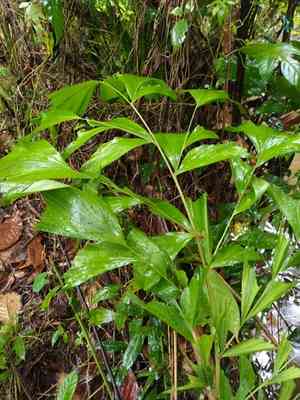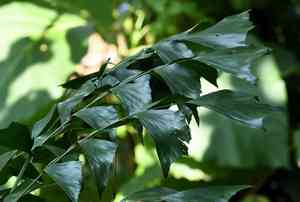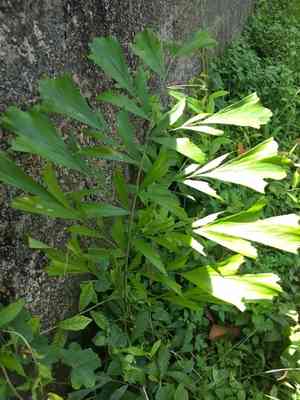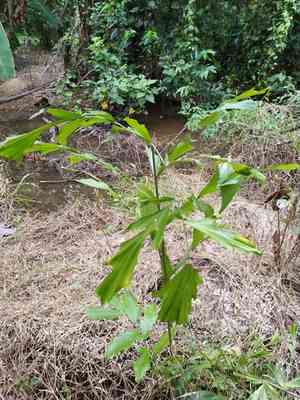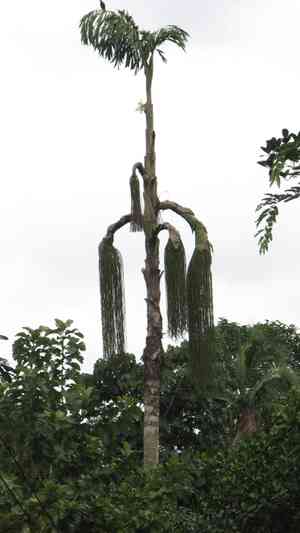
Jaggery palm(Caryota urens)

Jaggery palm (Caryota urens)

Also known as: Toddy palm, Kitul palm, Fish-tail palm

The jaggery palm tree, also known as the sugar palm, serves a variety of purposes:

1. **Sugar Production**: The sap is tapped to produce jaggery, a traditional, unrefined sweetener.
2. **Alcoholic Beverages**: The sap can be fermented to create toddy, a local alcoholic drink.
3. **Food**: The palm heart and fruits are consumed in various culinary dishes.
4. **Construction and Crafting**: The durable leaves and wood are used in construction and for making items like baskets, mats, and ropes.
5. **Animal Feed**: The leaves and pulped trunk can be used as fodder for animals, such as elephants.
6. **Traditional Medicine**: Certain parts of the tree are utilized in herbal remedies.

This tree is highly valued for its diverse applications in food, construction, and traditional practices.

Attributes of Jaggery palm

Lifespan
Perennial
Plant Type
Tree
Plant Height
25 m
Spread
10 m
Leaf Color
Green
Flower Size
1 mm
Flower Color
Yellow Green

ForwardPlant - Identify plants with a snap

Identify and diagnose plants, get toxicity alerts, and explore safety guides for all types of fungi.

Try for Free

Images of Jaggery palm

Jaggery palm(Caryota urens)

Quickly Identify Jaggery palm

1
Caryota urens can be recognized by its unique fishtail-shaped leaves, tall and slender trunk, and large clumps of hanging flowers that emerge from the top of the stem.

Scientific Classification of Jaggery palm

Phylum
Vascular plants
Class
Monocotyledons
Order
Arecales
Family
Palm
Genus
Fishtail palms
Species
Jaggery palm

Planting and Growing of Jaggery palm

Care Difficulty
Hard
Watering Schedule
Every 4 days
Sunlight Requirements
Partial sun
Sunshine Duration
4-8 hours
Ideal Temperature
65-85℉
Soil Type
Potting Mix, Peat Mix
Soil pH
6.5-7.5
Fertilizer Type
Balanced
Pruning Season
Spring, Summer
Pruning Area
Branches, Leaves
Pruning Frequency
Once a year
Repotting Season
Spring
Pot Type
Terracotta, Plastic

water icon How to Water Jaggery palm?

For Caryota urens, water until the soil is thoroughly moist, ensuring not to let it become waterlogged. Approximately 500 ml per session should suffice, making sure to reach the roots for proper nourishment. The finger test can be useful: if the top inch of soil is dry, it's time to water.
What are the symptoms of an underwatered Jaggery palm?
What should I do if my Jaggery palm is not getting enough water?
What are the symptoms of an overwatered Jaggery palm?
How to save an overwatered Jaggery palm?

sunlight icon What Are the Sunlight Requirements for Jaggery palm?

Sunlight Requirements: Partial sun, Full sun
Duration of light: 4-6 hours of sunlight
Caryota urens ideally thrives under partial sunlight conditions, receiving dappled sunlight throughout the day. This balanced exposure encourages healthy leaf growth, proper root development, and reduces stress, avoiding potential foliage burn.
What is the best lighting solution?
How to ensure Caryota urens gets optimal light?
What are the benefits of optimal lighting?
More About Sunlight Requirements Techniques

temperature icon What Is the Ideal Temperature Range for Jaggery palm?

Ideal Temperature: 65 ~ 85℉
The ideal temperature range for Caryota urens lies between 65°F and 85°F. This range provides optimal conditions for growth and photosynthesis, allowing the plant to develop robust foliage and healthy roots. Temperatures within this range are most commonly found in tropical regions, mimicking the natural habitat of Caryota urens and facilitating its growth without stress.

soil icon What Soil is Best for Jaggery palm?

Soil type: Loam, Sandy loam
Soil PH: 6.5 ~ 7.5
Caryota urens thrives in well-draining soil which prevents waterlogging, ensuring that roots have adequate air circulation. This is essential because it helps the plant avoid root rot, allowing for healthy growth and nutrient uptake. The plant requires moderately fertile soil, as it benefits from an environment that provides essential nutrients without excessive richness which may lead to lush growth but weak structure and pest issues. The soil should retain moisture adequately, facilitating consistent hydration. This is crucial for Caryota urens, as it ensures sustained growth by maintaining an ideal moisture balance.

fertilize icon How to Fertilize Jaggery palm?

Fertilizer type: Balanced
Caryota urens, commonly known as the Fishtail Palm, typically requires balanced fertilization to thrive. Apply a diluted liquid fertilizer at half strength for indoor plants to avoid root burn. For outdoor specimens, a full strength dose can be used but distributed over a wider area to ensure deep penetration and nourishment.

prune icon How to Prune Jaggery palm?

Pruning Time: Spring, Summer, Autumn, Winter
Begin by identifying and removing any brown or yellow fronds. These are often dead or dying and do not contribute to the plant's health, making them ideal targets for pruning. Use sharp, clean pruning shears or a saw to make precise cuts close to the trunk while retaining the petiole base. This helps prevent injury to the trunk and reduces disease risk. Trim away any dead leaf bases and trim the 'skirt' — the circle of older fronds around the midsection — to encourage a tidy, aesthetic appearance of the palm. While pruning, inspect the palm for any signs of pests or disease, as this will allow you to address any issues promptly and help maintain the plant's vitality. More About Pruning Techniques

propagate icon How to Propagate Jaggery palm plant?

Propagate Time: Spring, Summer
1
Harvest mature seeds from a healthy Caryota urens plant. For effective germination, ensure the seeds are fully ripe and have a healthy appearance. Clean the seeds thoroughly to remove any pulp, as leftover material can encourage mold growth.
2
Place the cleaned seeds onto a seed tray filled with a damp, well-draining potting mix. Cover lightly with soil, ensuring the seeds are not buried too deeply, and maintain soil moisture with regular watering. Position the tray in a warm, shaded location for optimal growth.
3
Once seedlings are large enough to handle, transplant them into individual pots. Ensure these pots have well-draining soil to prevent waterlogging. Gradually acclimatize the young plants to outdoor conditions by introducing them to indirect sunlight over several days.

repot icon How to Repot Jaggery palm plant?

Repotting frequency: Every 2-3 years
1
You should consider repotting Caryota urens when its roots start circling the pot's bottom, or you notice the plant's growth has slowed down. Ideally, wait for new growth in spring or summer as this indicates active growth, which assists recovery after repotting.
2
Choose a pot that is at least 2 inches wider in diameter than the current one, with good drainage holes. This allows the plant enough space to grow without waterlogging, promoting healthy root development and avoiding root rot.
3
Opt for well-draining and rich potting soil. A mixture containing peat moss, perlite, and organic matter like compost will be ideal, providing necessary nutrients while ensuring proper aeration and drainage, essential for Caryota urens.

ForwardPlant - Identify plants with a snap

Find the best spots for them to optimize their health, simply using your phone.

Try for Free

Toxicity

Ingestion, Contact

Identify toxic plants for your safety

Learn which plants are harmful to you and your pets, and make informed choices for a safer home!

Try for Free
WARNING
The judgment on toxicity and danger is for reference only. We DO NOT GUARANTEE any accuracy of such judgment. Therefore, you SHALL NOT rely on such judgment. It is IMPORTANT TO SEEK PROFESSIONAL ADVICE in advance when necessary.