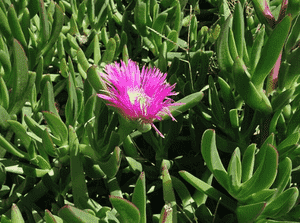
Hottentot fig (Carpobrotus acinaciformis)
Also known as: Sally-my-handsome, Elandssuurvy
The Hottentot fig, a succulent in the marigold family, is known for its vibrant pinkish-purple flowers. Originating from South Africa, it is a favorite snack for tortoises. This creeping plant is also found in coastal gardens and has spread to parts of the U.K.
In This Article
Attributes of Hottentot fig
Lifespan
Perennial
Plant Type
Succulent
Plant Height
50 cm
Spread
1 m
Leaf Color
Green
Flower Size
5 cm to 8 cm
Flower Color
Purple Pink Red
Images of Hottentot fig
Quickly Identify Hottentot fig
1
Identify Carpobrotus acinaciformis by its thick, succulent leaves that are sword-shaped and typically bluish-green. The plant produces showy, bright purple to pink flowers with a yellow center and has a characteristic mat-forming growth habit.
Scientific Classification of Hottentot fig
Phylum
Vascular plants
Class
Dicotyledons
Order
Caryophyllales
Family
Fig-marigold
Genus
Ice plants
Species
Hottentot fig
Planting and Growing of Hottentot fig
Care Difficulty
Easy
Watering Schedule
Every 2 days
Sunlight Requirements
Full sun
Sunshine Duration
4-6 hours
Ideal Temperature
50-75℉
Soil Type
Potting Mix, Peat Mix
Soil pH
6.5-7.5
Fertilizer Type
Balanced
Pruning Season
Spring, Summer
Pruning Area
Branches, Leaves
Pruning Frequency
2 times a year
Repotting Season
Spring
Pot Type
Plastic, Ceramic
 How to Water Hottentot fig?
For Carpobrotus acinaciformis, watering should be sufficient to moisten the soil without flooding it. Ensure the topsoil is completely dry between waterings to prevent root rot. Aim for around 250 ml, enough to hydrate but not so much that the soil becomes saturated.
What are the symptoms of an underwatered Hottentot fig?
›
What should I do if my Hottentot fig is not getting enough water?
›
What are the symptoms of an overwatered Hottentot fig?
›
How to save an overwatered Hottentot fig?
›
 What Are the Sunlight Requirements for Hottentot fig?
Carpobrotus acinaciformis ideally needs full sun exposure. This ensures robust growth, prolific blooming, and vibrant foliage, attributes crucial for the plant's well-being and visual appeal.
More About Sunlight Requirements Techniques→
What light exposure does Carpobrotus acinaciformis need?
›
How can you ensure adequate sunlight for Carpobrotus acinaciformis?
›
What are the benefits of ideal light conditions for Carpobrotus acinaciformis?
›
 What Is the Ideal Temperature Range for Hottentot fig?
The ideal temperature range for Carpobrotus acinaciformis is between 50°F and 75°F. This ensures optimal growth and flowering by providing a stable environment that mimics the plant's native coastal conditions. Consistently maintaining these temperatures allows the plant to photosynthesize effectively, facilitating healthy development.
 What Soil is Best for Hottentot fig?
Carpobrotus acinaciformis thrives in well-draining soil due to its natural habitat in coastal and sandy regions. Good drainage prevents root rot, ensuring the plant remains healthy and vibrant. This plant is adapted to nutrient-poor conditions often found in its native environments. Thriving in such settings, it requires minimal fertilization, making it a low-maintenance option for gardeners. Carpobrotus acinaciformis tolerates moderately saline soils which mimic its coastal origins. This characteristic makes it resilient in challenging environments where salt content might deter other plant species.
 How to Fertilize Hottentot fig?
For Carpobrotus acinaciformis, use a balanced fertilizer with equal parts of nitrogen, phosphorus, and potassium. When applying liquid fertilizer, dilute it to half the recommended strength. For slow-release granules, use about 100 grams per square meter per year.
 How to Prune Hottentot fig?
Begin by identifying overgrown or leggy sections of the plant. These are areas that have extended beyond their desired shape or have become too dense. Trim back excessive growth to the base of the plant or to a healthy node. This encourages denser growth and encourages the plant to maintain its attractive appearance. Inspect the plant for any dead or damaged leaves. Removing these promotes better air circulation and directs the plant's energy towards healthy growth.
 How to Propagate Hottentot fig plant?
1
Choose a healthy stem from the parent plant that is at least a few inches long and free from pests or disease to ensure the best chances of successful cutting propagation.
2
Using sterilized tools, make a clean, angular cut while trimming away lower leaves to reduce moisture loss and enhance rooting.
3
Place the prepared cuttings into a pot filled with the soil mix, ensuring that at least two nodes are submerged to encourage root development.
 How to Repot Hottentot fig plant?
1
Carpobrotus acinaciformis should be repotted when you notice its roots emerging from the drainage holes or if it's been more than a year since its last repotting. Always ensure the plant is actively growing for the best chance of success.
2
Select a pot that is slightly larger than the current one, with ample drainage holes. Terracotta pots are excellent as they allow soil to dry out more easily, preventing root rot in this drought-resistant plant.
3
Opt for a well-draining cactus or succulent mix. This prevents waterlogging and allows for proper air circulation around the roots, crucial for the health and growth of Carpobrotus acinaciformis.



